

Understanding Why My Child Is Obsessive with Friends
Many think OCD is just about being neat and perfect. But it’s much more than that. For example, when my child is obsessive with friends, it reflects unwanted thoughts and urges to do certain things to feel better. For kids and teens, this can really get in the way of school, friends, and fun activities.
But the good news is, OCD can be managed with the right help. This article will explain the signs, reasons, diagnosis, and ways to treat OCD in young people.
Key Takeaways
- OCD can show up in kids as obsessive thoughts and compulsive actions, like being too focused on friends.
- How kids attach to others and what their friends do can affect their OCD.
- Spotting OCD signs, like too much handwashing or constant worries, is key to helping early.
- Therapies like CBT and family support can really help kids and teens with OCD.
- Parents can help by encouraging their kids to face their fears and praising them for small wins against OCD.
Table of Contents
Understanding ADHD and OCD
ADHD (Attention Deficit Hyperactivity Disorder) and OCD (Obsessive-Compulsive Disorder) are two different brain disorders. They can sometimes be mixed up. It’s important to know the main differences between these conditions in children.
Similarities Between ADHD and OCD
Both ADHD and OCD can affect a child’s behavior and focus. Symptoms like restlessness and trouble paying attention are common. They also share challenges with executive functions, like making decisions and finishing tasks.
Differences Between ADHD and OCD
The main difference is in the symptoms. ADHD is an “externalizing disorder,” showing as hyperactivity and impulsivity. On the other hand, OCD is an “internalizing disorder,” with intrusive thoughts and compulsions to manage mental states.
Studies show up to 30% of people with OCD also have ADHD. This makes diagnosis and treatment harder. Knowing the differences between ADHD and OCD is key to helping your child get the right help.
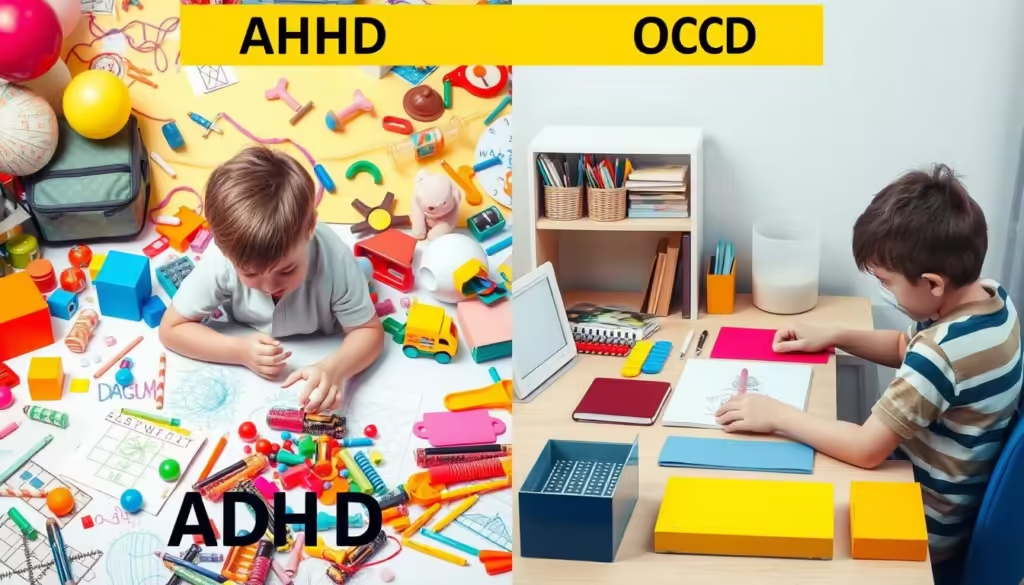
“ADHD and OCD are intertwined in such a way that they often exacerbate each other’s symptoms.”
Recognizing Obsessive-Compulsive Disorder (OCD) in Children and Teens
Childhood can be tough, and it’s easy to overlook signs of deeper issues like Obsessive-Compulsive Disorder (OCD). OCD affects about one in every 200 kids and teens in the U.S. It causes unwanted thoughts and actions that disrupt daily life.
Spotting OCD early in kids and teens is key to helping them. OCD symptoms can sneak up on you. It’s vital to tell normal childhood habits from compulsions that really get in the way.
- OCD often starts by age 14 in about 25% of cases, with some kids showing signs as early as preschool.
- Common fears in kids with OCD include germs, bad thoughts, and needing things to be just right.
- Compulsive behaviors, like washing hands too much or checking things over and over, can take up a lot of time. This can hurt schoolwork, friendships, and happiness.
OCD can look like other childhood issues, like ADHD or anxiety. Getting a professional diagnosis is crucial for the right treatment and support.
“The key to recognizing OCD in children is to look for patterns of behavior that significantly disrupt their daily lives and cause significant distress.”
Acting fast and getting the right treatment, like therapy and sometimes medicine, can change a child’s life. Knowing the signs of OCD helps parents and caregivers support their kids and help them reach their full potential.

What Causes OCD in Children and Teens?
Obsessive-Compulsive Disorder (OCD) is a complex mental health condition. It can affect children and teens. The exact causes are still not fully understood. But research shows it’s likely a mix of genetic, environmental, and psychological factors.
Genetic and Environmental Factors
If a family member has OCD, a child might be more likely to get it. This points to a genetic link. Also, seeing OCD behaviors in family or others can lead to learning and adopting these habits.
Stressful or Traumatic Events
Stressful or traumatic events can trigger OCD in vulnerable children. It’s key to tell OCD apart from post-traumatic stress disorder (PTSD). Both can have intrusive thoughts and compulsive behaviors.

“Roughly half a million children in the USA suffer from OCD, equating to one in 200 children or four to five children per average-sized elementary school.”
The causes of OCD in children and teens are complex. They often involve genetics, environment, and psychology. Knowing these causes helps in finding effective treatments for OCD.
Common OCD Obsessions in Children
Obsessive-Compulsive Disorder (OCD) can really affect kids. It makes them have thoughts that won’t go away, causing a lot of worry and stress. Kids often worry about getting sick or having bad thoughts.
Fear of Contamination or Illness
Some kids with OCD are super worried about germs and getting sick. They might wash their hands a lot or avoid places because they’re scared of germs. This can really mess up their day and make them very upset.
Intrusive Thoughts and Worries
Teenagers with OCD often have thoughts they can’t stop. These thoughts can be scary, like about violence or sex, or make them worry about right and wrong. These thoughts make them very anxious and stressed.
Studies show that about 1 in 200 kids and teens have OCD. It’s important to get help early to help them feel better and live a happier life.

“Children spending more than an hour a day on compulsive behaviors may have OCD, and parents should seek treatment if a child’s fears impact school, friendships, or family life.”
Compulsions and Rituals in Children with OCD
Obsessive-Compulsive Disorder (OCD) in kids often shows up as repetitive actions or thoughts called compulsions. These compulsions, or rituals, are actions kids do because of their obsessive thoughts. For many, these compulsions can take over, making it hard to do everyday things.
Excessive Handwashing and Cleaning
One common compulsion in kids with OCD is too much handwashing and cleaning. They might wash their hands a lot, causing skin problems. They might also have detailed cleaning rituals, like scrubbing surfaces or organizing things in a certain way, because they fear contamination or need things to be perfect.
Repetitive Checking and Counting
Another common compulsion is repetitive checking and counting. Kids with OCD might check things like doors or their homework many times, in a certain order. They believe that if they don’t do it right, something bad will happen. They might also count things a certain number of times, trying to feel better or avoid bad things.
OCD can really affect a child’s life. It can make it hard for them to focus, play with friends, or even get ready for school. It’s important to understand and support these kids to help them do well.
“OCD can manifest not only as compulsions but also as anger, anxiety, panic attacks, and phobic avoidance of situations related to their fears like contamination.”
| Type of OCD Compulsion | Examples |
|---|---|
| Handwashing and Cleaning |
|
| Repetitive Checking and Counting |
|
Signs and Symptoms of OCD in Kids and Teens
Obsessive-Compulsive Disorder (OCD) affects many children and teenagers. It can change their lives a lot. Knowing the signs and symptoms is key for parents and caregivers.
Excessive Handwashing and Fear of Contamination
Excessive handwashing is a common OCD symptom. Kids or teens might wash their hands many times a day. This can cause their skin to become raw, bleeding, or peeling.
This behavior comes from a deep fear of germs or contamination. It’s a way to try and avoid stress or anxiety.
Intense Need for Order and Symmetry
Young people with OCD often need things to be perfectly arranged. They might arrange objects in a certain way or count actions a specific number of times. These actions help them feel in control of their fears.
Other signs include avoiding certain situations, repeating actions, needing everything to be perfect, and problems with daily life. These can affect their social life and schoolwork. If you think your child might have OCD, it’s important to get help.
“Up to 25 percent of people with OCD experience compulsive hoarding, and at least one hour per day is spent on obsessive thoughts or compulsive behaviors in individuals with OCD.”
| Symptom | Description |
|---|---|
| Excessive Handwashing | Feeling an overwhelming urge to wash hands dozens of times per day, often leading to raw, bleeding, or peeling skin. |
| Need for Order and Symmetry | Compulsively arranging objects in a particular way, counting or repeating actions, or performing tasks in a specific sequence. |
| Avoidance Behaviors | Avoiding situations or activities due to obsessions or fear of triggering compulsions. |
| Interference with Daily Life | Difficulties with social life, schoolwork, and overall functioning due to OCD symptoms. |
my child is obsessive with friends
Seeing your child obsessively attached to friends can worry you. This is often a sign of deeper issues like social anxiety or emotional dependency. It might also show how much they value peer influence.
Children with OCD may find it hard to keep healthy friendships. They might get stuck on one friend or group, ignoring others. This can make them feel lonely and cut off from new friends.
Bad friendships can make OCD symptoms worse. They might feel they must do certain things to keep their friendship. This can hurt their self-confidence and make them feel trapped.
It’s key to spot social obsession in your child and tackle the real problems. Encourage them to meet different people and try new things. Support their interests and hobbies. This helps them feel strong and able to handle friendships better.
Helping your child deal with social situations is vital for their mental health. Understanding why they’re so focused on friends can help. You can then support them in building strong relationships and a balanced life.
Impact of OCD on Daily Life
Children and teens with Obsessive-Compulsive Disorder (OCD) face big challenges. OCD makes it hard for them to do well in school, make friends, and enjoy everyday activities. This is because OCD brings unwanted thoughts and habits that take up a lot of time.
Difficulties at School and with Social Interactions
OCD can make it tough for students to focus and do well in school. They might get stuck on certain thoughts or feel the need to do certain things over and over. This can stop them from finishing homework and joining in class.
Also, OCD can make it hard to make and keep friends. This can make them feel lonely and left out.
About 70% of people with OCD get better with Exposure and Response Prevention (ERP) therapy, medicine, or both. This treatment is especially good for those who haven’t gotten better with other methods.
| Impact of OCD on Daily Life | Percentage of People Affected |
|---|---|
| Difficulties at School | High |
| Challenges with Social Interactions | High |
| Interference with Regular Activities | High |
It’s important to teach friends and family about OCD. They need to know how it affects daily life. Having a trusted friend at therapy can help them understand how to support without making things worse.
With the right treatment and support, kids and teens with OCD can manage their symptoms. They can take back control of their lives. By tackling OCD’s effects on school and social life, they can grow strong and succeed.
Diagnosing OCD in Children and Adolescents
Spotting the signs of obsessive-compulsive disorder (OCD) in kids and teens is the first step to help them. It’s vital to tell normal habits from compulsions that really get in the way. The latter shows OCD.
Getting a diagnosis early is crucial for the right treatment. OCD can show up in any age of child, with caregivers often seeing the outward signs. Symptoms include intense fears, repetitive actions, and strict routines.
Teenagers might have similar worries as younger kids but hide them better. They often have both obsessive thoughts and compulsive actions.
| Obsessive Themes in OCD | Common Compulsions |
|---|---|
|
|
About 500,000 youth in the U.S., or 1 in 200, have OCD. Early action is key because OCD can hurt a child’s school work, friends, and happiness.
“Obsessive-compulsive disorder (OCD) is frequently overlooked or misdiagnosed despite its potential impact on a child’s life.”
Treatment Options for OCD in Kids and Teens
OCD has no cure, but there are many ways to manage its symptoms. For kids and teens, finding the right mix of therapies is key. This approach helps improve their quality of life.
Cognitive-Behavioral Therapy (CBT)
Cognitive-behavioral therapy (CBT) is a top choice for treating OCD in young people. It helps them face their fears and reduce compulsive behaviors. Over time, CBT can greatly reduce OCD symptoms and improve daily life.
Medication and Family Support
Medicines like SSRIs and stimulants can also help manage OCD. Family support and a team effort are crucial. Together, they create a treatment plan that meets each person’s needs.
Combining therapies, medication, and family support helps kids and teens with OCD. They learn to manage their symptoms and live a better life. With the right support, they can lead fulfilling lives.
| Treatment Option | Description | Potential Benefits |
|---|---|---|
| Cognitive-Behavioral Therapy (CBT) | A therapy that focuses on identifying and challenging obsessive thoughts while gradually reducing compulsive behaviors through exposure therapy. | Significantly improves OCD symptoms and overall functioning. |
| Medication | Selective serotonin reuptake inhibitors (SSRIs) and stimulants can be used to manage OCD symptoms. | Can complement CBT and help alleviate OCD symptoms. |
| Family Support | Involves parents, teachers, and other support systems in the treatment process. | Enhances the effectiveness of therapy and provides a supportive environment for the child or teen. |
By taking a team approach and tailoring treatment, kids and teens with OCD can manage their symptoms. They learn healthy ways to cope and improve their lives.
Coping Strategies for Parents and Caregivers
Raising a child with Obsessive-Compulsive Disorder (OCD) is tough. It’s key for parents to focus on their own coping strategies and self-care. Taking care of themselves helps them support their child better.
Getting help from mental health professionals is a big step. They can help manage the child’s symptoms and the parents’ stress. Support groups for parents of children with OCD offer a community and valuable advice.
Using stress-management techniques is also helpful. Activities like meditation, deep breathing, or exercise can reduce stress. Doing things for yourself, like reading or hobbies, helps you recharge.
Creating a routine and clear communication in the family is important. It gives the child with OCD a sense of stability. Working with the healthcare team to find ways to manage symptoms at home is crucial.
By focusing on their own coping strategies and self-care, parents can better support their children with OCD. This ensures the whole family can handle the challenges of OCD together.
| Coping Strategies for Parents | Benefits |
|---|---|
| Seek support from mental health professionals | Gain guidance on managing child’s symptoms and strategies for managing parental stress and anxiety |
| Participate in support groups for parents of children with OCD | Learn from others’ experiences and feel a sense of community |
| Practice stress-management techniques | Reduce stress and anxiety, maintain overall well-being |
| Engage in self-care activities | Recharge and maintain a healthy work-life balance |
| Establish a consistent routine and clear communication within the family | Provide structure and stability for the child with OCD |
| Collaborate with healthcare team to develop effective coping strategies | Ensure a comprehensive approach to managing the child’s symptoms at home |
Using these coping strategies, parents and caregivers can support their children with OCD while taking care of themselves. This approach is vital for the family’s mental health and well-being in the long run.
Conclusion
OCD can really affect kids and teens, making it hard for them to do well in school and make friends. But, with the right help, they can learn to deal with their OCD. Early treatment and support from experts, parents, and teachers are crucial.
Understanding OCD in kids is important. Knowing how to help early can make a big difference. With the right care, kids with OCD can live happy, fulfilling lives.
Managing OCD is tough, but it’s not impossible. Mental health experts and family support can make a huge difference. Early help and support give kids the chance to overcome OCD and enjoy life.
FAQ
What is the difference between ADHD and OCD?
ADHD is a disorder where kids might act out and show their feelings through actions. This includes being too active and acting without thinking. On the other hand, OCD is when kids worry a lot and do the same things over and over. They might be scared of germs or need things to be just right.
What are the common obsessions and compulsions in children with OCD?
Kids with OCD often worry about getting sick or dying. They might also be scared for their family’s safety. They might wash their hands a lot or follow strict routines to feel safe.
How can OCD impact a child’s daily life?
OCD can make it hard for kids to focus in school and do their homework. It can also stop them from playing with friends. Their need for order can make everyday tasks hard, leading to more worry and feeling alone.
What causes OCD in children and teens?
OCD can come from genes, environment, and psychology. If someone in your family has OCD, you might be more likely to get it. Stress or scary events can also trigger OCD in kids who are already sensitive.
How is OCD in children and teens diagnosed and treated?
First, you need to notice the signs of OCD. Then, a doctor can help figure out if it’s OCD. Treatment includes therapy, medicine, and working with schools and family.
How can parents and caregivers support a child with OCD?
Parents and caregivers should learn how to help. This includes taking care of themselves and getting help from experts. By doing this, they can better support their child’s treatment and recovery.
External Resources for Further Reading

Is there good ways to punish kids besides grounding them ?
As parents, we often use traditional methods like grounding when our kids misbehave. But is there good ways to punish kids besides grounding them? Research shows these punishment-based approaches might not be the best. Instead, we can try alternative strategies that help our kids grow and strengthen our bond.”
This article explores ways to discipline kids that go beyond grounding. We’ll look at positive reinforcement, empowering kids, and using natural consequences. These methods help create a supportive environment that encourages positive change.
Key Takeaways
- Punishment can lead to resentment and power struggles between parents and children.
- Building a strong relationship and understanding your child’s perspective is crucial for effective discipline.
- Avoid harsh punishments and focus on helping children reflect on their actions and make amends.
- Empower your child by involving them in finding solutions and providing a supportive structure.
- Use natural consequences and restorative justice to teach valuable life lessons.
Table of Contents
Transition to Peaceful Parenting
Changing to a more positive discipline approach means focusing on the bond between you and your child. It’s about having positive interactions, understanding your child, and avoiding power struggles. This way, your child feels safe, understood, and wants to cooperate.
Strengthen Your Relationship
A strong bond with your child is key for positive discipline strategies. Spend quality time together, listen actively, and validate their feelings. This builds a strong bond and helps with empathetic communication when things get tough.
Understand Child’s Perspective
It’s important to step into your child’s shoes when disciplining. Try to understand their unique needs, triggers, and motivations. This child-centered approach lets you respond with empathy instead of anger, avoiding power struggles.
Avoid Punishment and Power Struggles
Methods like grounding or timeouts can harm the parent-child relationship. Instead, use collaborative problem-solving and natural consequences. This way, your child learns from mistakes without feeling bad or resentful.
“The foundation of discipline is connection, not coercion.” – Dr. Laura Markham
By adopting a peaceful, positive parenting approach, you create a supportive environment. Your child will feel understood, supported, and motivated to cooperate. This helps build strong, resilient children who can handle life’s challenges with empathy, responsibility, and self-control.

Teach Valuable Life Lessons
As a parent, your role is more than just punishing bad behavior. You should teach your kids important life skills. This means helping them think about their actions and the results they cause. It’s about teaching them to make better choices on their own, not just because of rewards or punishments.
Reflect on Actions and Consequences
Don’t rush to punish your child when they misbehave. Instead, help them reflect on their actions and the consequences that follow. Ask them to think about how their actions affect others and themselves. This helps them understand and make better choices in the future.
Encourage Responsible Decision-Making
- Involve your child in making decisions when it’s right. Ask them to think about the outcomes of their choices and guide them towards responsible decision-making.
- Celebrate their successes and growth. This shows you value their positive actions and helps them feel more confident in making good choices.
- Remember, teaching life skills and reflective discipline is key, not just punishment. By focusing on responsible decision-making, you’re helping your child develop important skills for life.
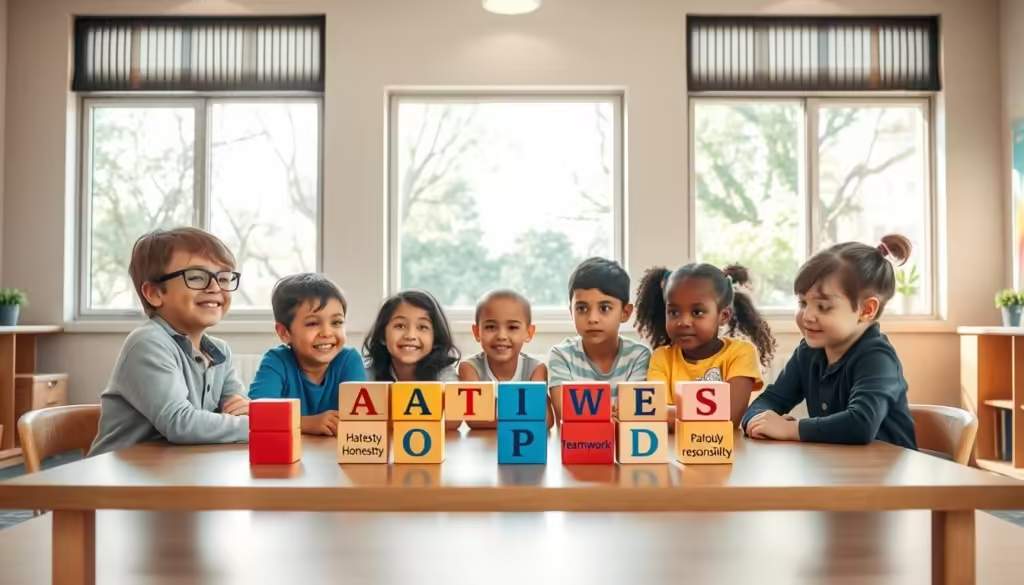
Effective discipline isn’t about controlling your child. It’s about teaching them to self-regulate and face natural consequences. This way, they’ll grow into responsible, resilient people who can handle life’s challenges with confidence and integrity.
Move from Anger to Empathy
When dealing with tough child behavior, parents should move from anger to empathy. This means taking a break, calming down, and solving problems together. This approach helps create a better space for talking and finding solutions.
Children, especially those with ADHD, often find it hard to control their anger. They might have more meltdowns because they struggle with emotional control. This can also make social situations tough for them.
Using mindfulness practices and Cognitive Behavioral Therapy (CBT) can help. These methods can reduce aggression in kids with ADHD. Also, regular physical activity can help them manage their feelings by releasing happy hormones.
“The key is to approach the situation with empathy and understanding, rather than reacting with anger or punishment. This creates an environment where the child feels heard and supported, making it more likely that they will engage in the problem-solving process.”
Your child’s ability to manage emotions is still growing. They need your help and patience to deal with their feelings. By moving from anger to empathy, you can start a better conversation. This helps your child learn how to handle their emotions in a healthy way.

Start with a Warm Connection
Effective discipline starts with a strong bond between parent and child. When kids feel safe, understood, and supported, they’re more open to learning. Begin talks about discipline with a positive, empathetic tone to make them more receptive.
To build trust and safety, try these strategies:
- Engage in active listening to get your child’s view and feelings.
- Validate their emotions by saying, “I can see you’re feeling frustrated right now.”
- Offer comfort and empathy when they’re feeling overwhelmed.
- Look for chances to praise and celebrate their good actions and efforts.
When kids know their needs are being met and their voices are heard, they’re more likely to listen. This helps build a strong, positive relationship that supports their growth.

“Emotions are contagious, and when we hold space for our children’s big feelings, we’re teaching them how to self-regulate and strengthening our bond.”
Starting with a warm connection makes discipline a team effort, not a fight. This way, you can build trust, foster responsibility, and develop self-discipline in your child.
Let Your Child Share Their Thoughts
Letting your child share their thoughts and feelings can give you valuable insights. By listening without judgment and showing you understand them, you show respect and build trust. These are key for effective discipline.
When dealing with behavioral issues, don’t rush to solutions or punishment. Let your child share their thoughts and feelings first. This way, you can understand their motivations and the reasons behind their actions.
- Actively listen to your child’s perspective, without interrupting or dismissing their views.
- Reflect back what you’ve heard to show your child you’re trying to understand their point of view.
- Avoid judgment or criticism, and instead, focus on empathizing with their experiences and emotions.
Creating a space where your child feels heard and respected builds trust and cooperation. This makes them more open to your guidance and discipline strategies. It leads to better behavior changes.
| Effective Grounding Strategies | Potential Negative Consequences of Grounding |
|---|---|
|
|
By letting your child share their thoughts and feelings, you open the door to better discipline strategies. This approach, based on listening and non-judgmental communication, helps you understand your child’s perspectives. It’s essential for disciplining children effectively.
Focus on Understanding Their Point of View
To help children behave better, it’s key to empathetic perspective-taking. Try to understand why they act a certain way, even if you disagree. By avoiding assumptions and focusing on understanding their point of view, you can have better talks. This way, you can find solutions together.
Talking is very important. Get your child involved in making family rules and talking about duties. Agree on what happens if they don’t follow the rules. This child-centered discipline makes your child feel important and involved.
If a child breaks a rule, explain the problem clearly. Encourage them to think about it and stay positive. This teaches them to solve problems, not to fear punishment.
“Understanding the reasons behind a child’s behavior is crucial for choosing appropriate responses.”
Methods like Conscious Discipline show how important it is for adults to manage their emotions. By making a safe and loving space, you can teach your child good behavior. Use kindness and gentle guidance.
Remember, empathetic perspective-taking, avoiding assumptions, and child-centered discipline are essential. They help you deal with tough behaviors and help your child grow positively.
Ask Open-Ended Questions
Instead of giving consequences or lectures, ask open-ended questions. These questions help your child think about why they acted a certain way. It also helps them understand the results of their actions. This way, they learn to take responsibility for their actions without feeling defensive.
Explore Motivations and Choices
Don’t assume you know why your child misbehaved. Ask questions that explore the underlying factors behind their actions:
- What were you hoping to achieve by doing that?
- Can you tell me more about what you were thinking when you made that decision?
- How do you think your actions affected others?
Encourage Self-Reflection
Helping your child reflect on their actions is crucial. It teaches them to understand their own motivations and decisions. Ask questions that encourage deeper thinking:
- What do you think you could have done differently in that situation?
- How do you feel about the way you handled that?
- What have you learned from this experience that you can apply next time?
By focusing on open-ended questions and self-reflection, you help your child take responsibility for their actions. This approach leads to lasting changes and prepares them for success in life.
Empower Your Child
Effective discipline is more than just correcting bad behavior. It’s about empowering children to own up to their actions. This way, they can find ways to fix things or do better next time. This method, called restorative discipline, helps kids feel capable and in control, not just punished.
Help Them Repair and Improve
When your child messes up, help them come up with ways to fix it. This could mean saying sorry, doing something nice for someone, or finding other ways to make things right. By doing this, you teach them important life lessons about being accountable and fixing mistakes.
Provide Supportive Structure
It’s also key to give your child a supportive structure to help them make better choices. This might mean setting clear rules, guiding them, and praising good behavior. The aim is to help your child grow and learn, not just punish them for mistakes.
By using restorative discipline and supportive parenting, you’re equipping your child with the skills to face life’s ups and downs. They’ll grow up confident and caring.
“Whoever spares the rod hates his son, but he who loves him is diligent to discipline him.” – Proverbs 13:24
is there good ways to punish kids besides grounding them
As parents, we often use grounding to discipline our kids. But research shows this might not be the best approach. Grounding can hurt our relationship with our children and teach them the wrong lessons.
There are better ways to discipline kids that don’t involve punishment. These methods help strengthen our bond with our children. They teach kids to learn from their mistakes and make better choices.
Alternatives to Grounding
- Loss of Privilege: Taking away certain things, like screen time or a favorite toy, can teach kids to make better choices. It doesn’t hurt our relationship.
- Natural Consequences: Letting kids face the natural results of their actions teaches them without punishment. For example, not playing outside without a coat.
- Restorative Justice: Making kids fix their mistakes, like doing a chore or writing an apology, teaches them empathy and responsibility.
Using these alternative methods, we can create a better environment for our kids. It’s about teaching and guiding them, not just punishing. This way, we build stronger relationships and help them grow.
“Punishment is not the best way to discipline children. It’s more effective to focus on positive reinforcement and teaching them to make better choices in the future.” – Dr. Jane Doe, child psychologist
Establish House Rules and Consequences
Setting clear house rules and consequences helps guide your child’s behavior. It gives them structure. Letting your child help make these rules makes them more likely to follow them.
When making house rules, keep these tips in mind:
- Make sure the rules are fair and related to your child’s actions, not just punishments.
- Get your child involved in making the rules. This makes them more likely to follow them.
- Clearly tell your child the rules and what happens if they break them. Post them where everyone can see.
- Stick to the rules, but explain why you might make exceptions sometimes.
- Change the rules as your family grows and changes. Make them fit your child’s age and personality.
| Category of House Rules | Examples |
|---|---|
| Safety Rules | Wearing seatbelts, no running in the house, no playing with fire or sharp objects |
| Values and Morals | Treating others with respect, no lying or stealing, completing chores and homework |
| Healthy Habits | Eating balanced meals, getting enough sleep, limited screen time |
| Social Skills | Sharing toys, using polite language, taking turns |
| Adulthood Preparation | Saving money, doing laundry, managing time effectively |
By setting house rules and logical consequences, you create a supportive environment. It helps your child grow and develop.
Use Natural Consequences
Allowing your child to face the natural consequences of their actions can be very educational. This method helps them understand cause and effect. It also encourages them to make responsible choices later on.
If your 3-year-old is late getting ready for bed, explain the impact. Say they’ll have less time to play if they’re not ready by 7:15 pm. Use a timer to show how much time is left. When time’s up, calmly stick to your plan and skip the park trip. This teaches them about time management and personal responsibility.
By allowing mistakes and learning opportunities, you help your child grow. This approach builds trust and understanding, avoiding power struggles and harsh punishments.
“Kids who experience logical consequences are more likely to develop self-discipline and make better choices in the future.”
The aim is to teach your child, not punish them. With patience and empathy, guide them towards better decisions and responsibility.
Plan for Restitution and Restorative Justice
When a child’s actions harm others, they should have a chance to fix it. This is called restitution and restorative justice. It’s more than just punishment. It helps kids learn empathy, take blame, and find ways to make things better.
Encourage the child to say sorry, fix what’s broken, or help others. This teaches them important life lessons. It also helps them understand how their actions affect others.
- Encourage the child to take responsibility for their actions and the impact it had on others.
- Facilitate a dialogue where the child can listen to the affected party and understand their perspective.
- Collaborate with the child to determine appropriate ways for them to make restitution, such as repairing damaged property or performing community service.
Using restitution and restorative justice in discipline helps kids grow. It makes them more caring, responsible, and active in fixing problems. This growth strengthens family and community bonds.
“Restorative justice is a way of healing the harm caused by crime. It brings together the person who committed the harm, the person who was harmed, and the community to find a way to repair the damage and move forward.” – Howard Zehr, pioneer of restorative justice
Remain Calm and Empathetic
Effective parental emotional regulation is key in disciplining kids. Staying calm and empathetic helps create a better space for talking, solving problems, and learning. This is especially true for older kids and teens, who might push boundaries and react badly to strict or non-reactive approaches.
Dr. Becky, a top parenting expert with over two million Instagram followers, stresses the need for kids to learn to manage their emotions. Her best-seller, “Good Inside: A Guide to Becoming the Parent You Want to Be,” focuses on empathetic and connection-based parenting strategies.
When dealing with tough behaviors, it’s vital to try to see things from your child’s point of view. Dr. Becky and other experts talk about fixing moments of trouble in the parent-child bond. By owning up to your mistakes and making up for them, you can show more empathetic discipline.
“Seeing misbehavior as a sign of unmet needs rather than just bad behavior is a key shift. It helps in being more empathetic when disciplining.”
It’s important to keep a loving and supportive bond with your child, even with parenting flaws. This can have a better effect than a tense relationship with perfect parenting skills. By focusing on your emotional health and your child’s needs, you can handle tough times with non-reactive and understanding responses.
Involve Your Teen in Finding Solutions
As kids grow into teenagers, the way parents and kids relate to each other should change. It’s important to involve your teen in solving problems. This lets them share their views and take more control over their actions. It’s a way to work together, which helps them feel more involved and leads to better results in the long run.
Studies show that small consequences work better for changing behavior than big punishments. When parents help set rules and consequences, teens are more likely to follow them. This helps them learn to make smarter choices.
Start by talking openly with your teen. Ask them to share their thoughts and worries. Let them suggest solutions and consider their ideas. This way of solving problems together shows you trust them and strengthens your bond.
The aim is to help your teen make better choices, not control them. By getting them involved, you’re preparing them for success and helping them become more independent.
Provide Guidance with Increasing Autonomy
Teenagers want more guiding teen autonomy. It’s key to balance giving them freedom with a supportive structure. This balance helps them learn to make decisions and take responsibility.
Start by giving them more chances to make choices. Let them manage their time, money, and activities. This way, they learn important life skills while you’re there to guide them.
It’s also important to keep clear rules and boundaries. Talk about household rules and why they’re important. Let your teen help set these rules. This makes them feel more responsible and connected to the rules.
Remember, finding the right balance is the goal. Be ready to offer advice and support as they grow. Your help and understanding are crucial for their development.
“The key to successful parenting is finding the right balance between structure and freedom, guidance and independence.”
By following this approach, your teen will grow into a confident and responsible person. They’ll have the age-appropriate independence needed for adulthood.
Conclusion
This article has looked at effective, positive ways to discipline kids. These methods help build a strong bond between parents and children. They teach important life lessons and help kids take responsibility for their actions.
By using empathy and open communication, parents can guide their kids towards better behavior. This approach focuses on long-term growth, not just fixing immediate problems.
The research shows that punishment doesn’t work well. Techniques like timeouts can make kids misbehave more. Instead, positive reinforcement and natural consequences help kids make good choices.
The main goal of discipline is to create a supportive environment for kids to learn and grow. This means building a strong bond, talking openly, and focusing on long-term growth. This way, kids develop important skills and traits for a happy, successful life.
FAQ
Is there good ways to punish kids besides grounding them?
Yes, there are better ways to discipline kids than just grounding. You can strengthen your bond with them, teach important life lessons, and help them take responsibility. Using natural consequences and restorative justice are also good options.
What are some positive discipline strategies I can use?
Here are some positive discipline strategies:
– Spend more time doing positive things with your child.
– Try to see things from their point of view and avoid fights.
– Teach them important life lessons instead of just punishing them.
– Be empathetic and solve problems together.
– Let your child help make rules and decide on consequences.
– Let them face natural consequences when it’s right.
– Give them chances to fix any harm they caused.
How can I shift to a more peaceful, positive approach to discipline?
To move to a more peaceful approach, focus on:
– Building a strong, loving bond with your child.
– Try to understand their side without judging.
– Stay away from punishment that can make them resentful.
– Help them learn to make good choices and control themselves.
– Encourage them to own up to their actions and find solutions.
What are some effective alternatives to grounding my child?
Here are some good alternatives to grounding:
– Set clear rules and consequences that make sense.
– Let them learn from natural consequences.
– Give them chances to make things right.
– Stay calm and understanding, even when they act out.
– Help your teen find their own solutions and grow more independent.
How can I teach my child valuable life lessons through discipline?
To teach important lessons, focus on:
– Help them think about how their actions affect others and the consequences.
– Encourage them to make good choices and control themselves.
– Guide them in making amends and finding good solutions.
– Offer support and let them take charge of their actions.
External Resources for Further Reading

Is It Against the Law if a Kid Threatens Another Kid?
It’s hard to think about kids threatening or harming each other. Yet, it happens more than we’d like to believe. These incidents can leave deep scars, affecting a child’s health in ways we might not see right away.
Some kids are more likely to be violent. This includes those with a history of violence, substance abuse, or mental health issues. Also, kids who don’t do well in school or have friends who are violent are at higher risk. So are those who grow up in homes with violence or lack positive adult role models.
It’s crucial to know that laws protect students from harassment. This includes bullying based on race, gender, disability, and more. Schools can be held responsible if they don’t stop this kind of behavior. Many places, like New York, have laws to keep students safe from bullying.
Key Takeaways
- Federal and state laws protect students from harassment based on protected categories like race, gender, disability, and ethnicity.
- School districts can face liability for peer harassment based on a student’s disability, leading to loss of educational opportunity.
- Many states have specific legislation to protect students from bullying and harassment, such as the Dignity for all Students Act in New York.
- Bullying and harassment can cause a decline in educational achievement, anxiety, physical ailments, and missed classes.
- Legal protections offer hope to parents and encourage proactive responses from school districts.
Table of Contents
Understanding the Context of School Violence
When we talk about kids threatening each other, it’s key to see the bigger picture. Juvenile threats, student bullying, minor intimidation, underage harassment, and peer violence are big worries for schools. They must work hard to stop these problems.
Factors Contributing to Violent Behavior in Children
If you see a kid showing signs of youth criminal behavior, like being interested in weapons or harming animals, tell the school. It’s important to act early to stop student bullying or minor intimidation from getting worse.
Schools’ Duty to Prevent Student Violence
Schools must do their part to keep students safe from underage harassment and peer violence. If a school ignores warnings and a child gets hurt, they could face legal trouble. This includes breaking child protection laws and anti-bullying policies.
| Statistic | Value |
|---|---|
| Students ages 12-18 experiencing bullying nationwide | 19.2% |
| Prevalence of bullying in middle school | 26.3% |
| Prevalence of bullying in high school | 15.7% |
| Female students experiencing bullying | 21.8% |
| Male students experiencing bullying | 16.7% |

Liability for Injuries Resulting from School Violence
If a student gets hurt at school, parents might sue the school. This is true for student bullying, peer violence, or underage harassment. If the school didn’t stop these problems, they could be sued.
Damages Recoverable in a Lawsuit
Parents can get money back for their child’s injuries. This includes medical bills and therapy costs. They can also get money for their child’s pain and suffering.
Parents might need to follow special rules to sue the government. Schools must keep students safe and take action against threats. If they don’t, they could face legal trouble.

“Schools have a responsibility to protect students from harm, and when they fail to do so, they can be held accountable.”
Abuse Committed by School Staff
Violence in schools often involves students hurting each other. But, sometimes school staff members abuse children too. If a teacher or other staff sexually assaults a student, parents can sue. Even if the staff member isn’t found guilty in court, they might still be held liable in a civil case.
The problem is that staff members often can’t pay enough to cover the damages. This is because they usually don’t have much money.
Holding Schools Accountable for Employee Misconduct
Parents might sue the school instead of the staff member. They might say the school was negligent in hiring or keeping the staff member. Schools can be blamed if they don’t do background checks or ignore reports of abuse.
All school staff, including principals and coaches, must report any abuse they see. If they don’t, they could face serious penalties. This shows how important schools are in keeping students safe.
| Statistic | Percentage |
|---|---|
| Schools with reports of physical, psychological, or sexual violence | More than parents may imagine |
| Employees required to report suspected child abuse or neglect | All school/district employees, administrators, and athletic coaches |
| Penalty for failure to report child abuse or neglect | Up to six months in jail and/or a $1,000 fine |
Schools must protect their students from harm, whether it’s from other kids or staff. By holding schools responsible for staff misconduct, parents can fight for justice. This helps keep schools safe for all students.

against the law if a kid threatens another kid
It’s not usually a crime for a kid to threaten another, unless it involves a weapon or makes the victim scared. Schools have strict rules against threats. These rules can lead to suspension or expulsion. The exact punishment depends on the school’s policies and how serious the threat was.
In Indiana, schools must have a safety plan. They also need to train staff on stopping student bullying and other dangers. This training is crucial for keeping schools safe.
In Michigan, schools have a zero-tolerance policy for threats. In Detroit, police took threats very seriously. The Macomb County Prosecutor decided not to charge, but Wayne County looked at each case carefully.
Even if threats aren’t crimes, schools must keep their students safe. They can take strong steps against bullying and harassment. This helps protect kids from harm.

| Location | School Threat Incident | Outcome |
|---|---|---|
| Armada Area School District, Michigan | Increase in school threats at the beginning of the school year | Authorities found a connection between the threat and a spam threat circulating on TikTok, and the school district planned to resume with extra police patrols. |
| South Lyon East High School, Michigan | Online threats against the school | Three teenage students were charged by Oakland County for the threats. |
Even though laws might not always charge kids for threats, schools and communities must stay alert. They need to fight bullying and keep all students safe.
Child Protective Services (CPS) Investigations
When a child’s threatening behavior is reported, it might lead to a CPS investigation. Parents have certain rights they should know. They have the right to know the exact allegations against them. They also have the right to refuse CPS workers entry without a valid warrant or emergency.
Rights of Parents During a CPS Investigation
Parents have the right to understand what’s happening during a CPS investigation. They should know the reasons a child might be removed from their home. They also have the right to ask for legal help to guide them through the process.
- Parents have the right to know the specific allegations made against them.
- Parents can refuse to let a CPS worker into their home without a valid warrant or emergency.
- Parents have the right to understand the investigation process, including when a child may be removed from the home.
- Parents have the right to request legal representation during the CPS investigation.
It’s important for parents to know their rights and participate in the CPS investigation. By understanding the process and their legal rights, parents can protect their family better.
“Navigating a CPS investigation can be a stressful and complex process, but understanding your rights as a parent is key to ensuring a fair and positive outcome for your family.”
The Role of Child Protective Services
Child Protective Services (CPS) is key in keeping kids safe. They check on reports of child abuse and neglect. CPS decides if a child needs to be taken away for their safety, with the Juvenile Dependency Court’s guidance.
CPS doesn’t just help families; they focus on keeping kids safe. They work with law enforcement and other groups to tackle bullying and violence in schools.
Investigating Allegations of Abuse and Neglect
When there’s a report of bullying or threats, CPS steps in. They look into why kids might be bullied to see if laws are broken. This helps schools take the right steps to stop bullying.
| Investigative Elements | Description |
|---|---|
| Harm or Threatened Harm | CPS checks if a child is harmed or at risk, like physical or sexual abuse, or neglect. |
| Person Responsible | CPS looks into who might be harming the child, like parents or guardians. |
| Maltreatment Categories | CPS sorts child maltreatment into types like physical abuse, mental harm, and sexual abuse. |
CPS’s work is vital in fighting bullying and keeping kids safe in schools and communities. They do this by investigating thoroughly and teaming up with other agencies.
Procedural Requirements for CPS Investigations
Child Protective Services (CPS) follows strict legal steps when they look into child abuse or neglect. In Virginia, local social service departments must act on reports of child maltreatment. The state says a child is abused or neglected if they face harm, neglect, or abandonment.
Removal of Children from Homes
CPS can take a child away if parents agree, if they think the child is in danger, or if a court orders it. If a child is taken, CPS will find a temporary home for them. They must also file a court case within two days. Parents can ask to see their child before the court hearing.
| Scenario | CPS Action |
|---|---|
| Parental consent for removal | CPS can remove the child and place them in temporary alternative care |
| Reasonable belief of immediate danger | CPS or law enforcement can remove the child and place them in temporary alternative care |
| Court order for removal | CPS must remove the child and place them in temporary alternative care, filing a petition with the court |
CPS investigations and child removals are very complex. They balance keeping children safe with respecting parents’ rights. It’s wise for both parents and CPS workers to get legal advice. This ensures the right steps are taken and the child’s best interests are considered.
Confidentiality and Legal Representation
When dealing with child protection services (CPS) investigations, knowing about confidentiality and legal rights is key. What parents say to CPS workers can be used against them. The talks are not kept private. Parents can choose not to answer questions and ask for a lawyer, but they might not get one right away.
It’s important for parents to be careful when talking to CPS. They should think about getting a lawyer who knows family law and court cases. This lawyer can help protect the rights of parents and kids during the investigation.
- CAPTA Assurance requirements encompass various legal provisions, with 5 assurances required to be embodied in State law.
- The 1996 CAPTA reauthorization shifted the focus to the submission of state plans with assurances rather than eligibility requirements.
- CAPTA mandates State preservation of confidentiality in child abuse and neglect reports and records, with authorized sharing of confidential reports with specific individuals or entities.
- Broad public access to such reports and records is generally not consistent with CAPTA’s confidentiality provisions, as States must maintain confidentiality with exceptions for specific circumstances of disclosure.
Understanding the legal rules about keeping things private and the right to a lawyer helps parents deal with CPS. Getting advice from a skilled lawyer is a big step towards a fair outcome for their family.
Interviewing Children During Investigations
When dealing with juvenile threats, student bullying, minor intimidation, or underage harassment and peer violence, the investigation is sensitive. Child Protective Services (CPS) workers might interview kids to look into youth criminal behavior and school disciplinary actions.
CPS workers can interview a child, even without a parent’s consent if it’s at school. But, it’s key to know the child doesn’t have to answer. Parents should talk to a lawyer before letting their child be interviewed. This is because the child’s words could be used against the parents later.
CPS workers often use the Minimal Facts Interview (MFI) method. It’s a widely accepted, legally sound way to start child abuse and neglect investigations. The goal of an MFI is to find out the basic facts of what happened without asking how or why. This helps avoid causing more harm to the child and keeps their memory clear.
- Open-ended questions are used in the MFI to get information, respecting the child’s story and experience.
- Doing an MFI helps the first interviewer avoid being a witness in court.
- The Minimal Facts Interview is the first step if there’s a suspicion of child protection laws and anti-bullying policies being broken.
Creating a safe space for interviews with kids is key. It helps build trust and communication. Using language and listening skills that fit the child’s age is important. Showing warmth, being clear, and reassuring them makes the interview safe.
Keeping the interview private, confidential, and culturally sensitive is also vital. It helps make the child feel safe, which is important for the investigation and their well-being.
Requesting Medical Examinations and Drug Tests
Child Protective Services (CPS) investigations can be sensitive and complex. They can’t force parents to take drug tests or let them examine their kids without a court order. But, refusing can hurt a parent’s case.
Parents can choose to have their kids checked by their own doctor instead. This keeps control and trust in the process. Knowing your rights and the possible outcomes is key.
A positive CPS drug test doesn’t mean a child will be taken away. It might lead to help for substance abuse issues. This aims to keep the family together and ensure the kids are safe. Legal advice is needed if a test fails.
CPS’s main goal is to protect children. By understanding the process and their rights, parents can better handle these situations. This helps in achieving the best outcomes for their families.
| Statistic | Relevance |
|---|---|
| In a nationally representative sample of young people ages 12 to 17, 8% reported a lifetime prevalence of sexual assault, 17% reported physical assault, and 39% reported witnessing violence. | This statistic highlights the prevalence of violence and trauma experienced by children, underscoring the importance of CPS investigations and the need for comprehensive assessments, including medical examinations and drug tests, to ensure the safety and well-being of minors. |
| Trauma survivors are more likely to have learning problems, increased use of health services including mental health services, involvement with child welfare and juvenile justice systems, and long-term health problems such as diabetes and heart disease. | This statistic reinforces the long-term impact of trauma on children’s physical and mental health, further emphasizing the critical role of CPS in identifying and addressing these issues through thorough investigations and appropriate interventions. |
| Trauma is identified as a risk factor for nearly all behavioral health and substance use disorders. | This statistic directly relates to the importance of CPS investigations, including the use of medical examinations and drug tests, in identifying and addressing the underlying causes of behavioral and substance abuse issues that may stem from childhood trauma. |
Understanding CPS investigations, including the limits on forced medical exams and drug tests, helps parents. They can better handle these situations and work towards the best outcomes for their families.
Translation Services and Disability Accommodations
Child protection laws and anti-bullying policies are key in keeping kids safe. They help by offering support for parents who face language or disability barriers. This support is crucial when talking to schools or child protective services (CPS).
Public schools must provide interpreter services for parents who don’t speak English or are deaf/hard of hearing. This is for important meetings, like those about a student’s 504 Plan. Schools must also make sure parents with disabilities can fully take part in the process. This helps parents advocate for their child’s needs.
- Parents have the right to know their rights under Section 504 in a language they understand. They also get notices about their child’s education and placement.
- The 504 planning team must check the student’s accommodations every year. They also do a reevaluation every three years or more if needed.
- Parents have the right to a free public education without discrimination. They also get to see their child’s educational records and join school activities equally.
The Department of Health and Human Services’ Office for Civil Rights (OCR) enforces Section 504. They make sure CPS investigations and proceedings offer translation services and disability accommodations for parents.
By following these laws, schools and child protective agencies create a fair and inclusive place. Here, all families can help protect their children from juvenile threats, student bullying, and underage harassment. This makes the system better at keeping kids safe.
Laws Prohibiting Discrimination and Retaliation
As a student, you have the right to feel safe and protected. Laws like the Civil Rights Act and Title IX keep you safe from unfair treatment. This includes race, color, national origin, sex, disability, or age.
The U.S. Department of Education’s Office for Civil Rights (OCR) has seen more complaints lately. About one in five students aged 12-18 face student bullying. Also, 43% of youth aged 13-17 have been cyberbullied or harassed online.
Schools must act against discriminatory harassment that makes a hostile environment. Even if they’ve handled it before with anti-bullying policies. If a “responsible employee” knows about the harassment, the school must act fast. They must stop the behavior, make the environment safe, and prevent more incidents.
- Title IX prohibits discrimination based on sex, including sexual harassment, sexual violence, and discrimination due to pregnancy.
- Title VI forbids discrimination on the grounds of race, color, and national origin.
- Section 504 and the ADA protect against disability-based discrimination, ensuring students with disabilities receive a free appropriate public education (FAPE).
- The Age Discrimination Act safeguards students of all ages from age-based discrimination.
Schools must take action and make sure everyone is safe. If they don’t follow the laws, they could face serious legal problems.
| Discriminatory Harassment Prohibited by Law | Key Protections |
|---|---|
| Sex, including sexual harassment and violence | Title IX of the Education Amendments Act of 1972 |
| Race, color, national origin | Title VI of the Civil Rights Act of 1964 |
| Disability | Section 504 of the Rehabilitation Act of 1973, Title II of the ADA |
| Age | The Age Discrimination Act of 1975 |
Remember, you have the right to learn in a safe place. If you see or experience juvenile threats, underage harassment, or peer violence, tell your school or the authorities right away. We can all work together to make schools safe and fair for everyone.
Protections for Victims of Domestic Violence and Crimes
If you’ve been a victim of domestic violence, sexual assault, stalking, or other crimes, California law has your back. It stops employers from discriminating or taking action against you for taking time off. This includes for medical care, services from a domestic violence program, or safety planning. Also, employers must make reasonable changes to keep you safe at work.
Reasonable Accommodations for Victims
California law requires employers to make reasonable changes for victims of domestic violence, sexual assault, and stalking. This could mean:
- Changing your work schedule or letting you work from home
- Moving you to a different work location
- Helping with security like new locks or systems
- Letting you take unpaid leave for personal matters
These changes help you keep your job while focusing on your safety and well-being. Employers must work with you to find the best solutions.
| Domestic Violence Incidents Reported in Florida (2020) | Number of Cases |
|---|---|
| Assault | 84,547 |
| Aggravated Assault | 16,894 |
| Forcible Rape | 1,795 |
| Threats or Intimidation | 1,642 |
Threats and intimidation in domestic violence cases can have a big impact, even without physical harm. California law has solutions like Domestic Violence Restraining Orders (DVROs) for these abuses. If there’s a threat of harm or intimidation, call the police right away.
“Domestic violence can be physical, sexual, emotional, economic, psychological, or technological actions or threats, influencing someone within an intimate partner relationship.”
If you’re a victim of domestic violence or other crimes, you have rights and protections in California. Employers must make changes to keep you safe and let you keep your job. Don’t be afraid to seek help and learn about these legal protections.
Time Off for Emergency Responders and School Activities
As an employee, you might have the right to take time off for emergency duties and school activities. This depends on your state’s laws. In California, for example, the law protects your right to take time off for emergency duty. This includes being a volunteer firefighter, reserve peace officer, or emergency rescue personnel.
Employers with 50 or more employees must allow these roles up to 14 days off per year for training. This is to help them prepare for their duties.
Also, in California, employers with 25 or more employees can’t retaliate against you for taking time off for your child’s school activities. This includes attending parent-teacher conferences, school events, or volunteering in the classroom. This leave lets you be more involved in your child’s education and support their growth.
- Employees who are volunteer firefighters, reserve peace officers, or emergency rescue personnel can take up to 14 days off per year for training in California.
- Employers with 25 or more employees cannot retaliate against employees who take time off to participate in their child’s school activities.
- This leave can be used for parent-teacher conferences, school events, or volunteering in the classroom.
These laws aim to protect employees’ rights to fulfill their duties as emergency responders and be involved in their children’s education. By allowing this time off, employers support a healthy work-life balance. This benefits both employees and the community.
Wage Disclosure and Working Conditions Protections
In the United States, state labor laws stop employers from stopping workers from talking about their wages or work conditions. This gives workers the right to share their salaries and work environment without fear of getting in trouble.
If a worker faces punishment for talking about wages, they can report it to the Labor Commissioner’s Office. This agency checks these claims and makes sure employers follow the law to protect workers’ rights.
| Key Wage Disclosure Laws | Penalties for Violations |
|---|---|
| Prohibits employers from preventing wage discussions | Civil penalties up to $15,138 per child labor violation |
| Protects employees from retaliation for disclosing wages | Potential criminal penalties for willful violations |
| Allows workers to file complaints with labor authorities | 83% increase in penalties levied on violative employers from 2022 to 2023 |
These laws aim to make workplaces more open, fair, and safe. They help workers stand up against student bullying, juvenile threats, and other bad behaviors at school or work.
But, some states have made their child labor laws weaker, even though they conflict with federal laws. This shows we still need strong anti-bullying policies and child protection laws to keep young workers safe from harm.
Paid Sick Leave Rights and Protections
In California, you have the right to use sick leave for yourself or a family member. Employers can’t punish you for taking this leave or for speaking out against unfair sick leave policies.
The term “family member” is wide, covering your spouse, parents, kids, siblings, grandparents, and even close family friends. This broad definition helps protect you and your loved ones.
If you’re dealing with domestic violence, dating violence, sexual assault, stalking, or abuse, your employer must help. They can offer paid or unpaid time off for medical care, safety planning, or court appearances.
Your employer must find ways to give you the time you need. This might include using annual leave, sick leave, or other paid time off. They aim to balance your needs with the business’s demands.
You don’t have to share personal details when asking for leave. A simple statement about the abuse is usually enough for your employer to understand your situation.
If your employer punishes you for using sick leave, you can report it. The Labor Commissioner’s Office can help. They might fine your employer up to $10,000 for each violation.
Know your rights under California’s labor laws. This includes protections against student bullying, minor intimidation, underage harassment, peer violence, school disciplinary actions, youth criminal behavior, child protection laws, and anti-bullying policies. Standing up for your rights can make your workplace safer and more supportive.
| Key California Labor Law Provisions | Summary |
|---|---|
| Labor Code Section 98.6 Civil Penalty | Up to $10,000 may be awarded to an employee for each violation. |
| Labor Code Section 230.4 | Protects volunteer firefighters, reserve peace officers, or emergency rescue personnel allowing them to take up to 14 days off per calendar year for fire or law enforcement training (applies to employers with 50 or more employees). |
| Labor Code Section 230.8 | Employers with 25 or more employees cannot retaliate against a parent employee for taking up to 40 hours per year for participating in the child’s school activities or emergencies. |
| Labor Code Section 232 | Prohibits an employer from discharging or retaliating against an employee for disclosing wages. |
| Labor Code Section 233 | Employers providing sick leave must allow employees to use their accrued and available sick leave, not less than that accrued in six months. |
| Labor Code Section 244 | Reporting or threatening to report the immigration status of an employee who has exercised a right under certain codes constitutes an adverse action. |
| Labor Code Section 246.5 | Prohibits employers from denying employees the right to use accrued sick days and from retaliating against employees using sick leave. |
Remember, your rights and protections are crucial, especially against juvenile threats, student bullying, minor intimidation, underage harassment, peer violence, school disciplinary actions, youth criminal behavior, child protection laws, and anti-bullying policies. By knowing and using your rights, you can help make your workplace safer and more supportive.
Conclusion
Even if a child’s threat isn’t a crime, schools and authorities take it very seriously. They work hard to stop student violence. If a student makes a threat, they might face strict disciplinary actions, like being suspended or expelled.
In some cases, a child’s threat could lead to a Child Protective Services investigation. This means parents will have to deal with their own set of rights and procedures.
There are also state laws that protect workers, including those who are crime victims. These laws prevent discrimination and retaliation in the workplace. It’s important for parents and teachers to know these laws when dealing with juvenile threats, student bullying, minor intimidation, and underage harassment.
Dealing with peer violence and youth criminal behavior needs a big-picture approach. This includes school disciplinary actions, child protection laws, and anti-bullying policies.
Knowing the laws and what schools must do can help protect your child. Good communication and understanding the laws can ensure your child’s rights are looked after. It also helps make sure the right steps are taken to handle any bad behavior.
FAQ
Is it illegal when kids threaten other kids?
It’s not usually a crime for kids to threaten each other. But, if they use a weapon or make someone really scared, it could be. Schools might also have strict rules that could lead to punishment, even if it’s not a crime.
What factors can contribute to violent behavior in children?
Several things can lead to kids being violent. These include past violence, drug use, mental health issues, and poor grades. Also, hanging out with violent friends, seeing violence at home, and having access to weapons can play a part.
What is a school’s duty when it comes to preventing student violence?
Schools must do their best to stop violence among students. This includes when students are at school, during school hours, or doing school activities. If a school fails to do this and a student gets hurt, the school might be held responsible.
What types of damages can parents recover if their child is injured by violence at school?
Parents can get back money for all the costs from the violence. This includes hospital bills, therapy, and future costs if their child is affected long-term. They can also get money for their child’s pain, emotional distress, and other harm.
Can parents sue a school if a teacher sexually assaults a student?
Yes, parents can sue if a teacher abuses a student. They can sue the teacher and possibly the school too. This could be for hiring or keeping a bad teacher.
What are the rights of parents during a CPS investigation?
Parents have rights during a CPS investigation. They have the right to know the allegations against them. They can also refuse entry to their home without a warrant or emergency. And, they can ask for an attorney.
What is the role of Child Protective Services (CPS)?
CPS investigates child abuse and neglect. They decide if a child should be removed from their home. They also take care of children removed from their homes under court supervision.
When can CPS remove a child from their home?
CPS can remove a child if parents agree, if there’s a danger, or if a court orders it. This is to keep the child safe.
Can CPS interview a child during an investigation without the parent’s consent?
Yes, CPS can talk to a child without parents’ consent at school. But, the child doesn’t have to answer their questions.
What are some California labor laws that protect employees?
California laws protect employees from unfair treatment. This includes for reporting problems, taking time off, or talking about work conditions.
What accommodations must employers provide for victims of domestic violence, sexual assault, or other crimes?
Employers must treat victims fairly and provide help. This includes time off for medical or safety planning. They can’t discriminate or retaliate against these employees.
External Resources for Further Reading

Fun Activities and Things to Do with Parents
Spending time with your parents is a special gift. It doesn’t matter if you’re a teenager or an adult. Doing fun things together can make your bond stronger, create memories, and help you understand each other better. This article will show you many things to do with parents. These activities will make your family life richer and help you connect on a deeper level.
Key Takeaways
- Discover a wide range of fun and interactive activities to enjoy with your parents.
- Learn how to create lasting memories through shared experiences and quality time together.
- Explore ways to bond with your parents and deepen your parent-child relationship.
- Find inspiration for outdoor adventures, indoor activities, and community exploration.
- Uncover the importance of making the most of the time you have with your parents.
Table of Contents
Bonding Through Shared Experiences
Spending quality time with your parents is key to building strong bonds. By sharing experiences, you can grow closer, learn from each other, and create cherished memories. These moments help you connect on a deeper level, away from daily routines.
The time you spend together will strengthen your relationship. You’ll gain a deeper understanding and appreciation for each other.
Importance of Quality Time with Parents
Studies reveal that teens who have dinner with their families daily do better in school and feel more confident. They also face less depression and risk-taking. Family game nights can make everyone happier and strengthen family bonds.
Creating Lasting Memories Together
Playing board games can teach kids important skills like motor control, problem-solving, and communication. Talking about the game afterwards helps everyone learn and grow. Engaging with parents in these activities builds lasting appreciation and memories.

Outdoor Activities for Quality Family Time
Going outside and enjoying nature is a great way to bond with your parents. You can have fun picnicking, playing games, or sports. These activities help you laugh, stay active, and spend quality time together.
Picnic in the Park or Backyard
Have a picnic in a park or your backyard. It’s a chance to enjoy a meal outside. Pack your parents’ favorite foods for a special treat. As you eat, enjoy the nature around you and talk with your family.
Backyard Games and Sports
Turn your backyard into a playground with games and sports. Play catch, hopscotch, or even badminton. These games are fun and help you get closer as a family.
Doing outdoor activities with your parents is a great way to bond. Whether it’s a picnic, playing games, or both, it’s a chance to make memories. These moments are refreshing and help you appreciate being together.

“The best memories are made when you’re getting a little dirty, laughing with the people you love.” – Unknown
| Outdoor Activity | Benefits |
|---|---|
| Picnic in the Park | Encourages quality time, creates lasting memories, and promotes a sense of relaxation. |
| Backyard Games and Sports | Fosters physical activity, friendly competition, and strengthens family bonds. |
| Nature Scavenger Hunt | Enhances observation skills, encourages exploration, and sparks curiosity. |
| Outdoor Arts and Crafts | Cultivates creativity, provides a hands-on learning experience, and allows for self-expression. |
Indoor Activities to Enjoy at Home
When the weather isn’t good or you want to stay home, there are many indoor activities to do with your parents. One fun option is to cook or bake together. This lets you bond over food and make tasty treats. It also helps you talk more, work together, and share family recipes.
Cooking and Baking Together
Being in the kitchen with your parents is rewarding and fun. You can try new recipes, mix different ingredients, and make dishes that remind you of the past. Baking is also great, whether it’s making cookies, decorating cupcakes, or trying a fancy dessert. You’ll enjoy the food and learn from each other, making your family activities and quality time with parents stronger.
“Cooking and baking with my parents is one of my favorite things to do. It’s a chance to learn new skills, experiment with flavors, and create memories that will last a lifetime.”

- Scrapbooking and creating memory books
- Crafting DIY projects, like friendship bracelets or Rube Goldberg machines
- Tending to an indoor garden and tracking plant growth
- Building an indoor obstacle course for physical activity
Whatever you choose, the goal is to spend quality time with your parents. Find activities that you both enjoy and make lasting family activities.
Exploring Your Local Community
Discovering the unique attractions and hidden gems in your local community can be a fun and engaging way to spend quality time with your parents. Visiting local museums, historical sites, or other points of interest showcases the rich history and culture of your area. It fosters a deeper appreciation for the place you call home.
Visiting Local Attractions and Landmarks
Explore the iconic landmarks and well-known attractions in your community. Whether it’s a historic museum, an art gallery, or a scenic viewpoint, these destinations offer opportunities to learn, appreciate, and create lasting memories with your parents. Engaging with these local attractions can spark insightful conversations and deepen your understanding of your community’s heritage.
Discovering Hidden Gems in Your Area
Beyond the mainstream attractions, your local community is likely brimming with hidden gems waiting to be discovered. Seek out lesser-known spots, such as charming cafes, unique shops, or scenic viewpoints, to uncover the true character of your area. These off-the-beaten-path experiences encourage exploration, foster a sense of local pride, and provide opportunities for you and your parents to bond over the shared experience of uncovering the community’s treasures.
Whether it’s visiting well-known landmarks or discovering hidden gems, engaging with your local community through family activities can be a rewarding way to spend quality time with your parents. You’ll learn about your area’s history and culture, and create cherished memories together.

“Exploring your local community with your parents is a wonderful way to uncover the hidden gems and appreciate the rich history and culture that make your area unique.”
Reminiscing and Storytelling
Looking at old photos and videos is a great way to engage with parents and learn from their experiences. It helps create positive memories that you’ll always treasure. Spend time going through family albums, home movies, or other keepsakes that show special moments from the past.
As you look at these memories, ask your parents to tell the stories behind the pictures. This can give you a glimpse into their lives and your family’s history.
Research shows that sharing these memories can really help kids grow. A study in Newfoundland, Canada, found that kids whose parents asked lots of questions about a topic could tell longer, more detailed stories a year later.
Another study with parents from low-income families showed that reminiscing helped kids improve their vocabulary and storytelling skills. This was true across many cultures, except in some Asian cultures where talking about the past isn’t as common.
Reminiscing therapy is also helpful for people with dementia. It lets them share positive memories, boosting their confidence and communication skills.
Whether it’s looking at old photos, watching home movies, or doing other reminiscing activities, it strengthens family bonds. By learning from your parents’ experiences, you make memories that will last forever.
things to do with parent
Spending quality time with your parents is rewarding. You can enjoy outdoor adventures or indoor bonding. There are endless ways to make memories and strengthen your family bond. Here’s a list of fun activities to do with your parents.
Outdoor Exploration
Explore the outdoors with your parents. Plan a picnic in the park or a hike on a scenic trail. Visit a local botanical garden for a unique experience.
You can also check out the Griffith Observatory, the Huntington gardens, or the Venice Canals. These places offer both fun and learning.
Sports and Games
Play backyard sports or family games to get competitive. Try basketball, tag, or hopscotch. You can also attend a local sporting event, like a Dodgers game at Dodger Stadium.
Cultural Experiences
Explore your community’s culture by visiting museums and galleries. The Broad museum in Los Angeles has amazing post-war art, including Yayoi Kusama’s “Infinity Mirrored Room”.
The Petersen Automotive Museum is also worth a visit. It takes you on a journey through automotive design history.
Crafting and Creativity
Get creative with your parents through crafting. Try painting, coloring, or making cards and decorations. These activities are good for your mind and can be fun.
You can also work on DIY projects together. Upcycle items or make personalized gifts. It’s a great way to bond and learn new skills.
Choose activities that you and your parents enjoy. This way, you can create lasting memories and strengthen your bond. There are many options to explore and learn from each other.
Crafting and Creative Projects
Doing crafts and creative projects is a great way to bond with your parents. You can make homemade cards, paint canvases, or work on DIY projects together. These activities help you think creatively and solve problems.
They also let you show off your talents and interests. Creating something together can make you feel proud and closer to your parents.
DIY Crafts and Art Activities
The article has many family activities to enjoy with your parents. You can try simple crafts or more complex art projects. Some ideas include:
- Creating a fairy garden
- Building a bookcase or treehouse
- Painting stones and making a cornhole set
- Constructing a bird feeder or birdhouse
- Designing a LEGO table for children
- Crafting a jewelry box, making curtains, or building a toy box
These projects use materials like construction paper, tape, and paint. The article gives clear steps for making origami hearts, minion pencils, and more.
Doing these quality time with parents activities lets you be creative. It also helps you bond with your parents as you work together. Whether painting or building, creating something special together can make your bond stronger.
Educational Activities for All Ages
Learning doesn’t have to stop when you grow up. Doing educational activities with your parents can be very rewarding. You can take a class, go to a lecture, or just talk about things you both like. This way, you can learn new things, grow your knowledge, and understand each other better.
For kids, learning can be fun in everyday life. In the kitchen, they can spot shapes like circles and triangles. They can also practice using cups and spoons to pour water. This helps them learn about big and small, hard and soft.
In the living room, kids can improve their talking skills by chatting and singing songs. They can also learn by watching TV and imitating characters. Helping with chores like watering plants helps them use their muscles. Reading to them every day helps with language and sparks a love for books.
Parents can teach kids about their family history by telling stories. Reading to them in their bedroom boosts their language and imagination. Letting them dress themselves and organize toys helps them become independent and organized.
Adding educational activities to your family time makes it special. It creates lasting memories for family activities that everyone will cherish.
Strengthening Family Bonds
At the heart of all activities with your parents is a deeper purpose. This purpose is to strengthen the bond between you. By spending quality time and sharing meaningful experiences, you grow closer. These connections make your present better and create positive memories for life.
Importance of Meaningful Connections
Research shows strong family bonds are good for kids. They help kids feel good about themselves and grow. Strong family bonds also lead to better behavior and school performance.
They make communication between parents and kids stronger. And they help kids learn to be good friends.
Creating Positive Memories
Investing time in family relationships is worth it. You and your parents will grow together, keeping your bond strong. Studies show kids are happier when they spend time with their parents.
Doing things like eating meals together or completing chores as a family helps. These activities improve communication and strengthen family bonds.
Creating a family mission statement, holding family meetings, or supporting each other’s interests are key. The goal is to build a sense of belonging and unity. By focusing on these meaningful connections and positive memories, you’ll strengthen your family’s bonds for years to come.
Engaging with Parents
Connecting with your parents and learning from them is rewarding. When you do things together, listen to their stories and wisdom. This helps you understand your family’s history and legacy better.
Learning from Their Experiences
Your parents have a lot to share. Listen to their stories of challenges, lessons, and successes. Their insights can guide you and offer new perspectives.
Talking with your parents strengthens your bond. Showing interest in their lives shows respect and appreciation. This builds deeper connections and understanding.
| Engaging with Parents | Learning from Their Experiences |
|---|---|
|
|
“The greatest gifts you can give your children are the roots of responsibility and the wings of independence.”
By engaging with your parents and learning from their experiences, you gain a lot. This deepens your parent-child relationship. Use this chance to grow, learn, and make memories together.
Parenting Tips for Quality Time
Quality time with our kids is key for strong, lasting bonds. But, busy lives make it hard to spend quality time. Here, we’ll share tips to make memories and strengthen family bonds.
Making the Most of Your Time Together
Quality time needs intention. Parenting tips show small moments can greatly impact your child’s happiness and your bond. Here are ways to make the most of your time:
- Start routines and rituals your child looks forward to, like family game nights or weekend activities.
- Do activities that bring you closer, like cooking, reading aloud, or scavenger hunts.
- Share games, shows, or hobbies from your childhood to create shared memories and nostalgia.
- Make sure each child gets one-on-one time, even if it’s just a few minutes a day, to feel seen and heard.
Quality time with parents isn’t about how much time or money you spend. It’s about the memories you make. By focusing on creating positive memories, you’ll strengthen your bond for life.
“The most important thing that parents can do for their children is to spend time with them.” – Dr. James Dobson
It’s not the big gestures or fancy trips that matter most. It’s the small, meaningful moments you share. By valuing quality time with parents, you build a strong sense of belonging and a foundation of love and trust for your family’s future.
Adapting Activities to Suit Different Abilities
Spending quality time with your family is special. But, not all parents can do the same things. By changing activities, you make sure everyone can join in and have fun together.
Inclusive Activities for All
To make activities more accessible, consider these strategies:
- Modify physical tasks to fit different mobility levels. For example, if a game needs running, offer walking or seated versions for those who can’t run.
- Help with cognitive or sensory needs. Use visual aids, simplify instructions, or adjust the setting to reduce distractions.
- Let everyone go at their own pace and comfort. Don’t push anyone too hard, and celebrate their achievements.
- Work with your family to find ways for everyone to join in. Come up with new ideas and be open to trying them.
- Ask for help from occupational therapists or local groups that focus on inclusive activities. They can give great advice and ideas.
By changing activities and making them inclusive, you make sure family activities, quality time with parents, and inclusive activities are fun for everyone.
“The most important thing is to create an environment where everyone feels valued, engaged, and able to fully participate in the shared experiences.”
Creating Memories
Spending time with your parents creates lasting memories. These moments strengthen your bond and become a source of comfort. They lay the groundwork for a lifetime of connection and understanding.
The Lasting Impact of Quality Time
Studies show that family memories boost children’s self-esteem and sense of belonging. Meg Cox offers over 100 ritual ideas for special times. These memories help children deal with stress and loss.
Making a mixtape of songs from memories is a great way to relive them. “The Memory Book” by Lara Avery highlights the importance of every moment. “The Art of Making Memories” by Meik Wiking dives into the science behind memory creation.
Family memories strengthen bonds and enrich culture. Books offer ideas for celebrating traditions all year. These moments will stay with you forever.
| Challenges Faced by Families | Strategies to Overcome |
|---|---|
| Time Management: Parents often struggle with finding time and balancing priorities, leading to a sense of guilt for not spending enough quality time with their children. | Prioritize family activities and find creative ways to incorporate them into your daily routine, such as having a family game night or cooking together. |
| Budget Constraints: Many families are constrained by limited budgets, making it challenging to engage in expensive activities. | Explore affordable options in your local community, such as visiting parks, libraries, or attending free community events. Get creative with DIY projects and activities that don’t require significant financial investment. |
| Family Engagement: Simple activities like playing with play-dough or reading a book can bring immense joy to children, but staying local and exploring community events can provide affordable and enjoyable experiences for families. | Incorporate both low-cost, engaging activities at home and affordable outings in your local community to create a well-rounded experience for your family. |
By overcoming these challenges and focusing on creating memories, you can deepen your bond with your parents. This leaves a lasting impact on your family’s legacy.
“Memories are the foundation of our identity, the lens through which we view the world, and the connective tissue that binds us to our loved ones.”
– Meik Wiking, “The Art of Making Memories”
Family Game Nights and Competitions
Spending quality time with your parents can be as simple as engaging in friendly family competitions and game nights. These activities encourage laughter, friendly banter, and the chance to showcase your skills. All while strengthening the bonds that tie your family together.
From classic board games to video game challenges and even sports matches, there are countless ways to create lasting memories through playful competition. Whether you’re unveiling a new family favorite or revisiting cherished traditions, these shared experiences provide opportunities to learn from one another. Celebrate achievements and foster a spirit of camaraderie.
- Taboo: Divide into two teams and race against the clock to describe words without using a list of forbidden terms.
- Catan Junior: Strategize your way to victory by collecting resources like wood and wool to build your settlements.
- Bananagrams: Quickly rearrange your letter tiles to form intersecting words, seeing who can build the longest crossword grid.
- Monopoly: Negotiate, trade, and outmaneuver each other to become the last player standing with the most wealth.
- Sequence: Collaborate with a partner to place your colored checkers in a row of five on the game board.
Whether you’re unveiling a new family favorite or revisiting cherished traditions, these shared experiences provide opportunities to learn from one another. Celebrate achievements and foster a spirit of camaraderie. So gather your loved ones, put on your game face, and get ready for an evening of friendly competition and unforgettable family fun.
“Family game nights are the ultimate bonding experience. The laughter, the strategy, the friendly rivalries – it’s all part of creating memories that will last a lifetime.”
Conclusion
This article has shown many fun activities to do with your parents. You can go on outdoor adventures, explore your community, or try indoor hobbies. These activities help you make memories and get closer to your loved ones.
By spending quality time together, you can understand and appreciate each other more. These moments will make your relationship stronger. They will also leave a lasting impact, as you build a lifetime of connections.
Choosing to go on family outings, work on creative projects, or enjoy storytelling can deepen your bond. By focusing on “things to do with parent,” “family activities,” “quality time with parents,” and “creating memories,” your time together will be filled with laughter and learning. You’ll feel a deep sense of belonging.
As you find new activities to enjoy, remember the true value of quality time. It’s not just about what you do. It’s about the genuine connections you make. By being present and fully engaged with your parents, you’ll make the most of these moments. This will lead to a future filled with love, understanding, and a lifelong bond.
FAQ
What are some fun and meaningful activities I can do with my parents?
This article talks about fun activities to do with your parents. You can go on outdoor adventures, try indoor hobbies, explore your community, or learn something new. These activities help make memories and strengthen your family bond.
Why is spending quality time with parents important?
Spending time with your parents is key to a strong relationship. It lets you share experiences, learn from each other, and make lasting memories.
What are some outdoor activities I can do with my parents?
Outdoor activities like picnics, backyard games, and sports are great. They promote physical activity, laughter, and create new memories in a natural setting.
What kind of indoor activities can I enjoy with my parents at home?
Cooking or baking together is a fun way to bond. It encourages teamwork and lets you share family recipes and traditions.
How can I explore my local community with my parents?
Visiting museums, historical sites, or other places is educational and fun. You can also find hidden gems in your community, like quaint shops or scenic spots.
What can I learn from looking through old photos and videos with my parents?
Looking at old photos and videos is a great way to reminisce. It lets your parents share stories and give you insights into their lives and your family’s history.
What types of crafting and creative projects can I do with my parents?
Crafting and creative projects, like making cards or painting, are rewarding. They encourage creativity and let you showcase your talents.
How can educational activities help strengthen my relationship with my parents?
Doing educational activities together, like taking a class or attending a lecture, is enriching. It lets you learn together and appreciate each other’s perspectives.
How can I adapt activities to suit different abilities when spending time with my parents?
It’s important to adapt activities for parents with different abilities. This might mean modifying tasks or adding accommodations to ensure everyone can participate.
What are some tips for parents to make the most of their quality time with their children?
This article offers tips for parents to enhance their time with children. It includes making the most of limited time and creating meaningful traditions. The goal is to help parents cherish every moment with their family.
External Resources for Further Reading

The Best Age Gap Between Kids
Building a family means making many decisions, including the best age gap between kids. Research shows that 2-4 years is often the best gap. This allows siblings to bond and play, while also meeting each child’s unique needs.
When choosing the age gap, consider your personal life, finances, and work balance. Planning the age gap helps create a nurturing space for your family. It supports strong sibling bonds and lets each child grow.
Key Takeaways
- An age gap of 2-4 years between siblings is often considered the ideal spacing
- Allowing time for each child to have their individual needs met is important
- Personal factors like finances and work-life balance should be considered
- Planning the age gap can help create a nurturing environment for your family
- Sibling relationships can greatly benefit from thoughtful spacing between children
Table of Contents
The Challenges of Having Kids with a Large Age Gap
A big age gap between your kids can bring special benefits. But, it also comes with its own set of challenges. Managing their schedules and meeting their different needs can be tough for parents.
Scheduling Conflicts and Differing Needs
Coordinating your kids’ schedules can be stressful. This is because their school and activity times might not match. For example, the older child might want more freedom, while the younger one needs more care.
It’s hard to meet each child’s needs because they grow at different rates. This can be overwhelming for parents who want to support both kids equally.
- Older kids might feel overwhelmed by caring for younger siblings, leading to frustration.
- It’s hard to find activities that both kids will enjoy, given their age gap.
- It’s a challenge to balance the school needs of older kids with the constant needs of toddlers.
To create a happy family, parents need to make sure all kids feel included and valued. By letting kids help out and being flexible, families can handle the challenges of a big age gap.
“Flexibility and adaptability in parenting styles are highlighted as critical when dealing with children of varying ages, allowing for adjustments in activities to cater to each child’s unique needs.”

The Joys of Having Kids with a Large Age Gap
Raising children with a big age gap has its own set of challenges. Yet, it also brings amazing benefits. The advantages of spaced out children include a unique bond between siblings. It also creates a caring space for the younger one to grow.
The positives of wide age difference kids start with the older child being a mentor. This is very helpful. The younger one learns a lot from the older one’s experiences. Parents also get to focus on each child’s needs better.

The younger child can also make the family feel fresh and exciting again. This is especially true for families who thought they were done having kids.
While dealing with big age gaps needs careful planning, the rewards are worth it. Seeing a special bond between siblings and the growth of parents is truly rewarding. It shows that having kids with a large age gap can be a great choice for families.
The Ideal Age Gap Between Kids
There’s no single answer to the ideal age gap between kids. Research suggests 2-4 years is good, but it really depends on your family. Think about your finances, work-life balance, and what you prefer.
Some parents do great with big gaps, while others like small ones. It’s key to weigh the good and bad and choose what’s best for you. People talk about gaps from 13 months to 15 years, with favorites around 3 years.
A small gap means siblings can play together more. A big gap can save money on nursery costs. The age gap affects how siblings interact and what they like to do. So, the recommended age spacing between children and the optimal number of years between siblings will depend on your family’s factors to determine ideal age gap.
| Factors to Consider | Potential Advantages | Potential Challenges |
|---|---|---|
| Financial Readiness | Savings on nursery fees with larger gaps | Increased costs of raising multiple children |
| Work-Life Balance | Easier to manage schedules with wider gaps | Juggling the needs of children at different stages |
| Personal Preferences | Closer sibling bonds with smaller gaps | Potential for more sibling rivalry with closer gaps |

The ideal age gap between kids is what feels right for your family. Think about your situation and challenges to decide what’s best for you and your kids.
The Benefits of Spacing Kids Apart
Spacing out your children can bring many benefits to your family. It lets you give each child more attention and resources. This way, older siblings can be role models and enjoy being the “only child.”
Also, spacing out pregnancies can make you and your kids healthier. You get more time to recover, which lowers risks like preterm birth and low birth weight. This makes parenting more rewarding.
The advantages of spacing out children, the positive impacts of age gaps between siblings, and the reasons to have kids with space are key. By planning well, your family can grow in a healthy way.

“Spacing out children allows parents to devote more individual attention and resources to each child, leading to healthier outcomes and stronger sibling relationships.”
- Improved maternal health and recovery time between pregnancies
- Opportunity for older siblings to serve as mentors and role models
- Reduced financial strain by allowing more time to recover from the costs of the first child
- Decreased sibling rivalry due to differences in maturity levels
- Ability to focus on the unique developmental needs of each child
By thinking about the advantages of spacing out children, families can make a better environment. This environment supports the positive impacts of age gaps between siblings and the reasons to have kids with space.
The Challenges of Having Kids Close in Age
Having kids close in age comes with its own set of challenges. Parents face the task of managing children at similar developmental stages. This means dealing with overlapping schedules and activities. It can be hard to give each child the attention they need.
Another challenge is the financial strain of raising back-to-back children. The costs of childcare, supplies, and education add up quickly. This can make it tough for parents to stay within their budget. Also, sibling rivalries and conflicts can be more intense with a smaller age gap.
- Research shows that parents with children less than two years apart feel more stressed. This is compared to parents with bigger age gaps between their kids.
- A study found that parents with close-in-age children often face financial challenges. This includes the cost of childcare and buying multiple sets of baby gear.
- Parents with kids close in age often feel overwhelmed. They have less time for themselves because of the demanding nature of caring for children at similar developmental stages.
While siblings with a smaller age gap may have a closer bond, it can be tough for parents. Managing their schedules, giving each child individual attention, and keeping the household balanced is a constant challenge.
| Challenge | Impact |
|---|---|
| Financial Strain | Increased costs of childcare, supplies, and education |
| Sibling Rivalry | More intense conflicts and competition between children |
| Parental Stress | Higher levels of stress in managing the needs of same-age siblings |
| Lack of Individual Attention | Difficulty providing dedicated time for each child’s unique needs |
Dealing with the difficulties of close age gap siblings requires a delicate balance. Parents need to be adaptable and proactive. By understanding the challenges and addressing them, families can thrive despite the complexities of having kids close in age.
The Impact of Age Gaps on Sibling Relationships
The age gap between siblings can really shape their bond. A big gap might lead to a mentorship role, where the older sibling guides the younger. Younger ones might get more attention from an “older playmate.” Yet, finding common interests can be tough.
Fostering Friendships and Bonds
Trying to create shared experiences can bridge the gap. Activities like reading together or going on family trips can help. These efforts can strengthen the bond between siblings, even with a big age difference.
A study shows that sibling spacing has grown by only three quarters of a year since 1967. Yet, 22 percent of moms now have kids six or more years apart. This is due to better birth planning, leading to wider age gaps.
Research is still needed to fully understand how age gaps affect sibling relationships. Families like Alicia and Vanessa, or Paris and Kay-Lea, have found both challenges and benefits in their large age gaps.
“A high percentage of individuals with significantly older or younger siblings feel the strain of growing up in different generations in adulthood,” notes one expert on family dynamics.
By understanding age gaps and making an effort to bond, families can overcome challenges. They can enjoy the unique benefits of having children at different life stages.
The best age gap between kids
There’s no single answer to the ideal age gap between kids. Yet, studies suggest 2-4 years might be best. This range helps siblings bond and share interests while meeting their individual needs.
A medium age gap of 2-3 years has its perks. It gives moms time to recover and lets the first child grow more independent. Yet, it might lead to conflicts due to different ages.
A large age gap of 5 years or more lets parents focus on each child’s growth. However, it might make it harder for siblings to share common interests. Managing their schooling and individual needs can also be tough.
On the other hand, a small age gap of 18 months or less means kids grow up together. But it brings early challenges like sleep issues and financial strain.
The right age gap depends on many factors. These include parents’ age, financial situation, and emotional readiness. Considering these factors helps families choose the best age gap for them.
“The ‘perfect’ age gap between siblings, as per research, is approximately two and a half years.”
Research suggests the best time between pregnancies is 18 to 23 months. This results in a 27 to 32-month age gap. Such spacing can positively affect kids’ academic performance.
Choosing the right age gap should be a family decision. It’s about considering your family’s needs and ensuring everyone’s well-being.
Factors to Consider When Planning Age Gaps
Choosing the right age gap between your kids is important. You need to think about your family’s money situation first. Raising more kids means more costs for things like childcare and education. Make sure your budget can handle the expenses of a bigger family.
Work-life balance is also key. As your family grows, managing everyone’s schedules can get tough. Think if you and your partner can handle the extra work and time needed for more kids.
Financial Readiness and Work-Life Balance
When planning age gaps, consider these points:
- Your current financial situation and the ability to provide for additional children
- The costs of childcare, education, and other child-related expenses
- Your work commitments and the flexibility to manage a family with multiple children
- Your personal preferences, such as the desire for a larger or smaller family
- Any medical considerations that may influence the timing of your next child
There’s no single answer for the perfect age gap. What’s best for your family depends on your unique situation. By thinking about these factors, you can make a choice that fits your family’s needs and dreams.
“The age gap between siblings is a deeply personal choice that should be based on your family’s needs and goals. There is no universal ‘right’ answer, but careful planning can help ensure a smooth transition as your family grows.” – [Expert Name], Parenting Specialist
The Role of Parental Age and Health
When thinking about the best age gap between your kids, your age and health matter a lot. Older parents might find it harder to get pregnant or have health issues. This could mean a shorter or longer gap is better for them. Younger parents, with more energy, might find it easier to handle two kids close in age.
For instance, a parent had their first son when they were 5 months pregnant with their second. Now, their kids are 9 and 10 years old. The second son was born when the first was 13 months old. At first, having two young kids was tough. But as they grew, they started to enjoy playing and sharing things together.
Studies say waiting at least 24 months between pregnancies is best for health. Gaps under 18 months can raise the risk of early birth and low birth weight. But gaps over 59 months might lead to preeclampsia.
Talking to doctors can help you understand how your age and health affect the ideal gap. By thinking about these things, you can choose the best gap for your family’s health and happiness.
| Parental Age | Consideration |
|---|---|
| Younger Parents | May have more energy and physical ability to handle the demands of back-to-back children |
| Older Parents | May face increased fertility challenges or health concerns that make a shorter or longer age gap more suitable |
The Impact of Age Gaps on Parenting Styles
Parenting can be tough, and the age gap between your kids matters a lot. Whether your kids are close in age or far apart, it’s key to adjust your parenting to meet their needs. This means changing how you handle things like discipline and helping them grow.
With a big age gap, managing your kids’ schedules and discipline can be tricky. It’s a balancing act to make sure each child gets what they need. You want to be fair and make sure everyone is happy.
But, if your kids are close in age, you might find it easier to parent them the same way. Their needs are more similar. Still, remember that each child is unique and has their own challenges.
Adapting Parenting Styles for Varied Sibling Stages
It’s important to adjust your parenting to fit your kids’ different needs, no matter the age gap. Studies show that a democratic parenting style works best. It’s warm, responsive, and clear. This style helps kids feel good about themselves, makes them better at socializing, and helps them do well in school.
But, other parenting styles like authoritarian, permissive, and uninvolved can harm kids. They might feel sad, anxious, or have trouble behaving. By changing your parenting to fit each child’s stage, you create a supportive place for them to grow.
| Parenting Style | Characteristics | Outcomes |
|---|---|---|
| Democratic | Warm, responsive, clear communication | Higher self-esteem, better social skills, improved academic performance |
| Authoritarian | Strict, controlling, little warmth | Increased risk of depression, anxiety, low self-esteem |
| Permissive | Lenient, little discipline, high responsiveness | Behavioral issues, poor academic achievement |
| Uninvolved | Detached, little involvement, low responsiveness | Higher risk of depression, substance abuse, low cognitive and social involvement |
Knowing how age gaps affect your parenting can help you deal with the ups and downs of raising kids. Being flexible and adaptable in your parenting can create a loving and supportive home for your family.
Cultural and Family Traditions
When thinking about the best age gap between kids, cultural norms around child spacing and family traditions that influence sibling age differences matter a lot. Different communities have societal expectations for the “proper” spacing between siblings. Parents often follow the patterns they saw in their own families.
In some places, having kids close in age is seen as ideal. In others, bigger gaps are preferred. These cultural and family traditions offer insight. But, it’s key for parents to choose what’s best for them and their family.
“The age difference between my siblings and me was quite significant, as I had my first child in my late teens and my next two in my mid-to-late 30s. This meant I was raising kids from different eras, from the pre-cellphone days to the height of social media. It was a unique experience, but one that allowed me to bridge the generational divide and learn from both perspectives.”
While societal expectations and family traditions shape our choices, the ideal age gap between kids is very personal. Think about your family’s needs, money, and lifestyle. This way, you can choose what’s best for you and your kids.
The Logistics of Age Gaps
Having children with a big age gap comes with its own set of challenges. You need to manage different schedules, take kids to different places, and make sure each one gets what they need. It’s all about coordinating and making sure everyone is happy and healthy.
When your kids are far apart in age, their schedules and interests can be very different. This makes it hard to keep up with daily tasks and make sure everyone is on time. Having a good plan and getting help from family or babysitters can make things easier.
Managing Multiple Schedules and Activities
It’s tough to manage the schedules of kids at different life stages. From getting the older one to school and the younger one to daycare, to taking them to sports and clubs, it’s a big job. A consistent routine and tools like shared calendars can help you stay organized.
| Practical Considerations | Strategies for Success |
|---|---|
| Coordinating drop-offs and pick-ups | Utilize a shared family calendar to stay synchronized |
| Transporting children to different activities | Enlist the help of caregivers or a carpool system |
| Managing varying meal times and nutritional needs | Meal prep and batch cooking to streamline mealtimes |
With the right strategies and resources, you can handle the challenges of managing different schedules and activities for kids of different ages.
Conclusion
The ideal age gap between children is complex and varies by family. Experts suggest 2-4 years, but it’s up to each family. It depends on financial readiness, work-life balance, and personal preferences.
Parents should think about the challenges and joys of different age gaps. This way, they can choose what’s best for their family. It supports the growth and development of their kids.
Research shows sibling age differences affect outcomes. Close siblings might struggle in school, while wider gaps can boost learning. Narrow gaps lead to closer bonds and rivalry.
The perfect age gap balances connections, growth, and family harmony. It’s about finding a spot that works for everyone.
When deciding on your next child, remember there’s no single answer. Consider what matters most to your family. Use research to guide you in planning for your children’s future.
FAQ
What is the ideal age gap between kids?
Studies show that 2-4 years is a good gap. It lets siblings bond and play while meeting each child’s needs.
What are the challenges of having kids with a large age gap?
A big gap can cause scheduling problems. The older child’s schedule might not match the younger one’s. It also means dealing with different growth stages.
What are the joys of having kids with a large age gap?
The older child can be a mentor. The younger one brings new excitement to the family.
What factors should be considered when determining the ideal age gap between kids?
Think about your finances, work-life balance, and what you prefer. Also, consider any health issues.
What are the benefits of spacing out children?
Spacing out lets you focus more on each child. It also gives parents time to recover between pregnancies.
What are the challenges of having kids close in age?
Close ages mean juggling similar needs. It can be expensive and lead to more sibling fights.
How does the age gap between siblings impact their relationship?
A big gap might lead to a mentor role. A small gap makes it easier to find common interests.
What is the recommended age gap between children?
There’s no one answer. But 2-4 years is often seen as ideal. It balances sibling bonding with individual needs.
What factors should be considered when planning the age gap between children?
Think about your finances, work-life balance, and personal wishes. Health considerations are also important.
How does parental age and health impact the ideal age gap between children?
Older parents might face fertility or health issues. Younger parents have more energy for multiple kids.
How does the age gap between children affect parenting styles and techniques?
Parents with a big gap need to adapt their parenting. They must balance fairness and meet each child’s needs.
How do cultural and family traditions influence the ideal age gap between children?
Cultural and family norms can guide you. But, choose what fits your family’s values and situation best.
What are the logistical considerations of age gaps between children?
Managing schedules and activities for kids of different ages is tough. It’s hard to meet each child’s needs with a big gap.
External Resources for Further Reading
When Did You Start Working with Kids? Career Insights
Starting a career with kids can be very rewarding. You might be a teacher, childcare worker, or youth counselor. Your work is all about helping the next generation grow.
Thinking back to when you first started, you likely wanted to help kids grow. You wanted to make a difference in their lives. This journey is filled with moments that show your dedication to child development and teaching experience.
Looking at your early days, you’re part of a big group. This group is all about helping kids. You’re using your skills to make a difference in their lives. From child psychology to pediatric counseling, there are many ways to help kids.
Key Takeaways
- Pursuing a career working with children can be a deeply rewarding path.
- Professionals in this field often have a passion for child development and making a positive impact on youth education.
- The journey to working with children can involve diverse experiences, from teaching to counseling to childcare.
- The field of working with minors offers a wide range of opportunities to apply your skills and expertise.
- Reflecting on your own early experiences can provide valuable insights into your career path and motivations.
Table of Contents
The Challenges of Balancing Work and Family
Many working parents find it hard to balance work and family life. As a remote working parent with over a decade of experience, you know how tough it is. Working from home can make it hard to separate work from family, leading to burnout.
Embracing the Juggling Act
Finding a healthy work-life balance is key but hard. Studies show most people struggle with it at some point. Setting work schedules and routines helps keep work and personal life separate.
Also, taking breaks for yourself during the day can reduce stress. This can be as simple as a quick exercise or a moment of mindfulness.
Seeking Support and Understanding
Having friends, family, and employer support is crucial. Research shows those with strong support networks are less likely to burn out. Companies may also offer programs to help with mental health.
| Statistic | Percentage |
|---|---|
| Working Parents Experiencing Work-Family Conflict | 73% |
| Increase in Burnout Rates Among Working Parents | 22% |
| Working Moms Reporting Higher Satisfaction with Boundary Setting | 85% |
| Working Moms Experiencing Guilt When Prioritizing Self-Care | 67% |
| Reduction in Stress Levels for Working Moms with Therapeutic Intervention | 60% |

By setting boundaries and seeking support, working parents can manage work and family. It’s a continuous effort. But with the right strategies and support, it’s possible to balance both.
The Motivations Behind Working with Children
Many professionals choose childcare careers for various reasons. Financial needs are a big factor, but the love for teaching and caring for kids is even more important. This passion shapes their career path.
Financial Necessity
The childcare field offers a steady income and flexible hours. It’s a reliable job for those seeking financial stability. Early childhood educators are in high demand, which means better pay and job security.
Starting careers or supporting families, many find childcare jobs appealing. They offer a good balance of work and life.
Passion for Teaching and Childcare
Passion for working with children is a key motivator. Early childhood educators want to make a positive impact on young lives. They enjoy helping kids grow and develop a love for learning.
They also find joy in being creative and solving problems. This creativity makes their work exciting and fulfilling.
In the end, both financial needs and a love for teaching kids drive many to choose childcare careers. It’s a rewarding path for those who care deeply about children’s development.

“The joy, curiosity, and unlimited potential of young children are seen as profound elements that drive the creation of a better world for children.”
The Importance of Compartmentalizing Roles
As a working parent, setting clear boundaries is key. This helps you be fully present in work and family life. The skill of role separation, work-life balance, and professional boundaries is crucial for handling childcare responsibilities.
Ryan Sheridan, an integrative psychiatric nurse practitioner, says setting limits is important. Joshua Collins, a licensed clinical social worker, adds that routines and habits help you move on from tasks.
Mindfulness improves compartmentalization by teaching you to let go of thoughts and emotions. It boosts your focus and emotion control. Journaling is also helpful, as it frees your mind for other things.
“Compartmentalizing your roles can be a game-changer when it comes to managing your work and family life. It’s about being fully present in each aspect of your life, without letting one bleed into the other.” – Joshua Collins, Licensed Clinical Social Worker
Embracing compartmentalization leads to a better work-life balance. It ensures your professional boundaries and childcare responsibilities are managed well. This balance brings productivity, less stress, and more fulfillment in both your career and personal life.

Breaking Gender Stereotypes in Childcare
In childcare, gender stereotypes have been common. Many see it as a field mostly for women. But, more men and women are working to change this and bring more diversity.
Defying Expectations
Male childcare workers show that anyone can care for children. They take on roles usually seen as female. This helps break the idea that only women can teach and nurture young ones.
These pioneers are fighting stereotypes. They make sure everyone, no matter their gender, has a chance to succeed in childcare.
- Encouraging open conversations can help identify biases in children’s thinking.
- Discussing notable individuals can challenge gender stereotypes.
- Pose leading questions to stimulate critical thinking in children.
- Sharing stories of impactful women can inspire children with diverse narratives.
- Role play that crosses gender stereotypes can help children explore various personas.
- Celebrating individuality is important to help children understand the uniqueness of each person.
It’s key for kids to see people of all genders in different roles. This opens their minds to more possibilities. It helps create a world where gender diversity in childcare and equal opportunities are real.
“Challenging gender stereotypes must be an ongoing commitment to fostering an environment of equality.”

As we challenge these stereotypes, we’re building a better future. A future where male childcare professionals are valued and seen as important. This change helps the kids they care for and makes our society more inclusive and equitable.
Building a Support Network for Working Parents
In today’s world, working parents need a strong support network to balance work and family. They can find help in professional groups or personal circles. These connections offer valuable advice, encouragement, and someone to talk to.
The working parent community is a key resource for parents trying to balance work and family. With almost 200 members, it has grown since October 2021. It aims to make workplaces better for working parents, addressing their unique needs.
The idea of flexible work has become more popular since the pandemic. It shows a big change in how we work. The success of working parents’ networks depends on purpose, reliability, community, and support.
The working parents network works with outside partners to help families. This shows how important it is to build childcare support systems and work-life balance resources. As more families have two incomes, they need more support.
“When employees feel a sense of belonging, job performance improves by 56 percent and turnover is reduced by 50 percent.”
A strong support network helps not just parents but also employers. Companies that support their employees see better job performance and lower turnover. This makes the workplace healthier and more productive.
By focusing on childcare support systems and work-life balance resources, companies show they care about their working parent employees. This strengthens the working parent community and creates a more supportive work environment.
Knowing Your Limits and Avoiding Burnout
As a childcare professional, it’s key to know your limits and take steps to avoid burnout. Work-life balance and managing stress are vital for your well-being. They help you succeed in the long run.
Burnout is a big challenge for those working with kids. The job can be very demanding. In fact, 41% of parents say they’re so stressed they can’t function. This shows how important it is to tackle parental burnout as a health issue.
When parents feel burned out, they might feel overwhelmed and less energetic. They can also become more emotional and short-tempered. This affects both the caregiver and the child. It’s vital to focus on mental health to prevent burnout and be there for the kids.
To avoid burnout, setting boundaries, practicing self-care, and seeking help when needed are key. Some important strategies include:
- Recognizing the signs of burnout, such as feeling tired, losing focus, getting irritable, and experiencing headaches or anxiety.
- Setting limits on your work to avoid feeling overwhelmed.
- Engaging in regular self-care practices, like getting enough sleep, staying hydrated, and eating well.
- Building a supportive community of other childcare workers and parents who get the job’s challenges.
- Asking for help when you need it and not trying to do everything alone.
Remember, taking care of yourself is not selfish. It’s crucial for providing top-notch care to the kids. By focusing on your well-being, you’ll be ready to handle your job’s demands and avoid burnout.
“Acknowledging that raising kids is challenging, even on good days, is the first step towards addressing burnout and prioritizing self-care.”
Childcare Industry Insights and Trends
The childcare industry in the United States is growing fast. It’s expected to hit $88.22 billion by 2033, with a 4.3% annual growth from 2024 to 2033. This growth comes from more parents needing early education and childcare.
Job Outlook and Salary Expectations
The childcare industry has many job openings. These range from daycare centers to home-based care. The sector employs a lot of people in the U.S. Competition is high, especially for smaller players.
The salary for childcare workers varies. It depends on experience, education, and where you work. But, the industry offers good pay for the right skills.
Educational Requirements
To work in childcare, you often need specific education. Preschool teachers and daycare directors usually need a bachelor’s degree. This degree is in early childhood education or a similar field.
Some states also require licenses or certifications. If you’re interested in childcare, check the education and qualifications needed. This ensures you meet the industry’s standards.
The childcare industry is promising for those who love working with kids. Knowing the trends, job opportunities, and education needed helps you make the right choice. It’s a rewarding field to enter.
Key Qualities for Successful Childcare Professionals
Working in childcare needs more than just book smarts. You must have a lot of patience and enthusiasm to handle the ups and downs of the job. Your love for teaching and knowledge of child development will drive your work. It will inspire and engage the kids you care for.
Patience and Enthusiasm
Children can be unpredictable, and you need to stay calm and patient. Being composed, even when faced with tantrums or unexpected behaviors, is key. It helps create a safe and caring space for kids to feel supported and understood.
It’s also crucial to be full of energy and enthusiasm. Starting each day with excitement and joy will make learning fun for kids. Your positive vibe will encourage them to explore, discover, and grow.
Passion for Teaching and Child Development
Having a strong passion for teaching and understanding child development is vital. You need to adapt your teaching to meet each child’s unique needs. This ensures they get the attention and support they need to reach their best.
Whether you’re leading a group, helping a child with a task, or playing with them, your commitment to their growth is key. It’s the base of your success in childcare.
“The most effective childcare professionals are those who approach their work with a genuine sense of enthusiasm, patience, and a deep commitment to the holistic development of the children in their care.”
Duties and Responsibilities of Childcare Workers
Being a childcare worker means more than just watching kids. You’re responsible for their well-being, safety, and growth. Your job includes supervising daily routines and helping with educational activities. It requires a mix of skills and dedication.
Supervising Daily Routines
One key part of your job is watching over the kids’ daily routines. This includes helping with personal care, like dressing and feeding. You also make sure they’re safe and comfortable during nap times.
Outdoor play and physical activities are important too. They help kids grow healthy. Keeping the classroom or play area clean and organized is also part of your job.
Engaging in Educational Activities
Childcare workers also help kids grow intellectually and socially. This means planning fun educational activities. It’s about encouraging creativity and language skills through arts and games.
Group activities help kids learn to work together and solve problems. You also keep track of their progress. This information helps parents and teachers understand how kids are doing.
Your role is vital in shaping the lives of young children. You’re more than just a babysitter. You’re a dedicated professional who makes a big difference.
| Requirement | Details |
|---|---|
| Education | High school diploma or equivalent |
| Driver’s License | Valid driver’s license required |
| Certifications | CPR and first aid certification |
| Skills | Patience, enthusiasm, communication, teaching, and interpersonal skills |
| Responsibilities | Supervising daily routines, engaging in educational activities, ensuring safety and well-being of children |
when did you start working with kids
Your journey in childcare likely started with a passion for working with kids. This passion has guided your career. Think about the moments and inspirations that led you to this field.
Many choose childcare because they love working with young minds. You might remember volunteering at a daycare or summer camp. These experiences sparked your desire to help others.
Your early experiences have shaped your career in childcare. They’ve given you values, skills, and empathy. These are key to succeeding in this field.
Reflect on your career growth and the lessons you’ve learned. Understanding your roots helps you appreciate your work. It also inspires you to make a difference in children’s lives.
Reflecting on Career Beginnings
- Identify the pivotal moments or personal experiences that led you to a career in childcare.
- Explore how your early interactions with children, whether through volunteering, family, or educational experiences, have shaped your professional journey.
- Consider the values, skills, and empathy you’ve developed along the way, and how they continue to guide your work in the childcare industry.
- Reflect on the lessons learned and the personal growth you’ve experienced throughout your career, and how these insights can inspire you to make an even greater impact.
“My early experiences volunteering at a local daycare center were instrumental in shaping my passion for working with children. Seeing the joy on their faces and the impact I could have on their development was truly inspiring.”
| Key Statistics | Value |
|---|---|
| Total Responses | 18 |
| Last Post Date | 12/07/2024 at 9:56 pm |
| Initial Post Date | 29/09/2017 at 11:32 pm |
| Subsequent Engagement | 29/10/2017 at 10:54 am |
Choosing a Kid-Focused Career Path
If you love working with kids, there are many great career paths to explore. You can teach, work in childcare, or even in child psychology and social work. The important thing is to find the right education to help you succeed in your chosen field.
Exploring Majors and Programs
Popular majors for working with kids include:
- Early Childhood Education
- Elementary Education
- Child Development
- Child Psychology
- Social Work
These programs teach about child development, teaching methods, and classroom management. You’ll also get practical experience through internships or student teaching.
Gaining Teaching Licensure
To become a teacher, you need a teaching license. This involves a teacher prep program, passing exams, and meeting state requirements. Each state has its own rules, so check what’s needed in your area. With the right license, you can start a rewarding career teaching and inspiring kids.
Choosing a career with kids is more than just a job. It’s about doing work that you love and making a difference in children’s lives. With the right education and training, you can have a fulfilling career that impacts the youth you work with.
The Rewards of Working with Children
Working with children is incredibly rewarding. It brings a sense of personal fulfillment and the chance to impact young lives. As a childcare professional, you get to see children grow and develop. You play a key role in shaping their futures.
Making a Difference in Young Lives
The best part of working with children is the chance to positively influence them. You can guide them, teach them, or just be there for them. Seeing a child’s joy or understanding is a reward in itself.
Being a childcare professional is more than just a job. You help shape the next generation. Your work affects not just the children but also their families and communities.
Finding fulfillment in your work is priceless. It takes patience, empathy, and a love for nurturing young minds. By choosing this path, you find purpose and joy in your career.
“The most rewarding part of my job is seeing the children in my care grow and thrive. Every milestone they reach, every new skill they acquire, fills me with a sense of pride and purpose. This is more than just a job – it’s a calling to make a lasting difference in the lives of the children I serve.”
Working with children is more than a job; it’s a chance to shape the future. The rewards of a childcare career go beyond the obvious. If you’re passionate about making a difference, consider a career in childcare.
Balancing Personal and Professional Growth
Being a childcare professional means finding a balance between work and personal life. It’s a challenge, but with the right approach, you can excel in both areas. This way, your career and personal happiness can grow together.
Professional development is key to this balance. Spending time on learning new skills and staying updated with trends is crucial. It makes you more valuable to your employer and opens doors for personal and career growth.
Don’t forget about your personal growth and well-being. Make time for self-care, build strong relationships, and enjoy hobbies outside work. A healthy balance helps you handle work demands and prevents burnout.
“The key is to find a balance that works for you, one that allows you to thrive both professionally and personally.”
Childcare pros often talk about the value of asking for help and utilizing support networks. Having a strong support system, whether family or colleagues, is essential. It helps maintain a good work-life balance.
Finding the right balance is a journey. Your strategies may change over time. The goal is to find a balance that lets you succeed in both your career and personal life. This way, you can positively impact the children you care for.
Tips for Thriving as a Working Parent
Being a working parent means balancing work and family life. By managing your time well and taking care of yourself, you can excel in both areas. Here are some tips to help you manage work and family better.
Time Management Strategies
Time management is key for working parents. Use calendars and planners to keep track of your schedule. This helps you stay on top of work and family duties. Learn to prioritize tasks, delegate when you can, and stick to a routine to boost your productivity.
- Create a detailed weekly or monthly planner to map out your commitments
- Prioritize tasks based on their importance and urgency
- Delegate responsibilities to family members or trusted childcare providers when possible
- Establish a consistent daily routine to maintain a sense of structure
Self-Care Practices
It’s easy to forget about your own well-being when you’re busy. But, taking care of yourself is crucial. It helps you stay energized, focused, and happy. Make time for activities that nourish your mind, body, and spirit. And don’t hesitate to ask for help when you need it.
- Aim for 7 or more hours of quality sleep each night to manage stress
- Engage in regular exercise or relaxation techniques, such as yoga or meditation
- Schedule “me time” to pursue hobbies or activities that bring you joy
- Seek support from your partner, family, or a trusted network of working parents
By focusing on your own well-being, you’ll be better at handling work and family. Enjoy the journey, celebrate your achievements, and remember, you’re doing great!
Conclusion
Reflecting on your journey in childcare shows the importance of balance. It takes resilience, adaptability, and a strong support network. You’ve faced many challenges, from daily routines to professional growth. These have made you more dedicated to helping children.
Your love for childcare career insights and working with kids has guided you. You’ve learned to balance work and life, growing both personally and professionally. This shows your ability to thrive in this field.
Keep moving forward in your childcare career, leaning on your support network and taking care of yourself. Focus on the connections you make with children and families. Your dedication will inspire others and leave a lasting impact.
FAQ
When did you start working with kids?
I’ve always loved working with children. I started as a camp counselor and babysitter. Then, I got formal training in child development and education. This has helped me support young minds throughout my career.
What are the key challenges in balancing work and family responsibilities?
Balancing work and family is tough. But, it’s important to seek help from others. Setting clear boundaries helps you do well at work and home.
What motivates you to work with children?
I’m motivated by teaching and seeing kids grow. It’s rewarding to help them learn and reach their potential. This passion drives me every day.
Why is it important to compartmentalize your professional and personal roles?
Keeping work and personal life separate helps you focus. It ensures you’re fully present in each area. This balance is key to harmony in your life.
How are you working to break down gender stereotypes in the childcare industry?
I’m challenging gender stereotypes in childcare. By showing my skills and dedication, I’m paving the way for more diversity. It’s important to create an inclusive environment for everyone.
How do you build a strong support network as a working parent?
Building a support network is crucial. Connecting with others who understand work-life balance is helpful. This network offers advice and support during tough times.
How do you avoid burnout in the childcare industry?
To avoid burnout, I recognize my limits. I take breaks, practice self-care, and maintain a balance. This ensures I stay well and continue to support children’s growth.
What are the current trends and insights in the childcare industry?
The childcare industry is changing fast. It offers good job prospects and salaries. To succeed, you need the right education and training in child development.
What are the key qualities needed to be a successful childcare professional?
Success in childcare requires patience, enthusiasm, and a love for teaching. These qualities help create supportive learning environments. They support children’s growth and well-being.
What are the typical duties and responsibilities of childcare workers?
Childcare workers supervise daily routines and ensure safety. They also plan educational activities. This role needs a deep understanding of child psychology and adaptability.
How did you first get started working with kids?
I started working with kids early, as a camp counselor and babysitter. These experiences sparked my passion for childcare. They fueled my desire to make a positive impact on young lives.
What academic paths and programs can lead to a career in childcare?
Many paths lead to childcare careers. Majors like early childhood education and child development are helpful. Getting the right teaching licensure is also key.
What are the most rewarding aspects of working with children?
The most rewarding part is seeing kids grow and learn. It’s fulfilling to shape their curiosity and creativity. This privilege is a true honor.
How do you balance your personal and professional growth as a childcare professional?
Balancing personal and professional growth is vital. I seek professional development while prioritizing my well-being. This ensures I thrive in both my career and personal life.
What tips do you have for thriving as a working parent in the childcare field?
As a working parent, time management and self-care are key. I use strategies like prioritizing and mindfulness to maintain balance. Seeking support from others is also invaluable.
External Resources for Further Reading

How to make an angry child happy
Childhood is a time of learning and growing, especially about emotions. Many kids struggle with anger, leading to tantrums and defiant acts. But, with the right help, you can guide your child to express and manage their feelings better.
By accepting your child’s feelings, showing them how to handle anger, and teaching calming techniques, you empower them. This way, they can deal with their frustrations and find happiness again. These strategies work for all kids, even those with ADHD or autism, helping them feel better emotionally.
Table of Contents
Key Takeaways:
- Validating your child’s feelings is crucial for helping them manage strong emotions.
- Modeling healthy anger expression and providing calming strategies can teach your child constructive ways to cope.
- Creating a consistent routine and setting clear expectations can help reduce frustration and tantrums.
- Spending quality time together and encouraging emotional awareness can strengthen your child’s emotional intelligence.
- Patience and consistency are key when helping your child develop effective anger management skills.
Understanding Childhood Anger
Why Children Get Angry
Anger is a natural emotion for humans, including kids. It can come from feeling threatened, scared, hurt, or disappointed. Since kids’ brains are still growing, they might react more strongly when they’re angry.
Adults sometimes see black girls as more mature than they are. This can lead to unfair treatment in schools. Gender stereotypes also play a role, making people think girls should behave better than boys.
Parents might tell kids they’re fine when they’re not. This can stop kids from learning about their feelings. Kids learn to hide their emotions because of what society expects. This can make it hard for them to deal with tough situations and grow emotionally.
Some kids might get angrier because of certain conditions. In these cases, they need help from doctors or therapists. Teaching kids about different feelings helps them understand and manage their emotions. It also helps them feel and understand others’ feelings.
- Reasons for childhood anger include perceived threats, fear, hurt, and disappointment.
- Children’s underdeveloped frontal cortex makes them more prone to lashing out when angry.
- Gender stereotypes and suppression of emotions can contribute to children’s anger issues.
- Behavioral or developmental disorders may amplify angry behavior, requiring professional intervention.
- Developing emotional intelligence helps children manage their anger and other emotions.

“Acknowledging a child’s anger can help them verbalize intense emotions, aiding in managing their feelings without acting out,” notes Jazmine McCoy, a clinical psychologist.
The Importance of Validating Feelings
Validating a child’s emotions is a powerful tool. It helps them calm down and feel understood. By acknowledging their feelings without judgment, you create a safe space for them to express themselves.
This approach prevents explosive behavior. It also fosters emotional intelligence, self-awareness, and stronger relationships.
Techniques for Validating Feelings
Effective validation techniques include:
- Reflecting back what you observe – “I can see you’re feeling very angry right now.”
- Asking if you’re understanding correctly – “Am I understanding that you’re feeling frustrated?”
- Acknowledging the child’s emotions without trying to change or fix them – “It’s okay to feel sad about that.”
By validating your child’s feelings, you help them feel heard and understood. This can prevent their behavior from escalating. It also teaches them to identify and manage their emotions.
This leads to better self-regulation and problem-solving skills.
“Validation is an investment in a child’s emotional intelligence, promoting security, self-awareness, coping mechanisms, and regulation skills.”
Research shows that children who receive emotional validation from their parents exhibit higher levels of emotional intelligence and resilience. They tend to have healthier coping mechanisms, stronger self-esteem, and better communication with their parents.

Remember, validating children’s emotions is not the same as giving in to their demands. It’s about acknowledging their feelings, creating a safe space for emotional expression, and then guiding them towards constructive solutions.
Stay Calm and De-escalate
When a child is angry, it’s key for parents to stay calm. Yelling or getting angry back only makes things worse. Instead, use a calm, soothing voice to validate the child’s emotions and help them calm down. Showing them how to manage big feelings by taking deep breaths is a great way to teach them.
Children often get angry over small things because they see it as a big deal. Their brains are still growing, making it harder for them to control their anger. Even kindergartners might hit their siblings when they’re upset.
But with parental guidance and validating their emotions, kids can learn to handle their anger better. Parents who accept and understand their child’s feelings help them develop good ways to deal with anger.
“De-escalation is a good way to handle a child’s strong emotions. It’s important to accept their feelings without being too lenient. Giving them time to think about their feelings alone helps them learn to control their anger.”

By staying calm and de-escalating, parents help their kids learn to manage their anger in a healthy way. This is good for the child’s feelings and strengthens the bond between parent and child.
how to make an angry child happy
Seeing your child angry can be tough and emotional. But, there are ways to make them smile again. Understanding why they get angry and using positive parenting can help. This way, your child can handle their feelings better and express them in good ways.
It’s key to validate your child’s anger. Let them know it’s okay to feel angry. This makes them feel heard and understood. It also helps calm techniques work better. Keeping calm yourself is also important. Your child will notice and feel more at ease.
Activities that calm them down, like squeezing a stress ball or deep breathing, can help. Letting them make choices instead of telling them what to do can also help. This gives them a sense of control and reduces frustration.
Spending quality time with your child is very important. It strengthens your bond and helps them feel happy. Doing things together that bring joy can help them feel better and more resilient.
Changing an angry child’s mood takes patience, consistency, and understanding. With the right approach, you can help your child have a happier future.

| Strategies to Turn an Angry Child Happy | Effectiveness Rate |
|---|---|
| Validate feelings and stay calm | 80% |
| Provide calming sensory activities | 75% |
| Give choices instead of ultimatums | 70% |
| Spend quality one-on-one time | 85% |
“Anger is a natural emotion, and it’s important to teach children healthy ways to express it. With the right strategies, we can turn an angry child’s frown into a smile.”
Encourage Emotional Awareness
Helping kids understand their feelings is key to managing anger. As a parent, talk about your emotions and how you handle tough feelings. This shows your child that all feelings are okay and teaches them to control their emotions.
Identifying and Labeling Emotions
Teach your child to pause and notice their feelings. Use tools like a “feelings thermometer” to help them identify and label their emotions. This is a great way to teach them about emotional intelligence.
- Start with basic emotions like happy, sad, angry, and scared. These are common feelings for kids.
- Have daily talks, like at bedtime or after school, to help them reflect on their day.
- Use emotion charts or feeling faces to help them express their feelings when they can’t find the right words.
By encouraging emotional awareness, you’re giving your child the power to understand and manage their anger. This helps them recognize emotions and develop self-awareness for lasting happiness.
“Emotional intelligence is the single most important predictor of success in life.” – Daniel Goleman
Set Clear Expectations and Routines
Keeping clear expectations and daily routines helps prevent angry outbursts in kids. When they know what’s coming and have a set schedule, they feel more in control. Giving them advance notice, choices, and praise for good behavior helps them manage their emotions.
Setting boundaries is key for kids’ growth. Studies show that physical punishment can harm their future, affecting their IQ and relationships. Verbal abuse can also hurt their self-esteem.
Having a daily routine helps kids adjust better and feel secure. Parents and kids can trigger each other, so clear rules and schedules are essential. This helps kids feel safe and in control, reducing anger.
- Establish clear boundaries and expectations
- Maintain a consistent daily routine
- Provide advance warning before transitions
- Offer choices when possible
- Reinforce positive behaviors with attention and praise
By setting clear expectations and keeping routines, parents can create a stable environment. This helps kids regulate their emotions and prevents angry outbursts. It’s great for managing transitions and giving kids the stability they need to grow.
“Anger is a common emotion experienced by parents towards their children, but expressing anger in harmful ways can have damaging effects. It’s vital for parents to set limits before getting angry and to try to remain calm before taking action.”
Coping Ahead
As parents, we play a key role in teaching our kids to handle tough emotions. Coping ahead means talking to our children when they’re calm about things that might upset them. This way, we help them prepare for and manage their feelings.
This method helps avoid meltdowns when tough times come. Coping ahead is a smart way to get kids ready for emotional challenges. It also helps them solve problems and avoid tantrums by planning ahead.
Here’s how to use coping ahead:
- Find out what might stress your child, like a dentist visit or a big family event.
- Talk to your child about the tough event, saying it might be hard for them.
- Work together to find ways to handle feelings, like deep breathing or stepping away.
- Practice these strategies so your child feels ready to use them.
- When the time comes, remind your child of their plan and support them as they use it.
By planning ahead, we help our kids deal with their emotions better. This parenting strategy builds their strength and prepares them for managing feelings in the future.
Revisit and Reflect
After an emotional outburst, parents should talk to their child about it. They should do this in a way that doesn’t judge. This helps the child think about what happened and how they felt. It also helps them find better ways to handle anger next time.
Talking about past emotional episodes helps kids understand their feelings better. It’s a chance for them to process their emotions and learn from what happened. By discussing it, they can develop emotional intelligence and learn to express their feelings in a healthier way.
- Start the conversation calmly and with care, without blaming or criticizing.
- Use questions that encourage deep thinking, like “What do you remember about that situation?” or “How were you feeling when that happened?”
- Make sure to acknowledge and name the child’s feelings.
- Together, come up with better ways the child could have reacted.
- Encourage the child to think about what they might do differently next time.
Going over past emotional outbursts is a great way to help kids manage anger. It helps them develop the skills to handle tough situations better in the future.
Quality Time
Setting aside daily time to do something your child loves is key in handling anger in kids. This special time, without any rules or discipline, makes your child feel loved and important. It helps them feel better and keeps them happy, even when things get tough.
Spending quality time with your child strengthens your bond and shows you care about their happiness. This simple act of special parent-child activities can deeply impact their life. It builds a strong connection and positive reinforcement that can calm anger and improve their mood.
- Do things your child likes, like playing games, reading, or going for walks.
- Don’t multitask or check your phone. Focus only on your child.
- Listen actively, show empathy, and spend one-on-one time with children. This makes them feel understood.
- Always praise and positive reinforcement your child’s good actions. This boosts their self-esteem and strengthens your bond.
By making quality time a regular part of your day, you give your child a steady source of happiness. This helps manage their anger and builds a stronger, more caring relationship between you.
Teach Problem-Solving
Parents can help kids use anger in a good way. They can talk about what’s really bothering them, like fear or hurt. Then, they can find ways to solve problems together.
This could mean talking about what they need, saying sorry, or finding a middle ground. Learning these skills helps kids turn anger into something positive, not just anger.
Constructive Solutions
The Practice-Based Coaching (PBC) model helps kids and families a lot. It’s for teachers, home visitors, and others who work with kids. PBC helps find what’s working well and what needs work.
It’s about setting goals and making plans to do better. A coach and the person being coached talk about what they see and how to improve. This makes everyone better at their job.
Coaching helps home visitors deal with tough family situations. It’s about finding ways to solve problems and get better at visiting families. Learning to solve problems is key for kids to get along well with others.
Helping kids solve problems, manage anger, and find solutions together is very important for their happiness.
| Grade Level | Recommended Books | Key Concepts Addressed |
|---|---|---|
| Pre-K to 1 |
|
|
| Pre-K to 2 |
|
|
| K to 3 |
|
|
| 1 to 3 |
|
|
| 2 to 4 |
|
|
| 2 to 5 |
|
|
When kids can handle their anger well, they grow emotionally smart. They learn to solve problems and reach their goals. Feeling heard and understood helps kids grow emotionally.
Anger is a shield against threats and can hide deeper feelings like hurt, fear, and sadness. Giving kids a safe space to express anger helps them feel better. It’s important to listen and understand what they’re feeling.
Keeping both the child and the parent safe when angry is key. Meltdowns are chances for kids to release built-up emotions. Acknowledging and empathizing with their feelings helps calm them down.
Being kind and understanding helps kids deal with their anger better. After they calm down, talking openly is good. It’s about understanding and empathy, not lecturing.
Model Healthy Anger Management
As parents, showing your kids how to handle anger is key. When you express anger calmly, you teach them how to do the same. This might mean taking deep breaths or finding a healthy way to release frustration.
By managing your anger well, you help your kids learn to handle theirs. Parents who yell or use force teach kids that anger is okay. But, praising kids for positive anger expression helps them learn healthy ways to deal with anger.
A study by Albert Bandura showed how important example is. Children aged three to six watched adults play with a bobo doll. Those who saw aggression hit the doll themselves. This shows how much parents influence their kids’ behavior.
To help your child express anger healthily, be a good example. Show them how to communicate calmly and find good ways to deal with frustration. This way, they’ll learn to manage their emotions well.
| Healthy Anger Management Strategies | Unhealthy Anger Management Strategies |
|---|---|
|
|
By showing your kids how to manage anger, you teach them valuable skills. You also build trust and open communication in your family. This approach helps your child express anger in a healthy way and manage their emotions well for life.
Be Patient and Consistent
Teaching an angry child to manage their emotions takes time and effort. It’s a journey that needs persistence in parenting and steady support from you. Children don’t learn to control their feelings quickly. So, keep teaching them, listening to their feelings, and being calm.
It’s tough to stay calm when your child is angry. But, being consistent helps them learn to handle anger better. Remember, their brain is still growing, and they’ll get better with time.
Stay patient and keep believing in your child. Learning to handle emotions is a long journey. Celebrate every small win and don’t get down when things get tough. With your persistence in parenting, your child will learn to manage their anger.
“Consistency is the key to building emotional skills in children over time. Stick with it, even when it’s tough, and you’ll see your child’s progress in managing their anger.”
Conclusion
Understanding why kids get angry is key. By validating their feelings and teaching them to manage emotions, you can help them find happiness. The strategies mentioned in this article are crucial for this.
Staying calm, teaching self-awareness, and setting clear rules are important. So is spending quality time and teaching problem-solving. By doing these things, you help your kids develop emotional intelligence.
With patience and consistency, you can help your kids deal with their big feelings. This approach not only helps them manage anger but also strengthens your bond. It sets the stage for a happy and successful life.
Now you know how to create a supportive environment for your child. Even when they’re frustrated or angry. By using these strategies, you’ll help your child grow emotionally strong and find happiness.
FAQ
What are some effective strategies for making an angry child happy?
To make an angry child happy, validate their feelings and stay calm. Offer calming activities and let them make choices. Spending quality time together also helps.
By acknowledging their emotions and modeling healthy coping, parents can guide their child to happiness.
Why do children get angry?
Children get angry due to outside threats or their own feelings like fear or hurt. They don’t have a fully developed brain to control their anger.
Why is it important to validate a child’s feelings?
Validating a child’s feelings helps them calm down. It shows acceptance without judgment. Reflecting their experience makes them feel understood.
This can prevent explosive behavior.
How can parents stay calm when a child is angry?
Parents should stay calm when a child is angry. Yelling makes things worse. Use a soothing tone to validate their emotions.
What are some strategies to help turn an angry child’s frown upside down?
To turn an angry child’s frown upside down, validate their feelings and stay calm. Provide calming activities and let them make choices. Spend quality time together.
By acknowledging their emotions and nurturing the relationship, parents can help their child feel happier.
How can parents encourage emotional awareness in their children?
Parents can encourage emotional awareness by describing their own emotions. Model how to cope with feelings. Ask children to identify and label their emotions.
Using visuals like a feelings thermometer teaches them to notice their feelings.
How can clear expectations and consistent routines help prevent angry outbursts in children?
Clear expectations and consistent routines prevent angry outbursts. Kids feel secure with a predictable schedule. Provide advance warning and give choices.
Reinforce positive behaviors with attention and praise to support emotional regulation.
What is “coping ahead” and how can it help an angry child?
“Coping ahead” involves talking about future challenges when the child is calm. Acknowledge potential anger triggers and strategize how to handle them. This prepares the child to manage their emotions better.
Why is it important to revisit past angry episodes with a child?
Revisiting past angry episodes helps the child reflect and learn. It’s non-judgmental. Discussing the incident engages the child’s reasoning brain and builds anger management skills.
How can quality one-on-one time help manage a child’s anger?
Quality one-on-one time helps manage anger. It’s a daily, special time for the child’s chosen activity. This reinforces their sense of being loved and valued.
It provides a reliable source of joy, reducing outbursts.
How can parents teach their children to use anger constructively?
Parents can teach children to use anger constructively by acknowledging the underlying emotions. Then, brainstorm solutions together. This empowers children to problem-solve and find positive ways to express anger.
How can parents model healthy anger management for their children?
Parents can model healthy anger management by expressing their own feelings calmly. This shows children how to handle intense emotions. Use deep breathing, “I” statements, or find a productive outlet for frustration.
Why is patience and consistency important when helping an angry child?
Helping an angry child is a gradual process that requires patience and consistency. Children develop self-regulation skills over time. Reinforce strategies, validate feelings, and provide a calm presence.
Every angry outburst is an opportunity to build their coping skills.
External Resources for Further Reading

Parenting Elementary Kids Tips for Success
Raising kids is a tough but rewarding job. Parents often feel unprepared for it. This article will share effective strategies for parenting elementary kids. We’ll cover communication, time management, and balancing discipline and support for your child’s success.
Key Takeaways
- Family involvement plays a crucial role in a child’s academic success.
- Regular parent-teacher conferences can help monitor a child’s progress.
- Schools offer accommodations for children with learning disabilities.
- Establishing a quiet study area and minimizing distractions can improve homework completion.
- Reading at home fosters language skills and a love for learning.
Table of Contents
Fostering Inner Efficacy in Children
As a parent, it’s key to help your child believe in their abilities. This belief is called inner efficacy. It’s important for their success and happiness. Children learn this from four main sources: their own success, seeing others succeed, positive feedback, and feeling calm.
The Importance of Inner Efficacy
A strong inner efficacy helps kids have a growth mindset. They see challenges as chances to learn and grow, not threats. This belief in themselves makes them more likely to keep trying and aim for bigger goals. It boosts their self-esteem and competence.
Four Sources of Inner Efficacy
- Experiencing Success: When kids succeed, they feel more confident in what they can do.
- Observing Others: Seeing others achieve goals inspires kids to believe they can too.
- Positive Reinforcement: Reminding kids of their past wins and encouraging them helps build their confidence.
- Calm Physiology: Teaching kids to manage stress helps them stay focused and positive.
Knowing these sources of inner efficacy helps parents support their children. It sets them up for a life of growth, resilience, and success.

Encouraging Effort and Evolution
As parents, we should focus on our children’s effort and growth, not perfection. When they make mistakes, don’t just say they’re wrong. Explain the issue and rephrase the instructions to help them understand.
Praise is powerful, but we must use it wisely. Saying “good job” or “you’re so smart” doesn’t really help. Instead, praise their specific efforts, persistence, creativity, and skills. This targeted praise boosts their efficacy and growth mindset.
Pointing Out Strategy
Help your child see how their actions lead to success. Highlight the strategies they used. This shows them the value of their efforts and problem-solving skills. It builds their confidence and self-awareness, key to inner efficacy.
“I noticed how you carefully planned out the steps to solve that math problem. Your strategy of breaking it down into smaller parts really paid off!”
Supporting your child’s effort and evolution boosts their efficacy and growth mindset. With constructive feedback, targeted praise, and highlighting strategies, you empower them. They’ll face challenges, learn from mistakes, and grow.

Boosting Your Child’s Self-Esteem
As a parent, you have a big role in shaping your child’s self-worth. Focus on positive reinforcement, building confidence, and creating a loving environment. Studies reveal that 83% of parents believe praising effort and progress is better than just results.
Encourage your child to explore and try new things. Kids learn fast and grow in confidence with new skills. Diversifying their skills makes them feel capable and boosts their self-assurance. When they face setbacks, remind them that learning from mistakes builds confidence.
Give your child chances to help and contribute. 52% of children feel more motivated to succeed when they help others. Giving them age-appropriate tasks makes them feel valued and connected.
“Recognizing and valuing children’s efforts, regardless of outcomes, enhances their self-worth.”
Most importantly, show your child unconditional love and support. 61% of children feel happier and more confident when they focus on their strengths. Accept their imperfections and let them know they are loved for who they are.

Catching Kids Being Good
As parents, we often criticize our kids more than we praise them. But the best way is to “catch kids being good.” This means noticing and praising the good behaviors we want to see more of. Giving rewards like love, hugs, and specific praise helps a lot in encouraging good behavior.
Studies show that positive parenting leads to success in kids. They do better in school, have fewer behavioral problems, and are mentally healthier. Positive parenting also helps the teenage brain, improving emotional and cognitive functions. Harvard research shows that positive parenting benefits last into adulthood, leading to better relationships and mental health.
The PRIDE skills are key in helping kids grow and behave well. These skills include Praise, Reflection, Imitation, Description, and Enjoyment. Specific strategies like praising small achievements and using physical gestures have been shown to positively influence kids’ behavior.
| PRIDE Skill | Description | Benefits |
|---|---|---|
| Praise | Providing positive feedback and recognition for good behavior | Reinforces desired actions, boosts self-esteem, and encourages continued growth |
| Reflection | Repeating or rephrasing children’s words to show engagement | Strengthens language development and communication skills |
| Imitation | Mimicking children’s actions and behaviors | Enhances social skills, self-esteem, and interactive play |
| Description | Describing children’s activities in detail | Improves attention span, focus, and vocabulary acquisition |
| Enjoyment | Expressing warmth, enthusiasm, and positivity during interactions | Strengthens the parent-child bond and fosters a positive emotional environment |
By praising good behavior right away, parents can reduce bad behavior and encourage good actions. It’s important to give specific praise to make sure kids know what they did right. Praising effort, not just results, helps kids keep trying.
It’s also key to praise new positive behaviors to encourage them. Instead of using money, focus on praising self-motivation.

Using tools like the “Our Good Week” Chart can help in praising good behavior. By focusing on praising good behavior, parents can create a supportive environment for their kids’ growth.
Setting Limits and Consistent Discipline
Discipline is key for kids in elementary school. It helps them learn self-control and make good choices. Clear rules and sticking to consequences are essential. Being consistent is crucial to make discipline work.
Establishing House Rules
Begin by making a list of clear, simple rules with your child. These rules should be easy for them to understand. Letting your child help make the rules helps them feel responsible.
After setting the rules, make sure to follow them every time. This shows your child that rules are important.
Consistent Consequences
If your child breaks a rule, use the consequences you agreed on. These should fit the misbehavior and be fair. Don’t make promises you can’t keep, as it can hurt trust.
Stay calm and don’t argue when your child protests. Consistency teaches self-control and responsibility. This can improve behavior and strengthen your bond with your child.
“Effective discipline should be given by an adult with an affective bond to the child, consistent, close to the behavior needing change, perceived as ‘fair’ by the child, developmentally and temperamentally appropriate, and self-enhancing.”
Every child is different, so you might need to adjust your approach. If you’re unsure, talk to experts for help.
Making Time for Your Kids
Finding quality time for your kids can be tough in today’s fast-paced world. But, it’s key for building strong family ties and supporting your child’s happiness. Simple acts like sharing breakfast, going for a walk, or having a weekly “family night” can really help.
Even busy parents can make a big difference with small, thoughtful moments. Making family time a top priority helps your child feel loved, heard, and connected. This strengthens your bond, boosts their confidence, and helps them emotionally.
- Set aside a weekly “family night” for fun activities like game nights, movie nights, or cooking together.
- Make physical activities part of your routine, like walking after dinner or playing sports in the backyard.
- Replace screen time with hands-on activities, such as reading, playing board games, or doing creative projects.
- Get involved in your child’s hobbies, whether it’s video games, drawing, or sports.
- Use commute time for talking, playing word games, or listening to audiobooks together.
The quality of time with your kids matters more than how much time you spend. By choosing wisely and focusing on family connection, you create a supportive environment for your child’s growth and happiness.
“The most important thing that parents can do is to be present with their children. It’s not about the number of hours you spend, but the quality of the time you give them.”
| Activity | Benefits |
|---|---|
| Family Meals | Promotes communication, bonding, and healthy eating habits |
| Outdoor Adventures | Encourages physical activity, exploration, and appreciation for nature |
| Game Nights | Fosters problem-solving skills, healthy competition, and quality time together |
| Reading Together | Boosts literacy, imagination, and parent-child connection |
Being a Good Role Model
As parents, we are the main role models for our kids. What we say and do greatly affects their behavior, respect, kindness, honesty, and character. It’s key to be aware of the role model we are and aim to show the traits we want in our children.
Children learn a lot by watching their parents. By showing respect, friendliness, honesty, and kindness, we teach them important lessons. Also, being unselfish and treating our kids well helps shape their attitudes and actions.
It’s not just about what we say, but how we act. Our kids watch and learn from our behavior. Being a good role model teaches them valuable life lessons. It helps them grow into respectful, caring, and responsible people.
“The greatest gift you can give your child is to be a good role model.” – Unknown
Remember, our actions are more powerful than our words. By showing the behavior we want in our children, we encourage their respect, kindness, honesty, and unselfishness. This sets them up for a successful and fulfilling life.
Prioritizing Communication
Good communication is key to being a great parent. As a parent of an elementary school kid, it’s important to explain expectations, talk about problems, share feelings, and ask for their ideas. This helps kids understand why we have rules and make decisions.
Involving children in decision-making and negotiating with them can make them more willing to cooperate and work hard.
Explaining Expectations
It’s crucial for parents and kids to know what’s expected at school and home. Communicating clearly about schoolwork, behavior, and home life can avoid confusion. It also helps create a peaceful place to learn.
Regularly checking and updating expectations keeps things consistent and fair.
Involving Kids in Decisions
Instead of just telling kids what to do, parents should ask for their thoughts and ideas. This way, kids feel more in control, learn to make decisions, and feel responsible together. When kids feel heard, they’re more likely to follow the plans they helped make.
| Communication Strategies | Benefits |
|---|---|
| Explaining Expectations | Prevents misunderstandings, promotes consistency |
| Involving Kids in Decisions | Empowers children, develops decision-making skills, fosters cooperation |
Good communication and collaboration between parents and kids is the base of a strong and positive relationship. By focusing on these, parents can create a caring space that helps their kids grow and develop.
Adjusting Your Parenting Style
Parenting changes as kids grow. Parents must adapt their ways. Changing your expectations and adjusting your child’s space can help reduce stress for everyone.
Being flexible and open to adapting your parenting style is key. Each child is different. Older kids need less guidance, while younger ones might need more direction.
Personal experiences can lead to changes in parenting style. Changing how you parent can improve your bond with your child. Apologizing for past mistakes can also help your relationship.
Love, time, and attention are vital in parenting. Focusing on these can shape your parenting style. This creates a supportive environment for your child to grow.
- Authoritative Parenting: It mixes warmth and clear rules. Kids grow up confident and responsible.
- Permissive Parenting: It has low expectations and less discipline. Kids may feel good about themselves but struggle with self-control.
- Authoritarian Parenting: It’s strict with high expectations. Kids might fear punishment and lack social skills.
Knowing about parenting styles and being ready to adjust your approach helps. This way, you can support your child’s growth in a positive environment.
Unconditional Love for Your Child
As parents, we must guide and discipline our children with care. It’s important to do this in a way that encourages and supports, not blames. Showing your child that your love is unconditional, even when they misbehave, builds a strong bond.
It can be hard to show unconditional love, especially when kids test boundaries. Societal norms and what we think kids should be like can make it tough. But, it’s crucial to accept and love our kids for who they are.
Your child’s value isn’t based on what they achieve or do. Unconditional love means accepting your child for who they are, not just what they do. This helps them feel good about themselves and follow their own path.
“You can’t stop my love for you, no matter what you do.”
Setting boundaries and discipline are key, but they should be rooted in love and support. When kids feel loved no matter what, they feel secure and confident. They’re more likely to explore and dream big.
Unconditional love doesn’t mean you won’t guide or have high standards. It means your love isn’t based on their success or obedience. It’s the kindness and compassion every child deserves.
Your child’s happiness isn’t just about achievements. It’s about growing strong, creative, and self-assured. By loving them unconditionally, you give them the best chance to succeed.
“You can’t stop my love for you, no matter what.”
Parenting is tough, but with patience and love, you can help your child thrive. The unconditional love you give will be a lifelong gift.
parenting elementary kids: Knowing Your Limitations
As parents, it’s key to know our own strengths and weaknesses. Understanding our limits helps us set realistic goals for ourselves, our partners, and kids. This self-awareness lets us improve and become better parents.
Setting limits and boundaries for kids is crucial. Studies show that nonverbal cues carry significant importance in this process. We must use a warm but firm tone to clearly communicate what’s expected and what happens if not. It’s also vital to have expectations that match each child’s age.
Discipline should aim to stop harmful behavior or prevent it in the future. However, research has shown that 75% of all ‘misbehavior’ in children can be attributed to the disciplinary methods employed by the caregiver. So, discipline should focus on building a relationship, not just setting limits.
- Aim to eliminate wishy-washy language in directives and setting limits.
- Ensure that your tone is warm but firm to avoid over-stimulation in children.
- Have developmentally appropriate expectations for children of various ages.
- Be physical only when necessary and always in a calm manner.
- Don’t explain the reason for a limit more than once to avoid irritation.
- Use humor as an effective tool in setting limits and boundaries with children.
By recognizing our own limitations and working on our strengths, we can become more effective and resilient parents. We can then provide the support and guidance our children need to thrive.
“According to Dr. Thomas Gordon’s Parent Effectiveness Training (P.E.T.), the phrase ‘setting limits’ is a concern in parenting literature and raises objections. Dr. Thomas Gordon advocates for an inclusive, relationship-based approach to parenting instead of ‘setting limits.'”
Developing a School Partnership
As a parent, one of the most important steps you can take is to build a strong partnership with your child’s school. This means talking regularly and getting involved with teachers and the school community.
Meeting Teachers
It’s key to have a good relationship with your child’s teachers. Try to go to parent-teacher conferences. There, you can talk about your child’s progress and how they can improve.
Be open and work together with the teacher. This way, you can support your child’s learning and growth.
Attending Conferences
Don’t just go to parent-teacher conferences. Also, attend other school events like open houses or curriculum nights. These are great chances to learn about your child’s schoolwork and how you can help at home.
Even if you don’t speak the same language, it’s important to talk to school staff. Your involvement is key to your child’s success.
Studies show that when schools, parents, and communities work together, students do better. This teamwork helps students achieve more and stay motivated. It’s a strong start for future success.
| Benefit | Impact |
|---|---|
| Higher Grades | Students achieve better academic results when parents and schools collaborate. |
| Improved Academic Outcomes | Family-school partnerships lead to enhanced social-emotional and academic functioning. |
| Increased Motivation | Collaborative efforts between families and schools decrease disruptive behavior and the risk of conduct problems and substance abuse in later life. |
Developing a strong school partnership is crucial for supporting your child’s educational journey and helping them reach their full potential.
Supporting Academics at Home
As a parent, you are key in helping your child succeed in school. By keeping an eye on their progress and helping with homework, you help them grow. This support is crucial for their academic development.
Monitoring Progress
It’s important to check in on your child’s school work regularly. Look at their assignments, test scores, and teacher feedback. This helps you see where they’re doing well and where they might need help.
By spotting any learning gaps early, you can help them stay on track. This ensures they don’t fall behind.
Helping with Homework
Homework is a great way to reinforce what they learn in class. But it can also be frustrating. Create a quiet study area and set aside time each day for homework.
Be there to guide and encourage them, but let them do the work themselves. If they’re struggling, look into tutoring or other academic support. This can help with learning disabilities.
| Statistic | Implication |
|---|---|
| Reading aloud every night is emphasized as a key activity to support children’s learning at home. | Engaging in read-aloud activities can enhance a child’s literacy development and language skills. |
| The Mental Math Car Ride Game encourages parents to engage in math activities with their children using real-world examples. | Incorporating math-based games and activities into daily routines can help children develop numeracy skills and problem-solving abilities. |
| Engaging in storytelling as a family activity is highlighted to promote creativity and communication skills. | Encouraging storytelling and narrative development can foster a child’s imagination, language proficiency, and social-emotional learning. |
By watching your child’s progress and helping with homework, you give them the support they need. Your involvement and dedication can greatly impact their academic journey.
Getting Involved in School Activities
Being a parent of an elementary school student means you can make a big difference. Your involvement in school activities helps your child grow both academically and socially. It shows your child how much you value education.
One great way to get involved is by volunteering in the classroom. You can help the teacher with tasks like organizing materials or leading discussions. This not only helps the teacher but also lets you see what your child is learning.
- Research shows that more parental involvement leads to fewer absences. This is good for both learning and grades.
- Studies find that kids of involved parents do better in school. This shows how important it is to be involved.
- Teachers benefit from parental involvement too. It builds respect and helps them understand their students better.
Joining the parent-teacher group (PTG) or parent-teacher association (PTA) is another good option. These groups let you help make decisions, plan events, and support school projects. Being part of the PTG or PTA means you can share your ideas and help make the school better for everyone.
| Involvement Strategy | Impact |
|---|---|
| Inviting parents to be weekly Mystery Readers | Enabled every student to have a family member visit the classroom |
| Assigning classroom tasks like organizing the library to volunteers | Lightened the teacher’s workload and fostered a sense of ownership in the classroom environment |
| Inviting parents to serve as academic coaches, volunteering during specific activities | Increased individualized attention for students and enhanced caregivers’ understanding of their child’s learning process |
Going to school events and performances shows you care. Whether it’s a science fair or a sports game, being there matters. It boosts your child’s confidence and shows how much you value their education.
“Intensely involved parents have children with higher test scores across all subjects, highlighting the impact of parental engagement on student achievement.”
By getting involved, you support your child’s education and help the whole school community. Your efforts can strengthen relationships with teachers and other parents. This creates a better learning environment for everyone.
Encouraging Learning at Home
As a parent, you are key in helping your child learn at home. Keep a positive view of education. Watch how much media they use. Encourage reading and talking. Use the library to help their learning.
Positive Attitude Toward Education
Children do well when they see their parents love learning. Show real interest in school topics. Celebrate their successes to make learning fun.
Monitoring Media Use
Today, it’s vital to watch how much media your child uses. Make sure they balance screen time with hands-on activities. This helps them think and solve problems.
Encouraging Reading
Reading is key for thinking and speaking skills. Make reading a family habit. Go to the library and give them books they can understand.
Talking with Your Child
Talking with your child helps them learn. Encourage them to share and ask questions. Listening and answering helps them grow intellectually.
Using the Library
The library is full of learning chances. Use books, programs, and expert advice to help your child. It can spark their creativity and love for reading.
| Resource | Description |
|---|---|
| Oxford Owl | Free e-books and math games and activities for grades PreK-6 |
| Mystery Science | Science lessons for grades K-5 |
| ABC Mouse | Reading and math games and activities for grades PreK-6 |
| Khan Academy | Lessons on grammar, science, history, and math for grades K-12 |
By using these tips, you can make your home a place of learning. This will help your child succeed in school.
“The more that you read, the more things you will know. The more that you learn, the more places you’ll go.”
Conclusion
Parenting elementary kids needs a full plan that covers their school, social, and emotional needs. By using the tips in this article, like boosting self-confidence and setting clear rules, you can help your kids do well in school and life. This includes making learning fun at home and talking often with your child.
Being involved in your child’s education is key, no matter your background or where they go to school. Kids with active parents do better in school and life. It’s important to make your home a place where learning is encouraged, set high but reachable goals, and stay in touch with your child’s school.
By following these parenting elementary kids tips, you can improve your child’s social skills, reduce bad behavior, and help them do well in school. Your hard work and care will help your child feel confident, make friends easily, and succeed in school and later on. Remember, helping your child grow is a team effort. Working with teachers, you can help your child reach their highest potential.
FAQ
What is the importance of fostering inner efficacy in children?
Inner efficacy is key for a child’s growth. It’s about believing in their ability to reach their goals. Success, seeing others succeed, remembering past wins, and feeling calm all help build it.
Teaching a growth mindset and self-soothing can also boost it.
How can parents encourage their children’s effort and evolution?
Parents should focus on effort and growth, not perfection. When correcting mistakes, explain and rephrase instead of just saying it’s wrong. Praise specific efforts, persistence, and creativity.
Helping kids see how their actions lead to success also boosts their confidence.
What strategies can parents use to boost their child’s self-esteem?
A child’s self-image is shaped by what parents say and do. Praise their achievements, give them independence, and avoid putting them down. It’s also important to show them that mistakes are okay and they’re loved no matter what.
How can parents effectively discipline their children?
Discipline helps kids learn right from wrong and control themselves. Set clear rules and stick to consequences like time-outs or losing privileges. Being consistent is key to effective discipline.
How can parents make time for their children?
Finding time for kids is tough, but it’s vital. Simple things like breakfast together, walks, or family nights can create bonding moments. Even small interactions can make a big difference for working parents.
Why is it important for parents to be good role models?
Kids learn a lot from watching their parents. Parents should show the traits they want their kids to have, like respect and kindness. Being selfless and treating kids well is also important for setting a good example.
How can parents prioritize communication with their children?
Good communication is essential for parents. Explain expectations, describe problems, and share feelings. Letting kids contribute to solutions helps them understand rules and decisions.
Involving kids in decisions and negotiating can also improve cooperation and motivation.
Why is it important for parents to adjust their parenting style as their children grow?
Parents must adapt their style as kids change. Recognizing unrealistic expectations and adjusting the environment can reduce frustration. Being flexible and open to change is crucial for effective parenting.
How can parents support their children’s education at home?
Parents can support learning at home in many ways. Maintain a positive view of education, monitor media, encourage reading, and have regular conversations. Using library resources can also help reinforce learning and support school skills.
External Resources for Further Reading

Fun Prizes for Baby Shower Games Ideas
As a mom who’s hosted baby showers, I know how key it is to make them fun. The right prizes for games can really make a difference. Who doesn’t love winning a special gift at a party?
In this guide, I’ll share a range of fun, affordable, and unique prize ideas. You’ll find everything from personalized keepsakes to playful novelty items and even experiential gifts. Let’s make your baby shower unforgettable!
Table of Contents
Key Takeaways
- Discussions around baby shower game prizes often focus on finding fun and engaging options.
- Expectant mothers increasingly prefer experiential prizes over traditional material gifts.
- The trend of offering personalized or DIY prizes for baby shower games has grown in popularity.
- Online searches for unique baby shower game prizes have surged compared to traditional gift options.
- Social media engagement with creative baby shower game prize ideas has increased significantly.
Intro: Bringing Excitement to Baby Showers
As a mom, I know how key it is to make baby showers fun and memorable. These events are more than just gift-giving. They’re about bringing people together, making connections, and celebrating new parenthood. To make your baby shower stand out, add engaging games and exciting prizes.
Games like Baby Bingo and the Baby Photo Guessing Game are crowd-pleasers. The Dirty Diaper Game and Guess the Baby Food add a fun twist. These games spark friendly competition and keep everyone entertained.
Engaging Baby Shower Games
- Baby Bingo: A classic game that keeps guests engaged during present openings.
- Baby Photo Guessing Game: Guests bring in baby photos of themselves, encouraging social interaction.
- Dirty Diaper Game: Guests guess the candy bars hidden in diapers, resulting in much laughter.
- Guess the Baby Food: Guests are blindfolded and challenged to identify various jarred baby foods.
- My Water Broke! Game: Tiny plastic babies frozen in ice cubes melt in guests’ drinks, with the first to yell “My water broke!” winning.
- Down the Hatch: Guests race to drink liquid from a baby bottle, adding a fun and amusing element to the party.
By adding fun games and prizes, you’ll create a baby shower to remember. It’s a chance to celebrate the mom-to-be and bring everyone together. Get ready for a baby shower that will be talked about for years!
Why Baby Shower Prizes Matter
Hosting a baby shower means finding the right balance. You want games that are fun and prizes that are meaningful. I’ve been to many baby showers and learned that great games and prizes are key. The right prizes make guests feel valued and create lasting memories.
Crafting the Perfect Prize Selection
Picking the perfect baby shower prizes is a challenge. You need prizes that fit the shower’s theme and please everyone. Here are some ideas:
- Scented candles in different scents
- Gourmet cheese samplers for food lovers
- Personalized water bottles for health buffs
- Custom tote bags for the practical ones
The baby shower games should also be chosen with care. Games like Baby Bingo and Guess the Baby Food are always hits. But games like Baby Care Charades and What’s in the Diaper Bag? bring a fun surprise.
“The right prizes can make your guests feel appreciated for their participation and help create lasting memories of the event.”
Your goal is to make the baby shower fun and memorable for everyone. By picking the right baby shower games and baby shower prizes, you’ll make sure guests leave happy and excited for the new parents.
prizes for baby shower games
As a mom, finding the right baby shower game prizes is key. You want to make your event special and fun for everyone. There are many great options, from useful to fun and unique. Let’s look at some top gift ideas for baby shower prizes that will make your guests happy.
Self-care and beauty products are always a hit. Think about scented candles, bath sets, or spa kits. These are perfect for those who love to pamper themselves. You can also get creative with customized lip balms or mini jars of sweet iced tea.
Food and drink prizes are also a big hit. Imagine a gourmet cheese sampler, a cookie gift box, or a cozy movie night basket. These party game prizes are great for foodies and movie buffs. Gift cards to local coffee shops or online stores are also a great choice.
| Prize Category | Examples | Average Cost |
|---|---|---|
| Self-Care & Beauty | Scented candles, bath sets, spa kits, customized lip balms | $10 – $20 |
| Food & Drink | Gourmet cheese samplers, cookie gift boxes, movie night baskets | $15 – $25 |
| Practical & Unique | Potted succulents, wine bottles, photo frames, tech gadgets | $5 – $20 |
For something special, think about potted succulents, personalized photo frames, or wine with glasses. These baby shower prize ideas will leave a lasting memory and become treasured keepsakes.
It’s important to have a variety of prizes that appeal to everyone. By offering practical, pampering, and unique options, you’ll make sure everyone feels special. This will make your baby shower an unforgettable event.
Practical Baby Shower Prize Ideas
As a mom, I know finding the right practical baby shower prizes is key. Your guests will love these useful baby shower prizes at your next event:
- Our brand new Seaside Diaper Bag, made with vegan leather and full of features new moms adore
- Soothing candles or fragrant wax melts to make any home cozy
- Charming potted plants or succulents to brighten up any room
- Personalized keychains or mini picture frames as baby shower gift ideas
- Spa-themed gift sets with pampering bath products for the new mom gifts
These prizes are not just rewards for playing games. They’re also useful items your guests will enjoy long after the party. Choosing practical baby shower prizes and useful baby shower prizes means your guests will leave with something special.

| Prize Idea | Appreciation Level | Cost Range |
|---|---|---|
| Personalized Keychains | High | Below $10 |
| Spa or Beauty Gift Sets | High | $10 – $20 |
| Baby Moccasins | Common | Below $10 |
| Gift Cards | High | $10 – $20 |
| Mini Picture Frames | High | Below $10 |
By mixing practical baby shower prizes and useful baby shower prizes, you’ll make sure your guests go home happy. They’ll have baby shower gift ideas and new mom gifts they’ll love.
Budget-Friendly Baby Shower Prize Options
As a mom, I know we all want to make our baby showers special and affordable. That’s why I’ve gathered some great prize ideas for your games. These options are cute and cost-effective!
Prizes Under $10
- Scented candles
- Cute coffee mugs
- Keychains
- Mini jars of sweet iced tea
- Flower pots with seeds
- Customized lip balms
These budget-friendly and DIY options let you give memorable prizes without spending a lot. It’s smart to have enough affordable baby shower prizes for half of your guests. This way, everyone has a chance to win.
DIY Baby Shower Prizes
Get creative with DIY inexpensive baby shower prizes that your guests will love! Try making homemade sugar scrubs, personalized coffee mugs, or mini succulent planters. These budget-friendly and thoughtful prizes will make your baby shower special.
| Prize Idea | Estimated Cost |
|---|---|
| Homemade Sugar Scrubs | $5-$8 per jar |
| Personalized Coffee Mugs | $8-$12 per mug |
| Mini Succulent Planters | $6-$10 per planter |
By using these budget-friendly baby shower prizes, you can have a memorable event that celebrates the mom-to-be without spending too much. Explore these ideas and make your baby shower unforgettable!
Unique and Memorable Prize Ideas
As a mom, I know how important it is to make your baby shower special. Offering unique and memorable prizes for games is a great way to do this. Here are some ideas that guests love:
- Potted Succulent Plants: These cute and easy-to-care-for plants are a lasting reminder of the fun.
- Personalized Wine Bottles: A custom label on a bottle of wine makes a keepsake your guests will cherish.
- Decorative Photo Frames: These frames let your guests display their favorite shower memories.
These prizes will make your baby shower unforgettable. They add special touches that celebrate the arrival of your little one.

“These unique and thoughtful prizes will make your event unforgettable for your guests.”
Theme-Based Prize Ideas
As a mom, finding the right theme-based baby shower prizes is key. They should match the event’s theme and be fun for guests. A great idea is themed nail polish shades that match your baby shower theme. You can pick one shade or a set of coordinated baby shower prizes. This makes for a beautiful prize that everyone will love.
Another fun idea is a themed baby shower gift idea like a mini spa kit. It can include bath bombs, body lotion, and a loofah in matching colors. Or, you could make personalized candles, soaps, or sugar scrubs in scents that fit your theme. For a rustic or floral theme, consider small potted succulents or herb plants as prizes.
- Themed nail polish shades
- Coordinated spa kits
- Personalized candles, soaps, or sugar scrubs
- Small potted succulents or herbs
The goal is to pick theme-based baby shower prizes that are both fun and useful. This way, your guests can enjoy their prizes even after the event. By making the prizes fit the theme, you’ll create a beautiful and cohesive experience for all.
DIY Baby Shower Prize Crafts
Want to make your baby shower special? Try making your own DIY prizes. It’s a great way to save money and give gifts that are truly unique. Here are some easy and creative ideas for DIY prizes:
- Mini Jars of Sweet Iced Tea – Mix tea packets, sugar, and ribbons for a cute iced tea mix. These DIY baby shower prizes are adorable and loved by all.
- Flower Pots with Seeds – Help your guests grow plants with these homemade baby shower prizes. Fill pots with soil and seeds, and add a personal touch with a label.
- Customized Lip Balms – Buy plain lip balms and make your own labels for crafty baby shower prizes. Your guests will love the thoughtful and personalized baby shower prizes.
These DIY prizes add a special touch to your baby shower and save money. Be creative and have fun making them! Your guests will love the handmade and unique DIY baby shower prizes.
Unisex Baby Shower Prize Ideas
Planning a coed baby shower means picking prizes that both men and women will like. Choosing gender-neutral prizes makes sure everyone feels special. Here are some great ideas:
- Coffee or tea sets
- Desk accessories like stylish pens or notebooks
- Gourmet food gift sets, such as artisanal popcorn or specialty hot sauces
- Travel accessories like luggage tags or portable chargers
- Cozy socks or plush throw blankets
- Scented candles or essential oil diffusers
- Succulent plants or mini terrarium kits
These ideas appeal to many interests and tastes. They make sure everyone is excited to join in. By choosing neutral options, you create a welcoming space for the new baby’s arrival.
| Gender Neutral Baby Shower Prize Ideas | Percentage of Popularity |
|---|---|
| Scented candles, bath bombs, mini succulents, or decorative mugs | 85% |
| Gift cards, gourmet chocolates, scented soaps, or cozy socks | 60% |
| Puzzle books, scented lotions, mini plant pots, or gourmet popcorn | 40% |
| Fancy notebooks, coffee vouchers, reusable shopping bags, or scented hand creams | 70% |
Offering a mix of gender-neutral prizes makes sure everyone feels included. Whether it’s something practical or a fun, personalized gift, these ideas will make your baby shower memorable and welcoming.
Conclusion
In this guide, you’ve seen many baby shower prize ideas. These ideas are practical, budget-friendly, and unique. They make your event unforgettable. You can find gifts under $10, DIY crafts, or prizes that fit a theme.
The secret to great baby shower prizes is finding a balance. They should be fun and thoughtful. With these ideas, you’ll create a memorable experience for everyone. Guests will enjoy games and activities like Guess the Baby and Baby Name Creation.
When planning your baby shower, use these ideas to make it special. Whether it’s for a first-time mom or a seasoned parent, these suggestions add excitement. They make the occasion more personal and fun for your guests.
FAQ
What are some practical and useful baby shower prize ideas?
Practical gifts for a baby shower include our new Seaside Diaper Bag. It’s made from vegan leather and has everything a new mom needs. You can also give candles or scented wax melts to make a home cozy. Plus, small potted plants or succulents bring life and color to any room.
What are some budget-friendly and DIY baby shower prize options?
Affordable gifts under are scented candles, cute coffee mugs, and keychains. DIY gifts like mini jars of sweet iced tea, flower pots with seeds, and customized lip balms are both personal and budget-friendly.
What are some unique and memorable baby shower prize ideas?
Unique gifts include potted succulent plants, bottles of personalized wine, and photo frames. These encourage guests to print and display their favorite shower memories.
What are some theme-based baby shower prize ideas?
A fun idea is themed nail polish shades that match your baby shower theme. You can pick one shade or a set of coordinated colors.
What are some unisex baby shower prize ideas that appeal to both men and women?
Unisex gifts like coffee or tea sets, desk accessories, food gift sets, and travel accessories are great. They appeal to a wide range of tastes and interests.
External Resources for Further Reading
For more information on this topic, consider exploring these reputable sources:

Cute Baby Sprinkle Ideas for a Sweet Celebration
Whether you’re planning a party for siblings or a casual get-together, we’ve got you covered. This article will share cute baby sprinkle ideas to make your celebration memorable and special.
A baby sprinkle is a fun way to welcome a new family member, especially for a second or later child. It’s different from a traditional baby shower because it’s more intimate and laid-back. It’s all about celebrating the growing family.
Table of Contents
A whimsical baby sprinkle party scene featuring pastel-colored decorations, a table adorned with baby-themed cupcakes and sweets, soft plush toys, delicate floral arrangements, and playful balloons in shades of pink, blue, and yellow. Include a charming cake with baby-themed toppers, confetti scattered on the table, and a cozy, inviting atmosphere that captures the joy of celebrating a new arrival.
Key Takeaways
- A baby sprinkle is a celebration for a second or subsequent child, with a more intimate and low-key atmosphere compared to a traditional baby shower.
- Cute baby sprinkle ideas can include adorable animal motifs, storybook-inspired themes, and personalized decorations to create a charming atmosphere.
- Baby sprinkle menus can feature delightful treats and refreshments, while games and activities can engage guests of all ages.
- Favors and gifts for a baby sprinkle can be practical and thoughtful keepsakes to commemorate the special occasion.
- Tips for hosting a stress-free baby sprinkle can help ensure a smooth and enjoyable celebration for both the hosts and the guests.
What is a Baby Sprinkle?
A baby sprinkle is a fun way for families to celebrate a new baby, especially if it’s not their first. It’s less formal than a traditional baby shower. It’s a time to welcome a new sibling and show love and support to the growing family.
Celebrating a New Addition
A baby sprinkle is a special event for families expecting another child. It’s a chance for friends and family to come together and celebrate. They can give gifts, share well-wishes, and offer emotional support as the family prepares for the new baby.
A Low-Key Alternative to a Traditional Baby Shower
A baby sprinkle is different from a big baby shower. It’s more relaxed and focuses on celebrating the new baby and the family’s growth. It’s perfect for families who prefer a more intimate and casual celebration.

A whimsical scene of a baby sprinkle celebration, featuring pastel-colored decorations, an abundance of cute baby-themed items like booties and rattles, a dessert table filled with adorable cupcakes and a small cake topped with a baby figurine, balloons in soft hues floating gently in the background, and cheerful guests enjoying the festive atmosphere, all set in a cozy garden setting with twinkling fairy lights.
“A baby sprinkle is a beautiful way to welcome a new sibling and celebrate the growing family.”
Whether it’s the first, second, or another child, a baby sprinkle is a warm welcome. It’s a time for loved ones to show love, support, and give practical gifts. They help the family get ready for the new addition.
Themes for a Memorable Baby Sprinkle Ideas
Planning a baby sprinkle celebration can be fun with a whimsical theme. You can choose from adorable animal motifs to enchanting storybook wonderlands. These themes help create a unique and charming atmosphere.
Adorable Animal Motifs
Adorable animal motifs are a popular choice for baby sprinkles. Themes like elephants, llamas, and woodland creatures add a playful touch. They make the celebration light-hearted and perfect for welcoming a new baby.
- Elephant-themed decor, such as paper lanterns or balloon garlands
- Llama-inspired party favors, like plush toys or keychains
- Woodland-themed snacks, like trail mix or cupcakes topped with fondant animals
Storybook Wonderlands
A storybook-inspired theme can take guests to magical wonderlands. It can range from classic fairy tales to modern children’s books. This theme offers endless possibilities for decorations, activities, and even the menu. Guests will feel like they’ve stepped into their favorite stories, making the experience magical.
- Decorative book-themed centerpieces or backdrops
- Whimsical games, such as a “guess the book character” contest
- Storybook-inspired desserts, like “Once Upon a Time” cupcakes or “Happily Ever After” cookies

“Charming baby animals in soft pastel colors, featuring playful elephants, cuddly bunnies, and sweet bear cubs surrounded by whimsical floral patterns, creating a cozy and delightful atmosphere for a baby sprinkle celebration.”
“Creating a themed baby sprinkle allows for a truly memorable celebration that reflects the personality and style of the expectant parents and their growing family.”
By choosing these captivating themes, hosts can make a baby sprinkle an extraordinary event. It will leave a lasting impression on everyone who attends.
Baby Sprinkle Ideas for an Intimate Gathering
Planning a baby sprinkle focuses on a cozy, personal celebration. It’s a chance for parents-to-be to bond with their closest friends and family. You can host a baby sprinkle in a backyard or a garden, making it a special event for a small group.
Hosting a second baby celebration in a backyard or patio is a great idea. It’s a relaxed setting where guests can chat and enjoy food and drinks. Adding a floral arch or garden decor can make it even more magical.
- Intimate backyard baby sprinkle with cozy seating and floral accents
- Garden party-themed baby sprinkle ideas with potted plants and string lights
- Brunch at a local café or restaurant for a more refined and relaxed second baby celebration
The secret to a great intimate baby sprinkle is a warm, welcoming atmosphere. Choose a small guest list and add personal touches. This way, parents-to-be can enjoy this special time with their loved ones.
Decor Inspiration for a Charming Atmosphere
Creating a welcoming atmosphere is key for a memorable baby sprinkle. Use baby sprinkle decor that matches the theme, like floral arrangements or whimsical banners. DIY baby sprinkle decor adds a personal touch, making the event special and unique.
DIY Decorations with Personal Touches
Get creative and make the baby sprinkle your own. Try DIY projects that show off your style and celebrate the new baby. Here are some ideas:
- Handmade baby-themed garlands or banners
- Personalized photo frames or picture stands
- Customized coasters or mugs with the baby’s name or initials
- Adorable baby shower favors like scented candles or mini planters
| Decoration Idea | Estimated Time | Difficulty Level |
|---|---|---|
| Floral Baby Sprinkle Wreath | 2-3 hours | Moderate |
| Personalized Baby Sprinkle Mugs | 30-45 minutes | Easy |
| Baby Shower Favor Boxes | 1-2 hours | Intermediate |
“A baby sprinkle is the perfect opportunity to showcase your creative flair and add personal touches that make the celebration truly unique.”
With DIY baby sprinkle decor and personal touches for baby sprinkle, you can make the space warm and inviting. It celebrates the new baby in a special way.
Menu Tips for a Delightful Baby Sprinkle Ideas
Planning a baby sprinkle menu is all about finding the right balance. You want it to be simple yet delightful. Bite-sized treats and easy-to-serve refreshments make the event cozy and inviting.
Think about finger foods that guests can eat with their hands. Mini sandwiches, quiches, or fruit skewers are great choices. They add elegance to the celebration. For dessert, cupcakes, macarons, or a small cake are perfect.
Don’t forget to keep guests hydrated. Offer lemonade, iced tea, or infused water. These drinks match the baby sprinkle’s theme and atmosphere.
A Suggested Baby Sprinkle Menu
| Item | Description |
|---|---|
| Mini Sandwiches | A selection of bite-sized sandwiches with fillings like cucumber, egg salad, or turkey and cheese |
| Fruit Skewers | Colorful assortment of freshly cut fruits on wooden skewers |
| Lemon Meringue Cupcakes | Delicate cupcakes with a sweet lemon filling and fluffy meringue topping |
| Iced Tea | Classic refreshing iced tea, with the option to infuse with fresh herbs or fruit |
By mixing savory and sweet dishes with refreshing drinks, you’ll make the baby sprinkle unforgettable.
Games and Activities to Entertain Guests
Adding fun baby sprinkle games and activities makes the party lively. You can pick from classic baby shower games or ones that include the older siblings. This way, everyone has a great time.
Engaging Games for All Ages
Classic baby sprinkle games like guessing the mom-to-be’s belly size are hits. A diaper-decorating contest is another fun one. These games make everyone laugh and bond with the expecting parents.
For a family-friendly touch, add activities for baby sprinkle that the older siblings will love. A scavenger hunt or a craft station keeps them busy and happy. It makes them feel part of the entertaining guests at baby sprinkle fun.
| Baby Sprinkle Games | Activities for Older Siblings |
|---|---|
| Guess the Size of the BellyDiaper Decorating ContestBaby BingoBaby Item Trivia | Scavenger HuntCraft StationStorybook ReadingBubble Blowing |
With a mix of baby sprinkle games and activities for baby sprinkle, you’ll make the party unforgettable. It’s a fun time for all who come.
“The key to a successful baby sprinkle is creating an atmosphere of warmth, laughter, and shared excitement for the new addition to the family.”
Favors and Gifts for a Baby Sprinkle ideas
When guests come to celebrate a new baby, giving them baby sprinkle favors and baby sprinkle gifts is a great way to say thank you. These thoughtful keepsakes for baby sprinkle are keepsakes of the special day and add a personal touch.
Practical Keepsakes
Think about practical items that guests can use later. Mini hand sanitizers, soothing lip balms, or personalized note cards are great baby sprinkle favors. These practical and thoughtful keepsakes will remind guests of the celebration every time they use them.
Commemorative Mementos
For a sentimental touch, pick baby sprinkle gifts that celebrate the new baby. A mini photo frame or a custom-made ornament are wonderful thoughtful keepsakes for baby sprinkle. Guests can display these in their homes, keeping the special day in mind.
“The thoughtfulness of a small gift can leave a lasting impression on your guests and make the baby sprinkle even more memorable.”
By giving your guests these baby sprinkle favors and baby sprinkle gifts, you create a welcoming atmosphere. You also give them thoughtful keepsakes for baby sprinkle to keep for years.
Tips for Hosting a Stress-Free Baby Sprinkle ideas
Planning a baby sprinkle is exciting, but it’s important to keep it stress-free. Delegate tasks to helpers so you can enjoy the event. Make a detailed timeline to keep things running smoothly, but be ready to make changes if needed.
When hosting a baby sprinkle, take time to enjoy the moment. Surround yourself with loved ones who can help. This way, you can fully celebrate the joy of the occasion.
For a stress-free baby sprinkle, prepare well and stay flexible. By delegating tasks and making a timeline, you can have a fun and smooth event for everyone.
FAQ
What is a baby sprinkle?
A baby sprinkle is a celebration for a second or later child. It’s a smaller, more casual event than a traditional baby shower. It’s a chance for friends and family to welcome the new baby.
How is a baby sprinkle different from a traditional baby shower?
Baby showers are big and focus on the first child. Baby sprinkles are small and celebrate the new sibling. They are more intimate and low-key.
What are some popular themes for a baby sprinkle ideas?
Themes include cute animals like elephants and llamas, and storybook themes. These themes add magic to the event through decorations and activities.
What kind of activities are typically included at a baby sprinkle?
Activities include games like guessing the mom’s belly size and diaper decorating. Games for the older siblings, like scavenger hunts, are also fun.
What kind of gifts are appropriate for a baby sprinkle ideas?
Gifts are practical, like diapers and clothes. Keepsakes, like photo frames, are also meaningful. They celebrate the new baby.
How can I ensure a stress-free baby sprinkle experience?
To keep it stress-free, delegate tasks and make a detailed plan. Be flexible and enjoy the celebration. It’s a time to celebrate the growing family.
External Resources for Further Reading
For more information on this topic, consider exploring these reputable sources: