
Best Kids Cereal Options for Your Growing Children
As a parent, you want your kids to start the day right with a healthy breakfast. Choosing the right kids cereal is key. It should be tasty and full of important nutrients. The best cereal gives your child the energy and nutrition they need to grow strong.
Key Takeaways
- Look for kids’ cereals with no more than 6 grams of added sugar per serving.
- Whole grain options like wheat, oats, and brown rice are healthier choices.
- Avoid cereals with artificial sweeteners and synthetic food dyes.
- Consider the potential risks of rice-heavy diets, such as inorganic arsenic exposure.
- Pair cereal with healthy dairy or plant-based milk alternatives for a balanced breakfast.
Table of Contents
Understanding the Importance of a Healthy Breakfast
Breakfast is key for kids, especially as they grow. It gives them the nutrients they need for their bodies and minds. Nutritious cereals for children are a great way to begin the day.
Benefits of Breakfast for Kids
Research shows kids who eat breakfast do better in school. A healthy breakfast keeps them energized and focused. It’s especially important for active kids who need lots of energy.
Nutritional Components to Look For
- Whole grains as the first ingredient
- Low sugar content (less than 6g per serving)
- Fortified with essential vitamins and minerals like iron, calcium, and vitamin D
- Adequate fiber to support digestive health
Stay away from kids’ favorite cereals with artificial sweeteners and too much sugar. Adding fresh fruits to their cereal can make it healthier and tastier.
“Nutrient-dense foods that are low in sodium and added sugars are recommended for children’s breakfasts.”
Preparing breakfast the night before can save morning time. Choosing nutritious cereals for children ensures they start the day right.
Top Nutrient-Rich Kids Cereals
Choosing the right cereal for your kids is key to a healthy start. Some brands are packed with nutrients. They offer whole grains, vitamins, and minerals, and are low in sugar. These cereals make breakfast fun and nutritious.
Whole-Grain Options
- All-Bran Complete Wheat Flakes: Kellogg’s cereal is full of fiber and whole grains. It’s crunchy and nutritious.
- Cascadian Farm Organic Purely O’s: These oat-based O’s are sweet and full of fiber. They have no artificial additives.
- Kashi GO: Kashi’s cereal is a mix of whole grains, protein, and fiber. It’s a filling breakfast for kids.
Cereals Fortified with Vitamins and Minerals
Many kid-friendly cereals are fortified with vitamins and minerals. This gives your kids a nutritional boost with every bite.
- Original Cheerios: General Mills’ classic cereal is fortified with iron, calcium, and vitamin D. It’s a great choice for a balanced breakfast.
- Post Shredded Wheat: This cereal is full of whole grains and fortified with vitamins and minerals. It’s a nutritious start to the day.
Low-Sugar Choices
There are many low-sugar cereals that are still tasty and nutritious. They’re perfect for parents who want to limit sugar in their kids’ diets.
- Barbara’s Puffins: These puffed cereal pieces are lightly sweetened and made from whole grains. They have just a few grams of sugar.
- FiberOne Original: General Mills’ high-fiber cereal is crunchy and has minimal added sugars. It’s a great low-sugar option.
When picking cereals for your kids, choose whole-grain, fortified, and low-sugar options. These cereals are nutritious and fun. They help your kids start the day off right.
How to Choose the Right Cereal for Your Child
Choosing the best cereal for your child is important. You want something tasty and full of nutrients. This helps them grow strong and healthy.
Reading Nutrition Labels
Start by reading the nutrition labels carefully. Look for cereals with lots of whole grains and at least 3 grams of fiber. Stay away from those with too much sugar, aiming for under 6 grams per serving.
Also, pick cereals that are fortified with vitamins and minerals. These include iron, calcium, and vitamin D. They are key for your child’s health.
Considering Allergies and Dietary Restrictions
If your child has food allergies or dietary restrictions, choose cereals that are safe. Opt for gluten-free, dairy-free, or nut-free options if needed. For those avoiding dairy, plant-based milk alternatives are a good choice.
For young children, watch out for choking hazards. Cut fresh fruits or toppings into small pieces. By carefully reading labels and considering your child’s needs, you can find a cereal that’s both nutritious and enjoyable.
| Cereal | Fiber (per serving) | Added Sugar (per serving) |
|---|---|---|
| Grape Nuts | 7 grams | 5 grams |
| Cascadian Farms Purely O’s | 4 grams | Less than 1 gram |
| Kashi Organic Honey Toasted Oat Cereal | 6 grams | 7 grams |
| Flax Plus Raisin Bran | 9 grams | 6 grams |
| Wheaties | 4 grams | 5 grams |
The best cereal for kids is whole-grain, low-sugar, and full of nutrients. By choosing wisely, you give your child a healthy and tasty start to the day.
Popular Kids Cereal Brands to Consider
Choosing the right cereal for kids is important. Several brands stand out, like General Mills, Kellogg’s, and Quaker Oats. They offer a variety of flavors and nutrients for your child’s needs.
General Mills Products
General Mills is a trusted name in cereals. Their Original Cheerios has only 2 grams of sugar and 4 grams of fiber. Wheat Chex is also a good choice, with 5 grams of protein and 5 grams of fiber.
Kellogg’s Offerings
Kellogg’s is another well-known brand. Raisin Bran is a favorite, with 8 grams of fiber and 6 grams of protein. All-Bran Complete Wheat Flakes also offers 9 grams of fiber and 4 grams of protein.
Quaker Oats Selections
Quaker Oats is famous for oatmeal, but they also have kid-friendly cereals. Oatmeal Squares has 5 grams of fiber and 4 grams of protein, making it a healthy option.
Other brands like Barbara’s, Kashi, Nature’s Path, and Bob’s Red Mill are also good. They have healthier options with less sugar, more whole grains, and important nutrients for your child’s growth.
When picking kids’ favorite cereals and kid-friendly cereal brands, look for whole-grain, low-sugar, and vitamin-fortified options. Avoid cereals with too much sugar, artificial colors, or sweeteners. This ensures your child has a balanced and nutritious breakfast.
Creative Ways to Serve Kids Cereal
Breakfast cereal can be more than just a bowl of crunchy goodness. Explore these creative ways to jazz up your kids’ morning routine. Turn their favorite cereals into fun and nutritious meals or snacks.
Adding Fresh Fruits and Nuts
Enhance your children’s cereal by topping it with fresh or frozen fruits like bananas, berries, sliced peaches, or a handful of nuts. This adds a burst of natural sweetness and valuable nutrients. It also makes the breakfast more visually appealing. Try mixing different cereal shapes for a “fun cereal” experience.
Incorporating Yogurt
For a protein-rich breakfast or snack, mix your child’s favorite cereal with plain or flavored yogurt. The combination of crunchy cereal and creamy yogurt creates a delightful texture that kids love. You can even layer the mixture in a parfait glass for a visually striking presentation.
To make breakfast more engaging, get creative by using different cereal shapes to craft fun designs or characters. Arrange the cereal pieces with fresh fruit slices to create playful faces or patterns. This will delight your little ones.
Cereal can also be used as a topping for smoothie bowls or mixed with dried fruits to make a nutritious homemade trail mix. The possibilities are endless when it comes to incorporating your kids’ morning cereal into various dishes and snacks.
Remember to always supervise young children and cut fruits into appropriate sizes to prevent choking. With a little imagination, you can transform your kids’ cereal into delightful morning snacks that they’ll look forward to.
Cereal and Balanced Nutrition
Choosing the right nutritious cereals for children is key for a healthy breakfast. Pairing kids cereal with the right foods ensures a balanced start to the day for your kids.
Pairing Cereal with Dairy or Alternatives
Adding low-fat or fat-free milk to nutritious cereals for children boosts protein and calcium. For kids with dietary needs, try fortified plant-based milks like soy or pea protein. They offer important nutrients too.
Importance of Fiber for Children
Fiber is vital for kids’ digestive health and overall health. Choose kids cereal with at least 3 grams of fiber per serving. Adding nuts or nut butter to high-fiber cereals makes for a filling meal.
| Nutrient-Rich Cereal Options | Fiber Content | Protein Content |
|---|---|---|
| Kashi Go Cereal | 11 grams | 11 grams |
| Magic Spoon Cereal | 3 grams | 14 grams |
| Shredded Wheat | 5 grams | 6 grams |
| Bran Flakes | 7 grams | 4 grams |
Try different nutritious cereals for children and toppings each week. This variety helps your child get all the nutrients they need for growth.
“When selecting a healthy cereal, it is recommended to choose options that are 100% whole grain and contain at least 3 grams of fiber per serving.”
– Lisa Young, Registered Dietitian
Understanding the Marketing of Kids Cereals
The world of sugary kids cereals and kids’ favorite cereals uses clever marketing. Companies use cartoon characters and bright packaging to grab kids’ attention. But these cereals often have a lot of sugar and not enough nutrients.
Analyzing the Appeal of Cartoon Character Brands
Cartoon characters on cereal boxes really draw kids in. These characters make kids excited about the cereal. But, these cereals might not be good for their health.
The Role of Packaging in Influencing Choices
The packaging of kids’ favorite cereals is key in what kids choose. Bright colors and fun designs make kids want to try them. But, it’s important to check if the cereal is really good for them.
Teach your kids to read nutrition labels. Choose cereals that are good for them, not just fun to look at. This way, they learn to make smart choices and see through marketing tricks.
It’s important to watch out for the marketing of sugary kids cereals. Give your kids healthy options that help them grow. By teaching them about healthy eating, you help them make better choices for their health.
Homemade Cereal Ideas for Kids
Homemade cereals are a great choice for a healthy breakfast. They let you pick what goes in, making them fun and nutritious. Kids can help make them, which makes them more excited about eating well.
Simple Recipes You Can Try
One simple idea is homemade granola. Mix oats, nuts, and seeds with a bit of honey. Another is overnight oats, which you soak in the fridge with milk or yogurt. Add fruits and nuts in the morning for a tasty breakfast.
For a more filling cereal, try making muesli. It’s a mix of grains, dried fruits, and nuts. You can change the ingredients to fit your child’s tastes and needs.
Customizing Ingredients for Health
- Swap in gluten-free grains like quinoa or buckwheat for children with sensitivities.
- Use unsweetened dried fruits and a small amount of natural sweeteners to reduce added sugars.
- Incorporate healthy fats from nuts, seeds, or nut butters to boost the nutritional profile.
- Add a scoop of protein powder or collagen peptides for an extra nutritional boost.
Homemade cereals are great because you can change them up. Let your kids help make them. This makes them more excited about their breakfast. Keep the cereal in airtight containers to keep it fresh.
Trying out these homemade cereal ideas can give your kids healthy, fun breakfasts. Use whole, natural ingredients to help their bodies and minds grow strong.
Tips for Encouraging Healthy Eating Habits
Starting a regular breakfast routine is crucial for kids’ healthy eating. Make breakfast fun by mixing colors or using cookie cutters. Letting your kids help with meal planning and shopping teaches them about food.
Give your kids many healthy choices and let them pick what they like. Show them by eating healthy breakfasts yourself. Don’t force them to eat everything, and listen to their hunger.
Getting your kids involved in cooking makes eating healthy fun. Encourage them to try new recipes and ingredients. With patience and creativity, you can help them develop good eating habits for life.
FAQ
What makes a healthy cereal for kids?
Healthy cereals for kids should be 100% whole grain. They should have no more than 6 grams of added sugar per serving. Avoid artificial sweeteners and synthetic food dyes. Look for cereals fortified with essential nutrients like iron, calcium, and vitamin D.
What are the key nutritional components to look for in children’s cereals?
A healthy breakfast gives kids the nutrients they need to grow. Look for cereals with whole grains as the first ingredient. They should have low sugar content (less than 6g per serving) and be fortified with vitamins and minerals.
What are some recommended nutrient-rich cereals for kids?
Good options include All-Bran Complete Wheat Flakes and Cascadian Farm Organic Purely O’s. Kashi Go, Original Cheerios, and Post Shredded Wheat are also great. These cereals are whole grain, low in sugar, and free from artificial additives.
How should I read nutrition labels when choosing cereals for my child?
When picking cereals, look for whole grain ingredients and low sugar content (less than 6g per serving). Make sure they don’t have artificial additives. Always check the nutrition labels, especially for serving sizes and added sugar.
What are some healthy kids cereal options from popular brands?
General Mills offers healthier options like Original Cheerios and Wheat Chex. Kellogg’s has Raisin Bran and All-Bran Complete Wheat Flakes. Quaker Oats offers Oatmeal Squares. Other good brands include Barbara’s, Kashi, Nature’s Path, and Bob’s Red Mill.
How can I make cereal more interesting and nutritious for my child?
Add fresh or frozen fruits like bananas, berries, or sliced peaches to cereals. Nuts or seeds add protein and healthy fats. Mix cereal with yogurt for a protein-rich breakfast or snack. You can also make fun shapes or faces using different cereals and fruits.
What should I consider when pairing cereal with milk or milk alternatives?
Choose low-fat or fat-free milk for added protein and calcium. For dairy-free options, use fortified plant-based milk alternatives like soy or pea protein milk. Make sure cereals have enough fiber (at least 3g per serving) for digestive health.
How can I avoid falling for marketing tactics when choosing kids’ cereals?
Be aware of marketing tactics like cartoon characters and bright packaging. These often promote cereals high in sugar and low in nutrients. Teach children to look beyond packaging and focus on nutritional content.
What are some homemade cereal ideas I can try with my kids?
Make homemade granola using whole oats, nuts, and seeds, sweetened with a small amount of honey or maple syrup. Try making overnight oats by combining oats with milk or yogurt and adding fruits and nuts. You can also prepare a healthy muesli mix using whole grains, dried fruits, and nuts.
How can I encourage healthy eating habits with kids’ cereals?
Set a consistent breakfast routine to promote healthy eating habits. Make breakfast fun by creating colorful combinations or using cookie cutters for shaped toast. Involve children in meal planning and grocery shopping to teach them about nutrition.
External Resources for Further Reading

How to Fix Overtired Baby Sleep Training Problems
Being a parent can be tough, especially when it comes to baby sleep. Overtiredness is a big problem that can mess up your baby’s sleep. It happens when a baby stays awake too long. This makes them feel stressed and can’t relax to sleep. Overtired baby sleep training can help address this issue by teaching your baby to self-soothe and settle down more easily. Don’t worry if your baby is overtired. There are ways to fix this and help them sleep better. Knowing when your baby is overtired, setting a regular sleep schedule, and using calming methods can help. These steps are key to your baby getting the sleep they need to grow well.
Key Takeaways
- Overtiredness in babies can lead to difficulty falling asleep and disrupted sleep patterns.
- Signs of overtiredness include fussiness, difficulty settling, and short naps.
- To address overtiredness, focus on creating a calm environment, following age-appropriate wake windows, and establishing consistent sleep routines.
- Effective sleep training can help your baby learn to self-soothe and sleep through the night.
- Seeking professional help may be necessary if you’re struggling to address persistent sleep issues.
Table of Contents
Understanding Overtiredness in Infants
Being a new parent means learning about your baby’s sleep patterns. Overtiredness is a common problem that affects many babies. Knowing what it is and how to spot it can help you create better sleep habits for your child.
What Does Overtired Mean for Your Baby?
Overtiredness happens when a baby stays awake too long. This makes their body release cortisol and adrenaline, stress hormones. These hormones make it hard for the baby to fall and stay asleep.
Signs Your Baby is Overtired
- Rubbing eyes or pulling ears
- Yawning excessively
- Fussiness or difficulty being soothed
- Difficulty settling down or falling asleep
- Waking up frequently during naps or nighttime sleep
Common Myths About Overtired Babies
Many think an overtired baby will sleep longer or easier. But, the truth is the opposite. Overtired babies have trouble falling and staying asleep, leading to poor sleep quality.
“Helping babies get enough daytime sleep can assist in breaking the cycle of overtiredness.”
Another myth is that controlled crying is the best way to handle overtiredness. But, experts now suggest gentler methods. These include creating a calming bedtime routine and teaching babies to soothe themselves.
It’s important to understand your baby’s sleep cues and set wake windows that fit their age. By listening to your child and sticking to a routine, you can help them smoothly move from play to sleep.

Why Sleep Training Matters for Your Child
Overtied baby sleep training is key for your baby’s growth. It boosts their brain, mood, and body. Good sleep habits mean better mood and learning skills.
Regular sleep times help your baby’s body clock. Without enough sleep, they might get cranky, have trouble focusing, and grow slower.
The Importance of Sleep for Infant Development
Quality sleep is vital for your baby’s growth. It helps their body fix itself and their brain work better. Without enough sleep, they can feel sad, have trouble thinking, and not grow as they should.
Benefits of Effective Sleep Training
Good sleep training brings many benefits. Studies show babies get better sleep in just a few days. By night three, they sleep much better.
A study with 652 families found crying drops by over 50% by night two. Sleep training is safe for both kids and parents.
How Sleep Affects Your Baby’s Mood
Well-rested babies are happier and cry less. After a few days of sleep training, they start to sleep better. Bedtime routines help them feel better and sleep better too.
Good sleep habits are crucial for your baby’s growth and happiness. By focusing on sleep, you help your child have a better childhood.
Identifying Overtired Baby Sleep Issues
As a parent, knowing when your baby is overtired is key. Overtiredness can cause many sleep problems. These include waking up a lot at night, short naps, and trouble sleeping alone.
Spotting the signs of overtiredness can help you fix sleep issues. It’s important to understand how overtiredness impacts your baby’s sleep. This knowledge lets you take steps to improve their sleep quality.
Symptoms of Overtired Sleep Problems
There are clear signs when a baby is overtired. These include:
- Frequent night wakings and trouble falling back asleep
- Short or restless naps during the day
- Hard time falling asleep at bedtime
- Being too active or fussy
- Yawning or rubbing their eyes a lot
How Overtiredness Affects Sleep Patterns
Overtiredness messes with your baby’s sleep cycles. It makes their sleep less restful. When a baby is overtired, their body makes stress hormones like cortisol and adrenaline.
These hormones make it tough for them to sleep well. This can start a cycle of poor sleep. It makes the problem worse.
By knowing the signs of overtiredness, you can help your baby sleep better. This is crucial for their health and happiness.

Strategies to Combat Overtiredness
It’s important to fight overtiredness in your baby for good sleep cycles and restful nights. A consistent sleep routine and gentle sleep coaching can help. This way, your baby can break the cycle of being overtired and sleep well.
Creating a Consistent Sleep Routine
Setting up a regular sleep routine is key to beating overtiredness in babies. Make sure nap and bedtime times are the same every day. This helps your baby’s body clock get used to sleep times.
Techniques for Soothing an Overtired Baby
Gentle ways to calm an overtired baby are very helpful. Try swaddling, white noise, rocking, or bouncing. Keep the room quiet and dark before bed for better sleep.
Environmental Adjustments for Better Sleep
The sleep environment is crucial for your baby’s rest. Make sure the nursery is dark, quiet, and cool. Use blackout curtains, sound machines, and a safe bed for the best sleep conditions.

“Consistency is key when it comes to combating overtiredness in babies. By establishing a predictable routine and creating a sleep-friendly environment, you can help your little one get the rest they need to thrive.”
Understanding Sleep Cycles in Infants
As your baby grows, it’s key to grasp their sleep patterns. Infant sleep cycles are different from adults’, with shorter times and more stage changes. Knowing these cycles helps you meet your baby’s sleep needs better.
The Basics of Infant Sleep Cycles
Newborns spend a lot of time in light sleep, moving often between active and quiet sleep. By 3-6 months, their sleep pattern becomes clearer, with longer night sleep and longer naps during the day.
Research shows that at 4 months, babies take 4 naps a day, totaling about 4 hours of sleep. By 5 months, they nap 3 times a day, for about 3.5 hours. Between 6 to 13 months, they nap 2 times a day, for about 3 hours.
How Overtiredness Affects Sleep Cycles
Overtiredness can mess up your baby’s sleep, causing more wake-ups and trouble switching sleep stages. When babies get overtired, stress hormones like cortisol make it tough for them to sleep well.
To keep sleep healthy, watch for your baby’s sleep signs and adjust their schedule. A regular bedtime routine and enough sleep during the day and night can stop overtiredness. This supports their sleep cycle growth.
Techniques for Sleep Training Overtired Babies
Dealing with an overtired baby can be tough for parents. But, there are gentle ways to help your baby sleep better. Let’s look at some effective methods to help your baby sleep well.
Gentle Sleep Training Methods
Gentle sleep training focuses on small changes and keeping parents close. These methods help soothe your baby, teaching them to fall asleep by themselves.
- Gradual Withdrawal: This method slowly increases the time you’re away from your baby’s crib. It helps them learn to fall asleep alone.
- Controlled Crying: Also known as the Ferber method, it involves checking on your baby at set times. This helps them learn to self-soothe.
- Chair Method: You start by sitting in a chair near your baby’s crib. Then, you move the chair further away as they learn to sleep alone.
Gradual vs. Immediate Sleep Training Approaches
Choosing between gradual and immediate sleep training depends on your baby’s age and your family’s needs. Gradual methods, like Gradual Withdrawal or Chair Method, are gentler. They’re better for younger or more sensitive babies. Immediate techniques, like Controlled Crying, work well for older babies who have strong sleep habits.
Establishing a Bedtime Routine
A consistent bedtime routine helps overtired babies sleep better. A routine like a bath, pajamas, reading, and singing can signal sleep time. Keep this routine every night, even on weekends, to help your baby sleep well.
Every baby is different, so finding the right sleep training method is key. With patience, consistency, and a gentle approach, you can help your baby sleep better and thrive.
Benefits of Napping for Babies
Napping is key for a healthy sleep routine in infants. It helps avoid being overtired and boosts nighttime sleep and growth. Knowing how naps work and setting up a good nap area can greatly improve your baby’s sleep.
The Role of Naps in Preventing Overtiredness
Daytime naps keep your baby’s sleep and wake cycles in balance. This stops them from getting too tired, which can make it hard to fall asleep and wake up a lot at night. Studies show napping kids do better in learning, memory, and thinking skills. So, making sure your baby naps well helps them sleep better at night and grow strong.
Signs That Your Baby Needs a Nap
- Rubbing eyes or yawning
- Decreased activity and engagement
- Fussiness or crankiness
Watching for these signs helps you know when it’s nap time. This way, you can keep a regular nap schedule and avoid your baby getting too tired.
Creating a Nap-Friendly Environment
To help your baby nap well, make their nap area cozy. This means:
- Darkening the room to reduce distractions
- Using a sound machine or white noise for a calm sound
- Keeping the room at a comfy temperature
- Having a safe, tidy sleep spot
By setting up a consistent nap routine and space, your baby will nap better. This leads to better sleep overall.
“Well-rested babies tend to sleep better at night and have improved daytime naps, forming a cycle of rest and better sleep.”
When to Seek Help for Sleep Training Issues
Dealing with newborn sleep training can be tough, but you don’t have to face it alone. If sleep problems, too much crying, or worries about your baby’s growth keep you up, it’s time to get help.
Signs It’s Time to Contact a Pediatrician
Every baby is different, but some signs mean it’s time to see a doctor. If your baby:
- Wakes up a lot at night, even after trying sleep training
- Cries a lot or is very fussy, affecting your daily life
- Shows concerns about their physical or brain growth
These are clear reasons to talk to your pediatrician for advice and support.
Seeking Professional Sleep Consultation
Besides talking to your pediatrician, a sleep consultant can also help. They offer tailored plans for your baby’s sleep issues, considering your child’s needs and your family’s wishes. They can assist with:
- Creating a sleep training plan that works
- Overcoming any sleep training hurdles
- Making sure your baby sleeps enough for their age
Getting help is right if sleep problems affect your family’s happiness or if you’re worried about your baby’s health or growth. With the right support, you can improve your newborn sleep training and ensure your baby gets the sleep they need.
The Role of Parental Anxiety in Sleep Training
Starting sleep training can be tough for parents. It’s normal to feel anxious during this time. It’s important to understand how your feelings affect your child’s sleep training.
Understanding Your Own Stressors
As a parent, knowing what makes you anxious is key. Babies often feel separation anxiety at 6-7 months, 9-10 months, and 12-14 months. Big changes, like a new sibling or preschool, can make this worse for both you and your child.
How to Manage Parental Anxiety During Training
- Take care of yourself: Try deep breathing, meditation, or talking to your partner to reduce stress.
- Use a gentle sleep training method: Start by being close to your child and then slowly move further away. Use reassuring words to help both you and your baby feel better.
- Help your child get used to their room: Spend time awake in their room to make it feel safe and welcoming.
- Talk openly with your child: Tell them when you’re leaving instead of sneaking out. This builds trust and helps them understand your routine.
Remember, sleep training takes time and effort. Keeping calm and consistent is key. By dealing with your own stress and finding ways to cope, you can help your child sleep better.
“Recognizing and managing parental anxiety is a key component of successful sleep training. By prioritizing self-care and implementing supportive techniques, you can create a more positive and sustainable sleep environment for your little one.”
Incorporating Technology and Tools for Better Sleep
Technology has become a big help for parents trying to improve their baby’s sleep. There are many tools out there, like sleep apps, smart cribs, and baby monitors. These tools help support your child’s sleep journey.
Sleep Training Apps and Their Effectiveness
Sleep training apps, like Smart Sleep Coach by Pampers, are very popular. They offer features like personalized sleep plans and AI scheduling. Many parents see better sleep for their babies in just a few days.
The Smart Sleep Coach app gives a free sleep assessment. It creates plans based on your baby’s age and sleep patterns. It also uses science-backed methods like Cry-It-Out and Ferber to help your baby sleep better.
Smart Cribs and Baby Monitors: Do They Help?
Smart cribs and baby monitors are also available. They have cool features like motion sensing and sleep analytics. But remember, these tools should help, not replace, good sleep habits and parental care.
Choosing to use technology for sleep training depends on your baby’s needs and your preferences. It’s also important to get advice from sleep consultants or your pediatrician. By using technology wisely, you can help your baby sleep well and support your own well-being too.
Common Mistakes in Sleep Training Your Baby
As parents, we all want our babies to sleep well. But, sleep training can sometimes go wrong. This can make our babies overtired and disrupt their sleep. Two big mistakes are over-scheduling and ignoring sleep cues.
Over-scheduling and the Risk of Overtiredness
It’s easy to fill our babies’ days with fun activities. But too much can make them overtired. This makes it hard for them to nap and sleep at night.
Newborns sleep a lot, around 4.5-6 hours a day. As they grow, so does their sleep need. By 4-5 months, they need 3.5-4.5 hours of sleep. And by 6-7 months, it’s about 3-4.25 hours.
Ignoring Sleep Cues: What to Avoid
Babies have their own ways of showing they’re tired, like yawning or rubbing their eyes. Not noticing these signs can make them overtired. This makes it tough for them to fall and stay asleep.
Keeping babies up past their bedtime is especially hard. They wake up earlier than those who sleep on time. A bedtime routine helps them get ready for sleep.
By avoiding these mistakes and listening to your baby’s sleep needs, you can help them sleep well. This is key for their health and happiness.
Maintaining Sleep Success After Training
After you’ve helped your baby sleep better, it’s time to make them sleep more on their own. This change takes time and watching how your baby’s sleep habits grow.
Transitioning from Sleep Training to Independent Sleep
As your baby gets older, what worked before might not anymore. Be ready to change things up and listen to your child’s needs. Keep a calm bedtime routine but slowly let your baby learn to fall asleep by themselves.
Monitoring Sleep Needs as Your Baby Grows
It’s important to keep an eye on how much sleep your baby needs and how they’re growing. Change nap times, bedtime, and how long they sleep as they grow. Be prepared for times when they might sleep less or more, and adjust your plan to help them.
FAQ
What does it mean for a baby to be overtired?
When babies stay awake too long, they get overtired. Signs include rubbing their eyes, yawning, and being fussy. They also have trouble settling down to sleep.
What are the common myths about overtired babies?
Many think overtired babies sleep longer or fall asleep easier. But, being overtired actually makes it harder for them to sleep well.
Why is sleep important for infant development?
Sleep is key for babies to grow and learn. It helps with thinking, feeling, and growing strong. Good sleep habits improve mood and learning skills.
What are the symptoms of an overtired baby?
Overtired babies wake up a lot at night and nap for short times. They also struggle to fall asleep on their own. This messes up their sleep patterns, making them wake up more often.
How can I combat overtiredness in my baby?
To fight overtiredness, stick to a sleep schedule and use soothing methods. Swaddling, white noise, and rocking can help. A cozy sleep space also promotes better rest.
How do infant sleep cycles differ from adult sleep cycles?
Babies sleep in shorter cycles with more stage changes. Overtiredness can upset these cycles. This leads to more wake-ups and trouble moving between sleep stages.
What are some gentle sleep training methods?
Gentle methods include slow changes and being there for your baby. You can start with small steps or use techniques like controlled crying. A consistent bedtime routine is also key.
How can naps help prevent overtiredness?
Naps prevent overtiredness and improve sleep quality. Look for signs like rubbing eyes and fussiness. A cozy nap spot and regular nap times help with better sleep at night.
When should I seek help for my baby’s sleep issues?
If your baby’s sleep problems last or they cry a lot, see a doctor. Sleep experts can give you tailored advice for your baby’s sleep issues.
How can parental anxiety impact sleep training?
Stress can make sleep training harder. Find ways to manage your stress. Remember, sleep training is a journey. Stay consistent, even when you’re anxious.
Can technology help with sleep training?
Yes, apps and smart cribs offer tools for sleep training. But, don’t forget to use your own judgment and get professional advice too.
What are some common mistakes in sleep training?
Avoid over-scheduling and ignoring sleep cues. Being too inconsistent or responding to every wake-up can slow progress.
How do I maintain good sleep habits after sleep training?
After sleep training, help your baby sleep more independently. Adjust their sleep schedule as they grow. Keep an eye on sleep cues and stick to routines for lasting sleep success.
External Resources for Further Reading
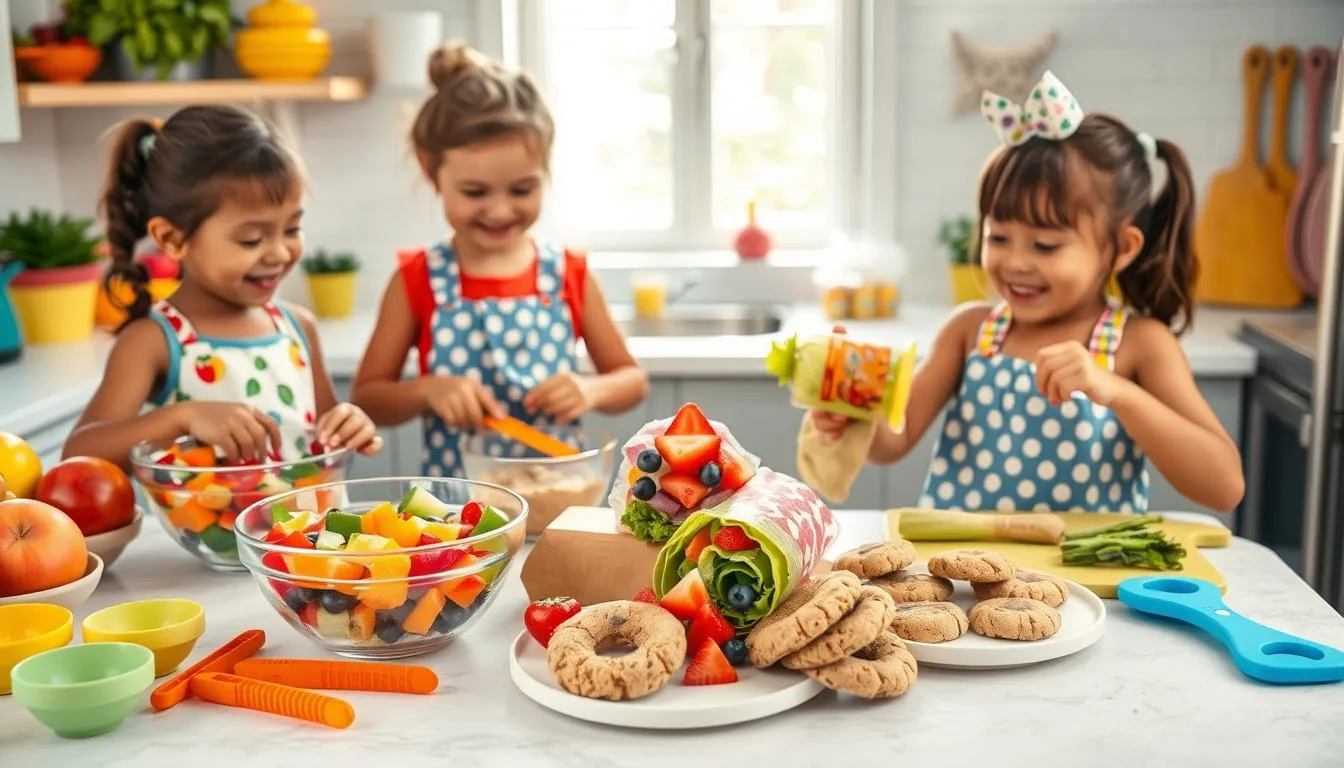
Easy Recipes For Kids With No Heat
Summertime is the best time for kids to help in the kitchen. Recipes for kids with no heat are perfect for this. They’re cool, fun, and let kids show off their cooking skills. Kids can make everything from fruit kabobs to their own sandwiches.
Key Takeaways
- Discover a variety of no-heat recipes that are perfect for kids to make on their own or with minimal adult supervision.
- Explore the benefits of engaging kids in the kitchen, including building confidence, developing life skills, and creating tasty snacks.
- Find inspiration for healthy, delicious, and kid-friendly summer meals that don’t require the use of a stove or oven.
- Learn tips for ensuring kitchen safety and making the cooking experience fun and engaging for children.
- Encourage your kids to get creative and take ownership of their meals by providing them with a variety of no-heat recipe options.
Table of Contents
Introduction to No-Heat Cooking Ideas
Explore a world of cooking without heat! No-bake recipes and cold dishes are safe and fun for kids. They can make everything from fruit salads to creamy desserts.
Benefits of No-Heat Recipes
No-heat cooking is great for families. It’s easy to make and safe, with no hot stoves or ovens. Plus, many dishes stay healthy and tasty.
Engaging Kids in the Kitchen
Getting kids to help in the kitchen is good for them. No-heat recipes let them mix, assemble, and try new things. It’s a fun way to learn about food.
Using air fryers or slow cookers makes no-heat cooking easy. It’s a great way to make meals fun for your kids.
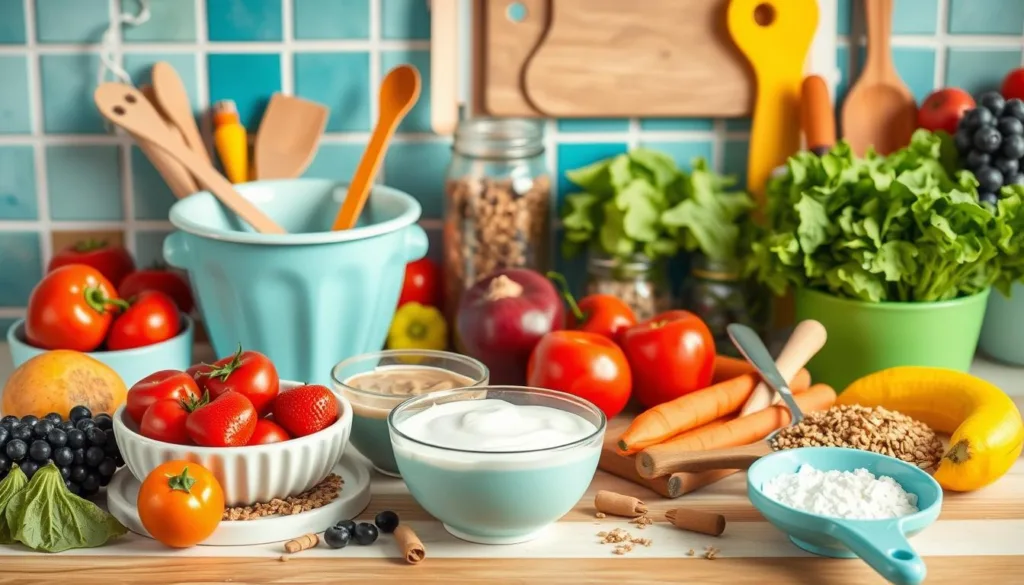
Fun and Healthy Snacks
Give your kids tasty and healthy snacks that don’t need the oven. They can make fun fruit kabobs, colorful veggie wraps, and yummy yogurt parfaits. These recipes are easy and fun, helping them learn to cook and eat well.
👶 Baby Feeding Essentials Parents Love
These are popular, parent-approved items that make this easier and less stressful.
Makes smooth purees fast and saves cleanup time.
👉 Check Price on AmazonPerfect for storing meals safely in the fridge or freezer.
👉 See on AmazonGentle on gums and easy for first feeds.
👉 View on AmazonFruit Kabobs for Creative Eating
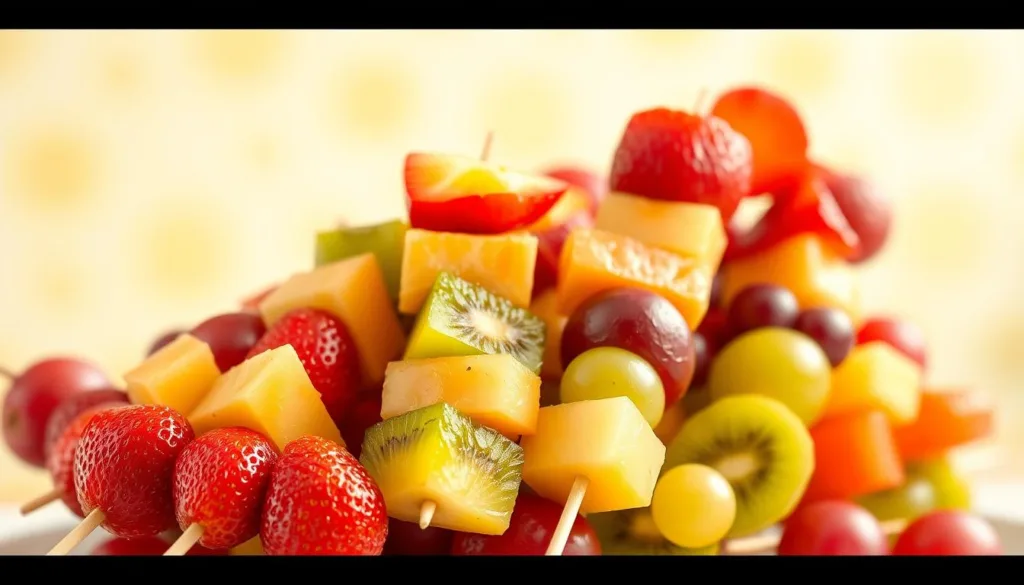
Kids enjoy making their own food, especially fruit kabobs. Choose fresh fruits like strawberries, grapes, and pineapple. Let them create their own kabobs and enjoy with cinnamon-spiced yogurt dip.
Veggie Wraps with Cream Cheese
Try veggie wraps for a tasty, no-bake snack. Spread cream cheese on a tortilla, add carrots, cucumbers, and bell peppers. Roll it up and cut into pieces for a healthy snack.
Yogurt Parfaits to Make Together
Make yogurt parfaits together. Start with Greek yogurt, then add berries, granola, and honey. Let them choose toppings for a fun, healthy treat.
| Nutrition Facts | Per Serving |
|---|---|
| Calories | 350 kcal |
| Carbohydrates | 33g |
| Protein | 12g |
| Fat | 19g |
| Saturated Fat | 8g |
| Fiber | 4g |
| Sugar | 10g |
The NHS suggests 100-calorie snacks, no more than two a day. Watch the salt, sugar, and fat in these recipes for a healthy diet.
Easy No-Heat Lunch Options
Packing a tasty and healthy lunch for your kids doesn’t mean you have to cook all day. Introduce them to no-heat recipes for kids that are easy, fun, and great for eating on the go. Try making DIY sandwiches or cold pasta salads. These fun food projects for kids will make lunchtime fun and keep them full.
DIY Sandwiches: Kids’ Choice
Start a DIY sandwich bar and let your kids make their own. Offer different breads, meats, cheeses, and veggies. Encourage them to mix and match to find their favorite flavors. This way, they learn to cook and enjoy what they make.
Cold Pasta Salad Creations
Pasta salads are a great no-heat lunch for kids. Mix cooked pasta, veggies, and a simple dressing for a tasty meal. Try a Rainbow Pasta Salad to add color and extra veggies to their lunch.
No-Heat Quesadillas for Quick Meals
Quesadillas are a quick and tasty lunch that kids love. Just layer tortillas with chicken, beans, cheese, and toppings. Then, wrap them up and pack them in their lunchbox for a no-cook meal.
These recipes for kids with no heat offer tasty and easy lunches that keep kids happy and focused all day. Enjoy the ease of no-cook meals and watch your kids’ creativity grow in the kitchen.
Delicious No-Cook Breakfasts
Mornings can be busy, but breakfast doesn’t have to be hard. Explore the fun of no-cook breakfasts that are both healthy and tasty. Try making customizable overnight oats or vibrant smoothie bowls. These easy recipes will make your kids look forward to breakfast.
Overnight Oats: Customize Your Way
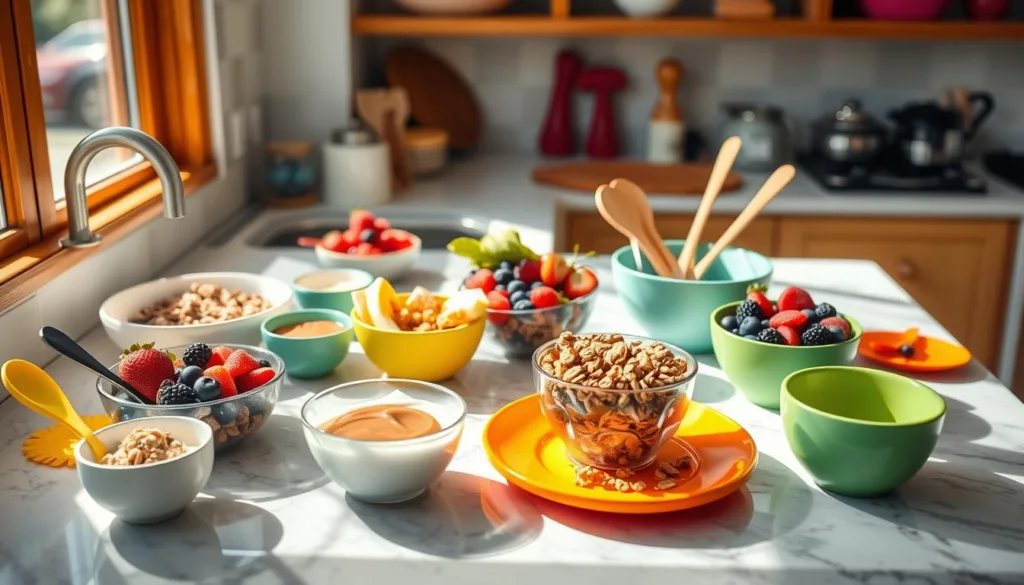
Overnight oats are perfect for quick mornings. Just mix oats, milk, yogurt, and toppings the night before. In the morning, you’ll have a delicious, no-heat breakfast ready.
The best part of overnight oats is how you can make them your own. Let your kids pick their favorite toppings like fruit, nut butters, or honey. This way, they get to enjoy a breakfast that’s just right for them.
Smoothie Bowls for a Colorful Start
Smoothie bowls are a tasty and healthy way to start the day. Blend frozen fruit, yogurt, and a bit of milk or juice for a creamy base. Then, let your kids get creative with fresh fruit, nuts, and other toppings.
Smoothie bowls are not only delicious but also fun to make. The colorful toppings and hands-on process make it a great way to encourage healthy eating.
By trying these no-cook breakfast ideas, you can make mornings easier. You’ll also help your kids learn to make their own healthy meals. Enjoy the ease of no-bake recipes and watch your kids grow to love cooking and eating nutritious food.
👶 Baby Feeding Essentials Parents Love
These are popular, parent-approved items that make this easier and less stressful.
✅ Microwave Popcorn Popper
Makes smooth purees fast and saves cleanup time. 👉 Check Price on Amazon
✅ Snapware Fridge-to-Microwave Food Storage
Perfect for storing meals safely in the fridge or freezer. 👉 See on Amazon
✅ Tiny Cups
Gentle on gums and easy for first feeds. 👉 View on Amazon
Sweet Treats Without the Oven
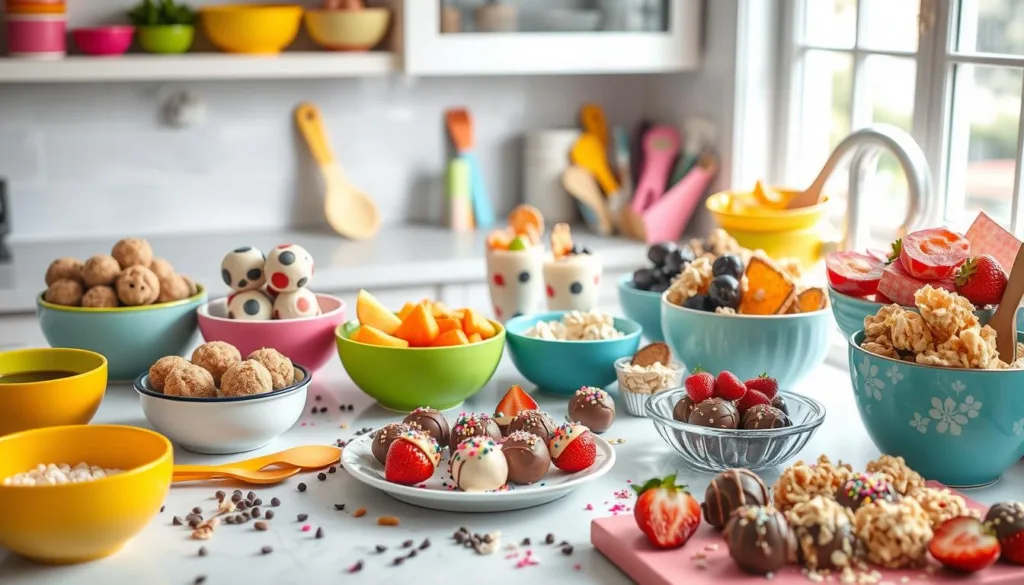
This summer, treat yourself to no-bake recipes that everyone will love. Enjoy no-bake energy bites, chocolate-covered pretzels, and fruit dips. These treats are easy to make and don’t need an oven. It’s a fun way to beat the heat and make yummy food together.
No-Bake Energy Bites
These snacks are full of good stuff like peanut butter, oats, and honey. They’re healthy and tasty, making them great for kids. Just mix, shape, and chill for a quick snack.
Chocolate-Covered Pretzels
Try the salty-sweet mix with homemade chocolate-covered pretzels. Coat pretzel rods or twists in melted chocolate. Let them cool for a tasty treat to share.
Decadent Fruit Dips
Make your fruit even better with creamy dips. Create a chocolate-hazelnut dip, a tangy lemon cheesecake dip, or a sweet cinnamon-spiced apple dip. They’re perfect with fresh fruits.
Creative Classroom Snacks
Packing snacks for school can be fun and healthy. Try making trail mix or cucumber sandwiches. These snacks are easy to make and keep kids happy all day.
DIY Trail Mix Combinations
Let your kids make their own trail mix. Use nuts, dried fruit, cereal, and seeds. They can pick their favorite ingredients for a tasty treat.
Pretzel and Cheese Stacks
Pretzel and cheese stacks are a quick, protein-rich snack. Layer pretzel crisps with cheese. Kids enjoy the mix of textures and tastes.
Cucumber Sandwiches for Freshness
Give your child a refreshing cucumber sandwich. Spread cream cheese or hummus on bread, then add cucumber slices. It’s a hydrating and crunchy snack.
No-Heat Party Foods
Hosting a fun party without cooking all day is a breeze with these creative no-bake recipes for children. Try mini pita pizzas or fruit and cheese platters. These fun food projects for kids are tasty and easy to make, without heating up the kitchen.
Mini Pita Pizzas: Let’s Build!
Turn mini pitas into mini pizzas that kids can make themselves. Offer toppings like cheese, peppers, and olives. It’s a fun, healthy snack that’s easy to make.
Fruit and Cheese Platter Fun
A fruit and cheese platter is a hit at any party. Mix fresh fruits like grapes and berries with cheese cubes. Add wooden skewers for a fun twist. It’s a simple yet delicious choice for everyone.
Colorful Veggie Cups with Dips
Set up a veggie cup station with dips for a healthy snack. Use carrot, celery, and cucumber sticks with hummus or ranch. It’s a colorful, tasty option that promotes healthy eating.
Engaging Kids in Healthy Choices
Teaching kids to eat healthy is a fun challenge. It helps them make good food choices for life. By letting them help in the kitchen, you spark their interest in no-heat recipes. They can make colorful fruit salads and fun snack mixes.
These activities make kids excited about healthy foods. They get to see and touch different foods. It’s a great way to teach them about nutrition.
Making Colorful Fruit Salads
Fruit salads are a tasty way to introduce kids to new fruits. Let them pick and chop fruits like berries, apples, and pineapple. They can make the salad look pretty, which makes them happy.
This also teaches them about the natural sweetness and colors of fruits. It’s a fun way to learn about healthy eating.
Crafting Your Own Snack Mix
Snack mixes are a great choice for kids to make in the kitchen. They can mix nuts, seeds, dried fruits, and cereals. It’s a fun way to learn about flavors and textures.
It also teaches them about balanced nutrition and how to control portions. This is a valuable lesson for kids.
By letting kids make these no-heat recipes, you’re teaching them a lot. They learn to cook, appreciate healthy food, and develop important skills. These activities are not just fun but also educational.
Tips for Kitchen Safety
When cooking with kids, safety is key. It’s fun and rewarding to involve them in the kitchen. But, it’s crucial to keep them safe while cooking. Follow a few simple steps to make a safe and fun cooking space for kids.
Keeping It Fun and Safe
First, teach kids to wash their hands well. Use soap and warm water before touching food or utensils. This stops germs and keeps the kitchen clean.
Always watch kids closely in the kitchen. You want them to help, but also keep an eye on them. As they get better, let them try more things.
Essential Utensils for Kids
- Give them small tools like plastic knives, spoons, and measuring cups. It makes cooking fun and less scary.
- Give oven mitts or potholders to handle hot dishes safely.
- Use cutting boards to keep their fingers safe from sharp blades.
Focus on safety and the right tools for a fun cooking space. This way, you bond with your kids and teach them about child-friendly no-cook meals and safe cooking fun.
Conclusion: Enjoying Time in the Kitchen
Engaging kids in the kitchen with no-heat recipes is rewarding. It’s fun and educational for the whole family. You can make colorful fruit kabobs or yogurt parfaits, opening up endless possibilities.
Sharing Recipes with Friends
Don’t hide your favorite no-heat recipes! Share them with friends and family. You could make a family cookbook or host a recipe-swapping party. This way, you inspire others to cook with their kids.
Encouraging Creativity in Cooking
Encourage your kids’ creativity and independence in cooking. Give them tools to try new flavors and textures. Celebrate their cooking, no matter how simple.
This way, you help them develop a lifelong love for cooking. You’ll be supporting their curiosity and problem-solving skills. They’ll enjoy cooking for years to come.
FAQ
What are the benefits of no-heat cooking for kids?
No-heat cooking is safe and easy for kids. It lets them be creative and independent in the kitchen. They learn important life skills without worrying about heat.
How can I involve my child in no-heat cooking?
There are many ways to get your child involved. They can help make sandwiches, toss pasta salads, or create yogurt parfaits. These activities help them explore their interests and feel accomplished.
What are some easy, no-heat snack ideas for kids?
Some tasty no-heat snacks for kids include fruit kabobs with cinnamon yogurt dip. They also enjoy veggie wraps with cream cheese and customizable yogurt parfaits. These snacks are healthy and fun for kids to make.
Can I make no-heat lunch options for my child?
Yes, you can! No-heat lunches for kids include DIY sandwich stations and cold pasta salads. You can also make no-heat quesadillas. These meals are easy for kids to prepare and require some creativity.
What are some no-cook breakfast ideas for children?
No-cook breakfasts for kids are easy and delicious. Try overnight oats or smoothie bowls. Kids can add their favorite toppings and mix-ins, making each bowl unique.
Can I make no-bake desserts and sweet snacks with my child?
Yes, kids can help make many no-bake treats. Try making energy bites with peanut butter and oats, or chocolate-covered pretzels. Fruit dips are also a hit. These recipes are simple and let kids be creative.
What are some no-heat snack ideas for school?
For school snacks, consider customizable trail mix, pretzel and cheese stacks, or cucumber sandwiches. These snacks are easy to pack and offer a variety of flavors and textures.
How can I involve my child in creating no-heat party foods?
For no-heat party foods, kids can help with mini pita pizzas, fruit and cheese platters, or veggie cups with dips. These activities let kids be creative and enjoy their work.
How can I encourage my child to make healthier food choices?
Engage your child in making colorful fruit salads or designing snack mixes. This introduces healthy ingredients in a fun way. It helps kids develop a positive view of healthy eating.
What are some tips for kitchen safety when cooking with kids?
Teach kids about hand washing, safe food handling, and using the right utensils. Always supervise them and gradually introduce more tasks as they become more confident and skilled. This ensures a safe and fun cooking experience.
External Resources for Further Reading
Easy Snacks Children Can Make Without Use of Equipment
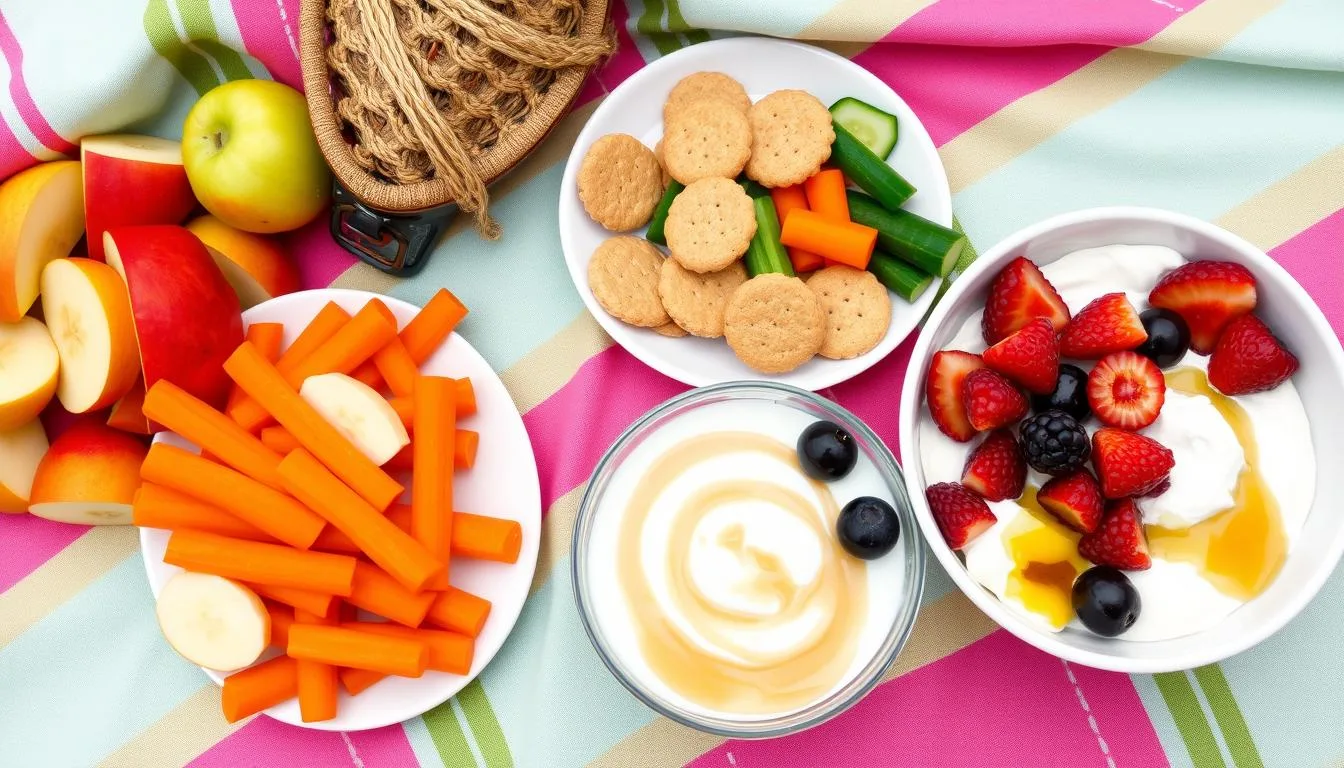
As parents, we’re always on the lookout for simple, healthy snacks our kids can make. Luckily, there are many tasty no-bake snacks that don’t need any special equipment. These snacks help kids become independent and creative in the kitchen. They also teach them to eat healthily from a young age.
Looking for a quick snack after school or a fun activity for summer? These snacks children can make without use of equipment, no-bake snacks, and kid-friendly recipes are perfect. Kids can make everything from peanut butter and fruit wraps to yogurt parfaits. The options are endless for easy snacks they can make by themselves.
Key Takeaways
- Discover simple and delicious no-bake snacks that children can prepare independently
- Learn about the benefits of encouraging independence and creativity in the kitchen
- Explore a variety of healthy, kid-friendly recipes that require no special equipment
- Discover how to incorporate learning into snack time for an educational and fun experience
- Get tips for making snacks more appealing and encouraging kids to experiment with flavors
Table of Contents
The Importance of No-Equipment Snacks for Kids
No-equipment snacks are great for kids to learn on their own and get creative. They help kids try new tastes and textures. This way, they learn about food and feel confident in the kitchen.
Encouraging Independence and Creativity
When kids make their own healthy snack ideas, they feel more in control. They get to try out new after-school treats and simple ingredients. Making snacks also lets them be creative, mixing flavors and styles.
Building Healthy Eating Habits
Making snacks helps kids understand and love healthy foods. This hands-on learning can lead to lasting healthy eating habits. Research shows kids eat better if they have healthy snacks at home, like fruit, pretzels, popcorn, and bagels.
“Studies have shown that children whose parents involve them in food-related activities, such as reading food labels and trying out new foods, tend to make healthier food choices.”
Preparing snacks also makes kids proud and more likely to choose healthy options. This can greatly improve their health and happiness.
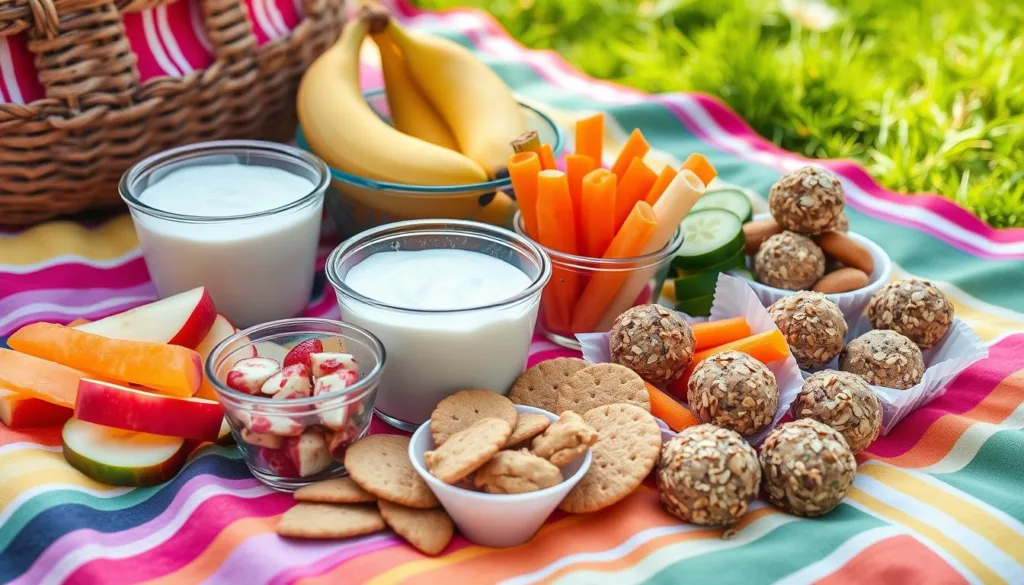
Fun No-Equipment Snack Ideas
Forget the complicated recipes and extensive prep work – these no-cook snacks are perfect for kids to make on their own! From nut butter and fruit wraps to customizable trail mix, these tasty treats require minimal ingredients and no equipment, making them a breeze for little chefs to whip up. Get ready to unleash your child’s creativity in the kitchen with these fun, kid-friendly recipes.
Nut Butter and Fruit Wraps
Spread your favorite nut butter – be it peanut, almond, or cashew – onto a whole-grain tortilla or flatbread. Top it with sliced bananas, apple rings, or fresh berries. Roll it up for a portable, no-cook snack that’s packed with protein and fiber. Let your kids customize their wraps with different fruit combinations and a drizzle of honey for a touch of sweetness.
Trail Mix with a Twist
Classic trail mix is a crowd-pleaser, but why not mix it up? Encourage your kids to get creative by adding their favorite fun food crafts like mini pretzels, roasted chickpeas, dried mango, or toasted coconut flakes. Store the mix in an airtight container for easy no-cook snacks on the go.
Avocado and Crackers Delight
Slice open a ripe avocado and let your little ones mash it up with a fork. Spread the creamy avocado onto whole-grain crackers for a delicious and nutritious no-cook snack. Sprinkle with a pinch of salt, pepper, or even a dash of lemon juice for an extra flavor boost.
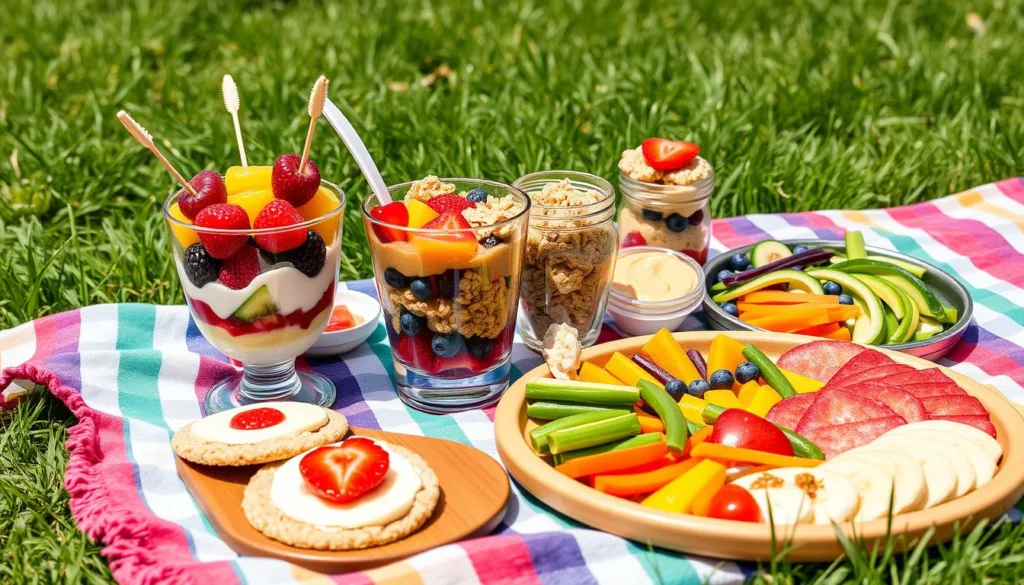
“Encouraging kids to get involved in the kitchen is a great way to foster their independence and creativity. These no-equipment snacks are the perfect starting point for young chefs to explore and experiment with healthy, tasty ingredients.”
Sweet No-Equipment Snacks
Goodbye to hard recipes and hello to fun, no-bake snacks. Kids can make these easy treats by themselves. They can make creamy yogurt parfaits, colorful fruit salads, and chocolate-dipped pretzels. These snacks are both healthy and yummy.
Yogurt Parfaits with Granola
Layer Greek yogurt, fresh berries, and crunchy granola in a clear glass or jar. This makes a healthy and pretty snack. Kids can make fun patterns with it. The mix of yogurt, fruit, and granola is a hit.
Fruit Salad Fun
Let kids chop up fruits like watermelon, pineapple, and grapes. They can make fun shapes with the fruit. This turns a simple salad into a fun snack.
Chocolate-Dipped Pretzels
Dip pretzels in melted chocolate for a sweet treat. Kids can add toppings like nuts or sprinkles. This snack is easy to make and loved by all.
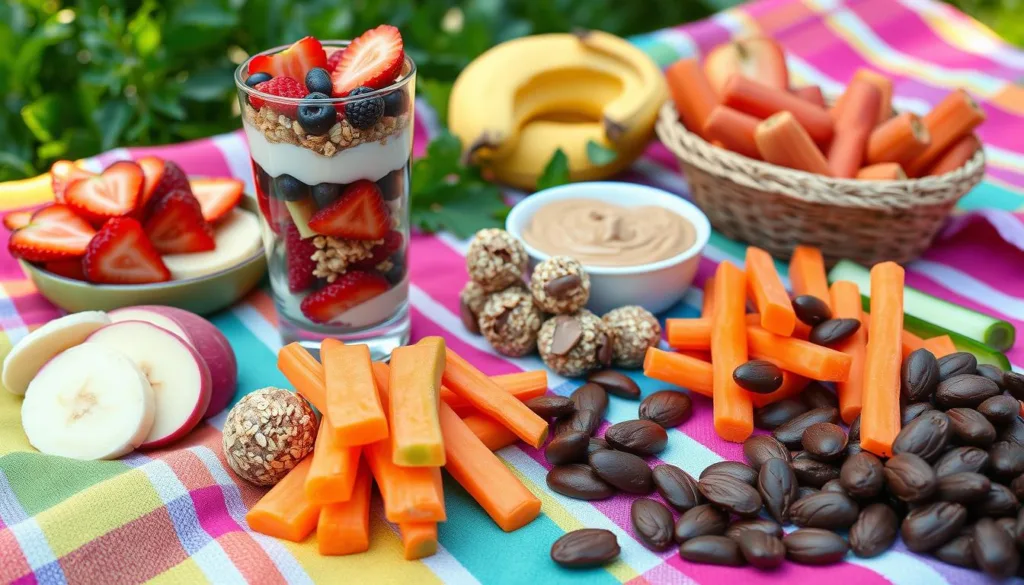
These snacks are not only tasty but also good for kids. They help kids learn to make healthy choices. Encourage them to keep exploring and making fun snacks.
Savory No-Equipment Snack Options
Savory snacks can be just as fun as sweet ones for kids. You can make tasty, healthy snacks with simple ingredients. Here are some no-equipment snack ideas that kids will enjoy.
Cheese and Veggie Stackers
Let your kids build their own cheese and veggie stackers. Offer sliced cheeses and veggies like carrots, cucumbers, and bell peppers. They can make their own mini snacks, teaching them about healthy eating.
Hummus and Pita Chips
Hummus is a great dip for pita chips, packed with protein. Try different hummus flavors like classic or roasted red pepper. Let your kids add veggies to make their own tasty dips.
Ants on a Log
“Ants on a log” is a favorite snack for kids. Spread peanut butter or cream cheese on celery, then add raisins or dried fruit. It’s a healthy snack that’s easy to make.
Getting your kids involved in making snacks makes them more fun. Let them try new flavors and find their favorites.
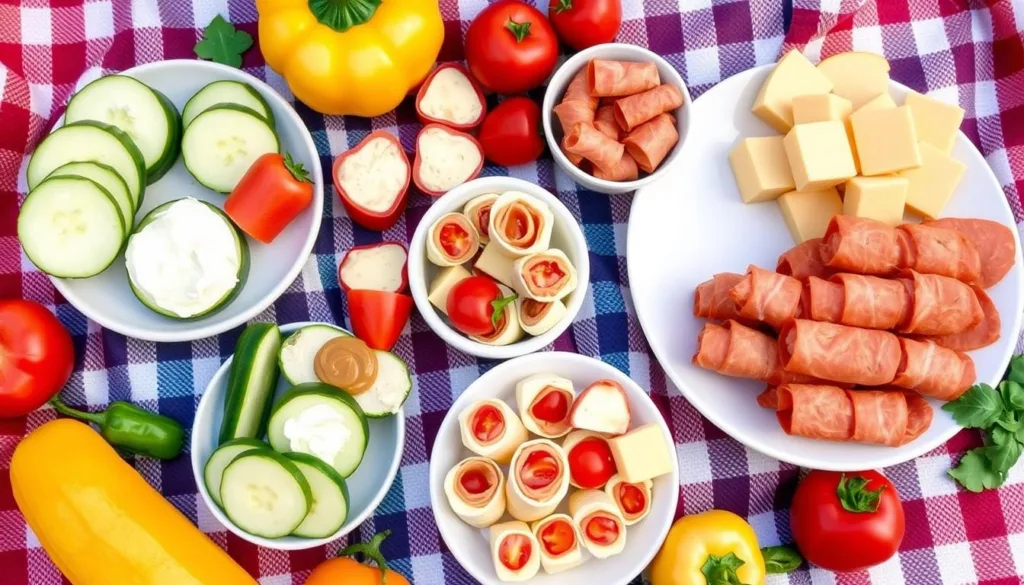
Seasonal No-Equipment Snack Suggestions
As the seasons change, so does the fresh produce we have. Explore seasonal snack ideas that kids can make without any special equipment. This way, you can enjoy the best of each season.
Summer Berry Cups
Summer is sweet, and so are berry cups. Let your kids layer strawberries, blueberries, and raspberries in small cups or jars. Add a dollop of whipped cream or crushed graham crackers for a refreshing treat.
Autumn Apple Nachos
As leaves change, bring fall flavors to snack time with apple nachos. Slice crisp apples and arrange them on a plate. Let your kids drizzle caramel sauce and sprinkle with nuts, cinnamon, or coconut. This snack celebrates the season’s harvest.
Seasonal snacks let kids connect with nature and make their own treats. Encourage them to add their favorite toppings to berry cups and apple nachos. This makes them feel proud of their creations.
Using Leftovers for No-Equipment Snacks
Looking at leftovers can change the game for easy, kid-friendly snacks. By using extra food, you can make tasty no-equipment snacks. These snacks not only cut down on waste but also spark your kids’ creativity in the kitchen.
Creative Sandwiches
Turn leftover meats like turkey, chicken, or smoked salmon into tasty sandwiches. Add your child’s favorite spreads, like hummus or cream cheese. Then, add crisp veggies for a healthy and tasty snack. Let your kids try out different flavors, from peanut butter and banana to chocolate and banana.
Veggie Rolls from Last Night’s Meal
Leftover roasted veggies are great for veggie rolls. Just roll up bell peppers, zucchini, or carrots in whole-grain tortillas or pita bread. Add a dip like ranch or tzatziki to make it more fun.
Getting your kids involved in using leftovers is good for them. It teaches them to be independent and creative in the kitchen. Encourage them to try new flavors and ways to present snacks. This makes snack time fun and exciting.
“Even picky eaters enjoyed sammies combining peanut butter, chocolate, and bananas.”
Snack Safety Tips for Kids
When making snacks children can make without use of equipment, safety is key. Teach kids about common allergens and the need for hand washing and clean kitchens. This helps them stay safe while making healthy snack ideas.
Avoiding Allergens
Tell your kids about common food allergies like nuts, dairy, and gluten. Teach them to read labels and avoid cross-contamination. Make sure they know to steer clear of utensils or surfaces with allergens.
Supervision and Cleanliness
- Watch over younger kids when they use utensils like butter knives.
- Teach them to wash hands before and after making snacks.
- Encourage them to clean surfaces and utensils well to stop germs.
By focusing on safety and cleanliness, you help kids enjoy making their own healthy snack ideas. A bit of guidance makes their kitchen time safe and fun.
Healthy Ingredient Alternatives
We all want our kids to eat well from a young age. Introduce them to healthy snack ingredients. Instead of sugary treats, choose better options.
Choosing Whole Grains
Whole grains are great for snacks. They have more fiber and nutrients than refined foods. Try whole-grain crackers or no-bake granola bars for a nutritious snack.
Selecting Natural Sweeteners
Natural sweeteners like honey or bananas are better than sugar. They add flavor and nutrients. Use them in yogurt parfaits or energy bites for a healthier snack.
Teach your kids to choose healthy snacks. This helps them make good choices and enjoy eating well. Start small and let them help pick new snacks.
| Ingredient | Nutritional Benefits |
|---|---|
| Whole Grains | More fiber, vitamins, and minerals compared to refined grains |
| Natural Sweeteners (Honey, Maple Syrup, Mashed Bananas) | Provide additional nutrients and a healthier alternative to refined sugar |
| Nuts | High in healthy fats, fiber, and antioxidants |
| Dairy Products (Cheese, Full-Fat Yogurt) | Contribute to a child’s nutritional requirements for calcium, magnesium, and vitamins A and D |
| Raisins | Rich in iron, which is beneficial for transporting oxygen throughout the body |
| Avocados | Provide heart-healthy fats, fiber, folate, and vitamins C and K |
| Sweet Potatoes | One of the richest sources of beta-carotene |
| Pickles | Good source of vitamin K and can contain probiotic bacteria |
| Kale | Superfood rich in vitamins A, C, and K |
| Hummus | Creamy spread made from chickpeas |
By using healthy ingredients, you teach your kids about good choices. They’ll learn to love healthy snacking with simple ingredients. This fuels their growth and keeps them healthy.
Making Snacks More Appealing
Make healthy snacks more fun for kids by adding a creative twist. Use fun shapes and bright colors to grab their attention. Try cutting fruit or cheese into shapes with cookie cutters or make veggie designs on a plate.
Introduce themed snack days like “Rainbow Tuesday” or “Finger Food Friday.” It keeps kids excited about eating healthy.
Fun Shapes and Colors
Use presentation to make snacks more appealing. Cut fruit, cheese, or crackers into fun shapes with cookie cutters. Create a colorful plate with sliced bell peppers, carrot sticks, and grape tomatoes.
There are countless ways to make fun food crafts and kid-friendly recipes that kids will love.
Themed Snack Days
Make snack time exciting with themed days. “Tropical Tuesday” could have pineapple, mango, and coconut. “Fruity Friday” might be a colorful fruit salad.
Let kids help pick themes and come up with snack ideas. These themed easy snacks make mealtime fun.
By making snacks look good and adding themed days, kids will enjoy trying new fun food crafts and kid-friendly recipes. The more they get involved, the better they’ll eat for life.
Incorporating Learning into Snack Time
Snack time is more than just eating. It’s a chance for kids to learn too. By adding math and science to snacks, you make it fun and educational.
Math with Measuring Ingredients
Get your kids to help with measuring snacks. They can measure out trail mix or fruit slices. This helps them learn about fractions and measuring.
Ask them to compare amounts and guess how many apple slices will fit on a plate. It’s a great way to practice math.
Science with Food Reactions
Snack time can also teach science. For example, when you slice an apple, it turns brown. But adding lemon juice stops this.
Ask your kids to watch and guess what will happen next. It’s a fun way to learn about science.
By making snacks educational, you feed their minds and bodies. You spark their curiosity and help them solve problems. All through making snacks children can make without use of equipment and kid-friendly recipes.
Encouraging Kids to Experiment
It’s important to help kids become creative and adventurous in the kitchen. Encourage them to try easy snacks, fun food crafts, and kid-friendly recipes. Let them explore new flavors and ways to present food.
Flavor Combinations to Try
Encourage kids to think outside the box when it comes to food. Suggest trying new and tasty combinations like:
- Apple slices with cheddar cheese
- Cucumber slices with hummus
- Banana with a sprinkle of cinnamon
- Bell pepper strips with ranch dressing
Fun Presentation Styles
Make snacks fun by turning them into art. Teach kids to:
- Make faces on rice cakes using vegetable toppings
- Create “sushi rolls” with tortillas and various fillings
- Arrange fruit skewers in playful patterns
- Assemble veggie-topped crackers into mini-sculptures
Always praise their creativity and hard work. This will make them more confident and eager to try new things. With a bit of imagination, easy snacks, fun food crafts, and kid-friendly recipes can be a fun journey in the kitchen.
Hosting a No-Equipment Snack Party
Hosting a no-equipment snack party is a fun way to boost kids’ creativity and help them bond over healthy food. Set up different stations with fresh ingredients. Let kids make their own snacks without needing special cooking tools.
Menu Ideas for Group Snacking
Start with a build-your-own parfait bar. Kids can layer Greek yogurt, granola, and colorful fruits like berries and kiwi. Another hit is a trail mix station where they can mix nuts, seeds, and dried fruit.
For something savory, offer crunchy veggies like carrot sticks and bell pepper strips. Serve them with creamy hummus and zesty guacamole for dipping.
Games and Activities to Pair with Snacks
Make snack time more fun with games and activities. Try a “guess the ingredient” contest where kids identify snack parts by sight, smell, and taste. You can also have a contest for the most creative snack presentation.
These games help kids solve problems, build community, and make snack time unforgettable.
FAQ
What types of no-equipment snacks can children make?
Kids can make many tasty snacks without any cooking tools. They can make nut butter and fruit wraps, trail mix, and avocado and cracker toppings. They can also make yogurt parfaits, fruit salads, cheese and veggie stackers, and hummus with pita chips.
How do no-equipment snacks promote independence and creativity in children?
Making their own snacks helps kids feel independent and confident in the kitchen. It also lets them be creative with different flavors and how they present their snacks.
What are the benefits of children making their own healthy snacks?
Making their own snacks helps kids develop healthy eating habits and understand nutrition better. It also teaches them important skills like measuring and following recipes.
How can parents make no-equipment snacks more appealing to kids?
Parents can make snacks more fun by making shapes and using bright colors. They can also have themed snack days and encourage kids to be creative with their snacks.
What safety considerations are important when children prepare their own snacks?
It’s key to teach kids about allergens and the importance of cleanliness. They should learn to use utensils properly and wash their hands. Parents should watch over younger kids while they snack.
How can no-equipment snack preparation be turned into a learning opportunity?
Snack making can teach kids about math and science. They can learn about fractions and measurements, and even simple food science.
What are some ways to encourage children to experiment with their snacks?
Parents can encourage kids to try new flavors and presentation styles. Praising their creativity and efforts can help them feel more confident in the kitchen.
How can a no-equipment snack party be organized?
A snack party can have stations for kids to make their own parfaits, trail mixes, or veggie dippers. Fun games like “guess the ingredient” can add to the fun.
External Resources for Further Reading
Best Chapter Books for 1st Graders to Begin Reading
As your child starts their reading adventure, chapter books are key. They are longer and more complex than picture books. This helps 1st graders move to more exciting and meaningful stories.
Chapter books have short chapters, simple words, and pictures to help them understand. They are great for growing your child’s love for reading and sparking their creativity.
Key Takeaways
- Chapter books for 1st graders provide a step up from picture books, with longer stories and more complex plots.
- These books often feature short chapters, easy-to-understand language, and illustrations to support comprehension.
- Popular series like Owl Diaries, Frog and Toad, and Dragon Masters are excellent choices for young readers.
- Chapter books help develop essential reading skills, such as vocabulary, focus, and listening comprehension.
- Introducing chapter books early encourages a lifelong love of reading and exploration
Table of Contents
Introduction to Chapter Books for Young Readers
Chapter books are a fun bridge between picture books and novels. They have short chapters and lots of pictures, perfect for first-graders. These books help kids get better at reading and love stories more.
Switching from picture books to chapter books is exciting for first-graders. These stories have characters and plots that grab kids’ attention. They make reading fun and not too hard.
Reading chapter books helps kids become more confident and skilled. It’s a great way to start loving books even more. Chapter books are like a doorway to a world of stories.
“Chapter books are the perfect stepping stone for young readers, allowing them to dive into captivating stories while building essential literacy skills.”
If your first-grader wants to start reading chapter books, there are many great ones out there. They’re a great way to introduce them to longer stories.
Benefits of Chapter Books for 1st Graders
Chapter books are a big step up from picture books for 1st graders. They offer many benefits for early elementary reading skills. These simple chapter stories and transitional chapter books are key in shaping young readers.
Encouraging Early Reading Skills
Chapter books help 1st graders get better at reading. They learn to read faster, understand better, and keep reading longer. This makes them feel proud as they finish each chapter or book.
Fostering Imagination and Creativity
Chapter books spark kids’ imaginations with their stories and characters. Series like “Katie Woo” and “Charlie & Mouse” make stories relatable. They help kids understand others better.
Building Vocabulary and Comprehension
Chapter books introduce new words and stories. This helps 1st graders learn more words and understand stories better. They get to keep more of what they read.
“Chapter books are a game-changer for young readers, opening up a world of adventure and self-discovery.”
Chapter books do more than just help with reading. They also help kids love reading for life. This sets them up for success in reading as they grow older.
How to Choose the Right Chapter Book
Finding the perfect first chapter book for your child can be fun but challenging. It’s key to think about what they like, their reading level, and the book’s complexity. This balance can spark their love for reading and help them succeed in chapter books.
Consider Your Child’s Interests
Look at what your child enjoys most. Do they like magical stories, animal tales, or stories about everyday life? Choosing a book that matches their interests can make them more excited to read.
Books like Unicorn and Yeti, The Questioneers, and Mercy Watson are great for early readers. They have fun stories and easy words, perfect for sparking a love for reading.
Assess Reading Levels and Complexity
When looking at chapter book series, think about the book’s reading level and complexity. Look for big print, short sentences, and lots of pictures to help them understand.
Books like The Boxcar Children, Nate the Great, and A-Z Mysteries are great for first-graders. They have reading levels from grades 1-4. This helps your child feel proud of their reading progress.
“The more that you read, the more things you will know. The more that you learn, the more places you’ll go.”
– Dr. Seuss
Choosing the right chapter books is about finding a balance. It’s about matching their interests with their reading level. With some exploration and guidance, you can open a world of reading adventures for your child.
Top Recommended Chapter Books for 1st Graders
As your young reader starts their chapter book adventure, there are many exciting choices. This list includes beloved series and timeless classics. It’s filled with chapter books for 1st graders that will spark their imagination and grow their love for reading.
Series to Explore
- The Owl Diaries by Rebecca Elliott: Charming stories about Eva Owl and her forest friends.
- Dragon Masters by Tracey West: Exciting fantasy adventures featuring brave young dragon riders.
- The Adventures of Sophie Mouse by Poppy Green: Heartwarming tales of friendship and problem-solving.
Standalone Titles Worth Reading
Our Friend Hedgehog: The Story of Us by Lauren Castillo is a beautifully illustrated, heartwarming tale about the power of friendship. For easy chapter books that offer both humor and meaningful messages, check out the Infamous Ratsos series by Kara LaReau.
Classic Choices That Endure
Timeless classics like the Frog and Toad stories by Arnold Lobel and The Questioneers series by Andrea Beaty continue to engage young readers. They offer relatable characters and valuable lessons. These first grade reading options blend entertainment and education perfectly.
Whether your child loves whimsical adventures, heartwarming friendships, or classic tales, this selection has something for everyone. It provides a wealth of opportunities to nurture their love of reading and support their early literary journey.
Engaging Your Child with Chapter Books
Switching from picture books to chapter books is a big step for kids. It’s important to make this change fun and engaging. Create a cozy reading spot and talk about the books to help your child enjoy simple chapter stories.
Reading Together as a Bonding Activity
Reading aloud to your child is a great way to bond. Choose a special time each day to read together. Use different voices and actions to make the story come alive.
Ask your child to guess what happens next or share their thoughts. This makes reading a fun and interactive experience.
Discussion Questions to Spark Conversations
- What was your favorite part of the story and why?
- How did the main character feel in this situation, and how would you have reacted?
- If you could change one thing in the story, what would it be?
- What do you think might happen in the next chapter?
Talking about the books helps your child think critically and understand the story better. These chats also strengthen your bond and encourage a love for books for young readers.
Creating a Cozy Reading Environment
Make a special “reading nook” in your home. It should have comfy chairs, good light, and few distractions. This cozy spot will help your child dive into simple chapter stories.
Add soft pillows, blankets, and a bookshelf to make it inviting. This will encourage your child to enjoy early elementary reading.

By making reading a positive and fun experience, you can help your child love books for young readers. This will prepare them for success in early elementary reading.
Fun Activities to Supplement Reading
Transitional chapter books and first chapter book series are exciting for young readers. But why just read? Add fun activities to make reading better and more fun for your first grader.
Themed Crafts Based on Books
Make stories come alive with crafts inspired by books. For example, after reading Dragon Masters, your child can make a cardboard dragon. They can also design their own mythical creature. These crafts boost creativity, imagination, and connection to the book’s world.
Writing Simple Book Reviews
Encourage your child to write simple book reviews. This improves their writing and helps them share their thoughts on early reader books. They can draw pictures, rate the book, and talk about what they liked or didn’t like.
Book-related Games and Challenges
Play games and challenges tied to transitional chapter books. Try a book-themed scavenger hunt or play vocabulary games with story words. You can also make comprehension questions to check their understanding. These activities make reading fun and help them remember what they’ve learned.
Adding these fun, book-inspired activities to reading can grow your child’s love for first chapter book series. It can also spark a lifelong love for reading.
Addressing Common Challenges in Reading
As your child starts reading chapter books, they might face some challenges. But with your help and the right strategies, they can overcome these hurdles. This will help them love reading more.
Overcoming Reluctance to Read
If your child doesn’t want to read, choose high-interest books that they like. Try series like “The Infamous Ratsos” or books with characters they can relate to, like “Sofia Martinez”. Celebrating their reading wins can make them more eager to read.
Tips for Understanding Difficult Passages
When they find hard parts, tell them to look at pictures and guess words. Break chapters into smaller bits and talk about them. Being patient and supportive is key.
“The key to helping a child overcome reading challenges is to make it a positive and rewarding experience, not a chore.”
By tackling reading challenges with kindness and smart strategies, you can make your child a confident reader. The path might have ups and downs, but with your support and the right tools, they’ll do great.
Encouraging a Love for Reading Beyond 1st Grade
As your child grows, it’s key to keep their love for reading alive. Start introducing chapter books for 1st graders that are a bit more challenging. This helps them build on the reading skills they’ve already learned.
Introducing More Complex Series
Books like The Questioneers or Here’s Hank have harder words and themes. They let your child enter new worlds. These stories help them think more deeply and get ready for even tougher books for young readers later on.
Lifelong Reading Habits to Foster
- Make sure your child reads every day, even just for 10-15 minutes.
- Take them to the library or bookstore often. Let them find new early elementary reading books.
- Talk about the books they’re reading. Ask questions that make them think and connect with the story.
- Show them how much you love reading by sharing your favorite books.
- Try different types of books. This includes fantasy, adventure, realistic stories, and nonfiction. It helps them find what they like and improves their reading skills.
By choosing diverse chapter books for 1st graders and teaching good reading habits, you’re giving your child a great start. They’ll have a lifetime of reading adventures ahead of them.
“The more that you read, the more things you will know. The more that you learn, the more places you’ll go.”
– Dr. Seuss
Conclusion: Start the Adventure with Chapter Books
Chapter books can spark a lifelong love of reading in kids. They bridge the gap between picture books and novels. This helps kids improve their reading skills, vocabulary, and endurance.
Introducing your child to chapter books opens a world of literature. It can inspire a love for reading that lasts long after their early years.
Final Thoughts on Early Reading
Every child’s reading path is different. The goal is to make reading fun and fulfilling. Encourage your child to try various genres, like action-adventure or fantasy.
This way, they can find stories that excite their imagination. With patience and guidance, your child can develop a lifelong love for reading.
Resources for Parents and Caregivers
As you start this reading journey, use the many resources available. Local libraries have great lists for early readers. Educational websites and book blogs offer helpful tips and suggestions.
By staying informed, you can support your child’s reading journey. This ensures they become confident and lifelong readers.
FAQ
What are chapter books for 1st graders?
Chapter books for 1st graders are a big step in learning to read. They have longer stories and more complex plots. This helps kids move from picture books to more challenging reading.
These books have short chapters, simple words, and pictures to help kids understand better.
How do chapter books for young readers differ from picture books?
Chapter books are longer, with 30 to 100 pages. They have short chapters and lots of pictures. This helps kids get used to longer stories and improves their reading skills.
What are the benefits of chapter books for 1st graders?
Chapter books help 1st graders in many ways. They improve reading skills, like fluency and comprehension. They also introduce characters and situations that help kids understand others better.
Reading chapter books helps kids stay focused and feel proud of finishing each chapter or book.
How do I choose the right chapter book for my 1st grader?
When picking chapter books, think about your child’s reading level and interests. Look for books with big print, short sentences, and pictures. Choose books that your child likes to read more.
What are some popular chapter book series for 1st graders?
Some favorite series for 1st graders include Owl Diaries and Dragon Masters. The Adventures of Sophie Mouse and Unicorn and Yeti are also popular. Classic choices like Frog and Toad by Arnold Lobel still excite young readers.
How can I engage my 1st grader with chapter books?
To get your child excited about chapter books, read together. Talk about the story, characters, and themes. This helps them understand and think critically.
Make a cozy reading spot and use different voices for characters. This makes the story come alive.
What activities can I do to supplement my child’s chapter book reading?
To make reading fun, try crafts inspired by the book. Write simple book reviews or play games with new words. These activities help kids understand and enjoy reading more.
How can I address reading challenges with my 1st grader?
If your child struggles with reading, choose books they’re interested in. Use pictures and clues to help them understand. Break chapters into smaller parts if needed.
Always celebrate their reading achievements. This boosts their confidence and love for reading.
How can I encourage a lifelong love of reading beyond 1st grade?
To keep your child loving books, introduce more challenging series as they grow. Make sure they read regularly and see you reading too. Expose them to different genres to keep their interest and skills growing.
External Resources for Further Reading
Baby Shower Food Ideas for a Girl | Sweet Party Treats
Hosting a baby shower for a girl is a fun event that needs a menu full of pink treats. Think about serving finger foods, desserts, and healthy snacks. Use pink and pastel colors to make your food look great and fit the theme.
Don’t forget about food safety and what guests can eat. Have a mix of dishes to please everyone. You can make a big impact with mini cupcakes and fruit skewers. These ideas will make your baby shower for a little girl unforgettable.
Key Takeaways
- Incorporate pink and pastel colors into your food presentation to match the theme of a baby shower for a girl.
- Offer a variety of food options, including finger foods, desserts, and healthy snacks, to cater to different dietary needs and preferences.
- Be mindful of food safety and label dishes to help guests with allergies or dietary restrictions.
- Consider using sturdy tableware and creative food table setups to ensure a smooth and convenient experience for your guests.
- Opt for make-ahead dishes and mess-free foods to ease the preparations on the day of the baby shower.
Table of Contents
1. Stylish and Sweet Themes for Baby Showers
Choosing a theme for a baby shower is key. It sets the mood for the whole event. Themes that include baby themed snacks, feminine finger foods, and pastel colored treats can make the celebration memorable. Here are some stylish and sweet ideas to consider.
Candyland Theme
Take your guests on a sweet journey with a Candyland theme. Decorate with bright balloons, striped straws, and lollipop stands. Offer baby themed snacks like mini cupcakes, cake pops, and pretzels in soft colors. A candy buffet and fun games will make everyone feel like a kid again.
Fairytale Wonderland
Bring magic to your baby shower with a Fairytale Wonderland theme. Use whimsical touches like teacup snacks, flower arrangements, and fine china. Treat guests to pastel colored treats like macarons, small pies, and tiny sandwiches. Guests should dress up to celebrate the new arrival.
Floral Dreamscape
Surround your guests with nature’s beauty in a Floral Dreamscape theme. Decorate with fresh flowers, plants, and nature-inspired decor. Serve baby themed snacks and feminine finger foods with edible flowers, like floral cupcakes and fruit skewers. Guests can make their own bouquets or terrariums.
2. Delicious Finger Foods for Your Celebration
Finger foods are key for a baby shower menu. They let guests move around and enjoy the party without sitting down. You can pick from many tasty options, like baby shower food ideas for a girl and feminine finger foods.
Mini Quiches
Mini quiches are a top pick for baby showers. You can fill them with many ingredients to please everyone. Try a classic with bacon and Swiss or a veggie version with spinach and feta. Plus, they’re easy to make ahead and warm up later.
Caprese Skewers
Caprese skewers are a light and tasty choice. They’re made with mozzarella, cherry tomatoes, and basil. Add a balsamic glaze or pesto for extra flavor. These skewers are a healthy and colorful option for your menu.
Deviled Eggs
Deviled eggs are a must-have at any baby shower. You can spice them up with paprika or cayenne. Or, top them with olives to look like babies in bassinets. They’re easy to make ahead and always a hit.
Offering these baby shower food ideas for a girl and feminine finger foods will make your guests happy. They’ll enjoy tasty bites while celebrating the new baby girl.
3. Creative Desserts to Delight Guests
Desserts are the highlight of any baby shower menu. Wow your guests with pink desserts that match the celebration’s feminine theme. Standout choices include pink velvet cupcakes and strawberry shortcake bites.
Pink Velvet Cupcakes
Give the classic red velvet cupcake a fun twist with pink food coloring. Make these mini cupcakes that everyone will love. Top them with cream cheese frosting and powdered sugar for a fancy yet playful look. These baby shower food ideas for a girl will charm everyone with their bright color and tasty flavor.
Strawberry Shortcake Bites
Try strawberry shortcake bites for a light dessert. Use mini biscuits, fresh strawberries, and whipped cream for a delightful treat. These bites are perfect for a baby shower, offering a mix of flavors and textures.
Adding these pink desserts to your menu will make your baby shower unforgettable. The mini cupcakes and strawberry shortcake bites look amazing and taste even better. They’re sure to make your event a sweet success.
4. Tasty Treats for the Sweet Tooth
Every baby shower needs delicious, pastel treats to please everyone’s sweet tooth. Chocolate-dipped pretzels and berry cheesecake jars are perfect choices. They add a delightful touch to your celebration.
Chocolate-Dipped Pretzels
These treats mix salty and sweet in a fun way. Coat pretzels in melted chocolate and add white chocolate drizzle or pink sprinkles. The mix of chocolate and pretzel is irresistible.
Berry Cheesecake Jars
Layer berries, cheesecake, and graham cracker in jars for a tasty dessert. These bite-sized treats offer a mix of flavors and textures. They’re a hit for any baby shower, especially with their pastel colors.
Adding these treats to your menu will make your guests happy. They’ll enjoy the sweet flavors and create lasting memories for the mom-to-be.
5. Healthy Options for Your Baby Shower
Planning a baby shower menu means adding healthy choices for guests. Veggie platters with colorful veggies and dips are a great pick. For a splash of color, serve fruit skewers with pink and red fruits like watermelon, strawberries, and raspberries.
These options offer a balanced choice and show you care about different diets. With more people wanting plant-based or vegetarian food, these choices are a thoughtful gesture. They show you’re ready to meet various dietary needs.
Veggie Platters with Dips
Set up a platter with fresh veggies like carrot sticks, celery, and cucumber. Pair it with dips like hummus, tzatziki, and ranch. This mix of flavors and textures is sure to delight your guests.
Fruit Skewers
Make colorful fruit skewers with watermelon, strawberries, and raspberries. These skewers are not only pretty but also healthy and refreshing for your guests.
By adding these healthy and vibrant options, you balance fun with nutrition. This ensures all your guests feel well taken care of and happy.
6. Beverages to Include in Your Menu
Planning a baby shower for a baby girl means adding pink drinks to the menu. Consider pink lemonade and sparkling raspberry punch for a sweet touch.
Pink Lemonade
Pink lemonade is a refreshing drink for any baby shower. You can make it by adding strawberry puree or red food coloring to lemonade. It’s a pretty drink that everyone will enjoy.
Sparkling Raspberry Punch
For a fizzy drink, try sparkling raspberry punch. Mix raspberry sorbet, lemon-lime soda, and fresh raspberries. It’s a tasty, pink drink that looks great with your baby shower food ideas for a girl and pink desserts.
These drinks add fun to your baby shower menu. They keep everyone happy and hydrated. Pink lemonade or raspberry punch will make your guests smile.
7. Savory Options That Will Please Everyone
When planning a baby shower menu, it’s key to offer a variety of savory dishes. These foods not only fill bellies but also balance out the sweet treats. Here are some tasty savory choices that will make your guests happy.
Stuffed Mushrooms
Stuffed mushrooms are a great snack for a baby shower. They’re small but full of flavor. Fill mushroom caps with a mix of cream, herbs, and cheese, then bake until they’re golden. These bites are easy to grab and enjoy.
Sliders with a Twist
Mini slider sandwiches are a hit, and you can make them even more special for your baby shower. Add unique toppings like cranberry sauce or apple slaw. This adds a fun twist to a classic favorite. Your guests will love the mix of big flavors in small packages.
| Dish | Prep Time | Cook Time | Servings | Nutritional Value (per serving) |
|---|---|---|---|---|
| Stuffed Mushrooms | 15 minutes | 20 minutes | 24 pieces | Calories: 50, Fat: 3g, Carbohydrates: 4g, Protein: 3g |
| Sliders with a Twist | 10 minutes | 15 minutes | 12 sliders | Calories: 150, Fat: 8g, Carbohydrates: 12g, Protein: 8g |
These savory dishes make sure everyone finds something they like. Whether they’re looking for baby themed snacks or feminine finger foods, there’s something for everyone.
8. Themed Foods for a Gender Reveal
Revealing the gender of a new baby is thrilling. What’s better than celebrating with pastel colored treats? Enjoy blue and pink pudding cups and themed cake pops. These desserts make the moment more exciting and satisfy everyone’s sweet tooth.
Blue and Pink Pudding Cups
Make your guests’ experience fun with blue and pink pudding cups. Layer the pudding in clear cups or jars, switching between colors for a striking look. Add a cute gender-themed decoration on top, like a paper stork or baby onesie. This treat is not only cute but also lets guests join in the fun.
Themed Cake Pops
Surprise your guests with themed cake pops that represent the gender reveal. Make pops in baby shapes, like rattles or onesies, and cover them with pastel colored fondant or royal icing. The bright pink and blue colors make these treats hard to resist and a great match for the event.
Choose between the playful pudding cups or the cute cake pops for your baby shower food ideas for a girl. These treats add sweetness and excitement to your gender reveal party. Enjoy these tasty and beautiful treats as you wait for the big reveal!
9. Fun Snacks to Keep the Energy Up
Planning the perfect baby shower for your little girl? Don’t forget the snacks! Interactive food stations are great for mingling and tasty treats.
Popcorn Bar with Toppings
Set up a popcorn bar for guests to customize. Offer toppings like pink chocolate drizzle, strawberry powder, or savory seasonings. It’s a fun snack that keeps everyone energized.
Trail Mix Station
Make a trail mix station with nuts, dried fruits, and pink candies. Guests can mix their favorite ingredients for a unique snack. It’s a creative way to enjoy different tastes.
These stations will be a hit at your baby shower. They keep guests fueled and engaged. With baby themed snacks and baby shower food ideas for a girl, it’s a memorable experience for all.
10. Easy DIY Food Stations for Guests
Planning a baby shower can be fun with interactive food stations. Guests love making their own food, like tacos or sundaes. These DIY stations make the event memorable and fun.
Build-Your-Own Tacos
Start with a taco station. You’ll need taco shells, fillings like beef and chicken, and toppings like cheese and salsa. This lets everyone make their own taco, matching their taste.
Make-Your-Own Sundae Bar
For dessert, set up a sundae bar. Use pastel colored treats like pink ice cream and toppings like sprinkles. It’s a fun way for guests to enjoy a sweet treat their way.
These DIY stations add fun to your baby shower. They let guests pick what they like, making the event special and enjoyable for everyone.
| DIY Food Station | Ingredients | Benefits |
|---|---|---|
| Build-Your-Own Tacos |
|
|
| Make-Your-Own Sundae Bar |
|
|
11. Essential Tips for Planning Your Food Menu
Planning the perfect baby shower food menu is key. It can make or break the event. Whether it’s a small gathering or a big celebration, choosing the right food is important. Here are some tips to help you plan a menu that will impress your guests.
Choose Seasonal Ingredients
Using seasonal ingredients makes your dishes fresh and flavorful. It also saves money and adds elegance to your menu. Choose from summer berries to autumn vegetables to make your menu vibrant and delicious.
Consider Dietary Restrictions
Think about your guests’ dietary needs when planning your menu. Offer gluten-free, dairy-free, and vegetarian options. Label each dish clearly so everyone can enjoy without worry. This shows you care about your guests’ needs.
By following these tips, you’ll create a menu that delights everyone. Use fresh, seasonal ingredients and consider dietary restrictions. Your baby shower will be a memorable culinary experience that guests will talk about for a long time.
“Creating a memorable baby shower menu is about balancing delicious flavors, vibrant presentation, and thoughtful accommodations for your guests.” – Seeemaa Budhraja, Certified Dietitian and Nutritionist
12. Setting Up the Perfect Food Presentation
Make your baby shower a feast for the eyes with creative plating and beautiful table settings. This will make the food a highlight of the event. It will also add to the overall beauty of the celebration.
Creative Plating Ideas
Impress your guests with unique presentation ideas. Try serving appetizers in mini baby shoes or in the shape of a baby carriage. This adds a playful touch.
Play with layering and stacking to make the food look stunning. These techniques will enhance the feminine theme of your baby shower.
Beautiful Table Arrangements
Turn your serving tables into elegant spots with tiered stands and floral centerpieces. Use color-coordinated tablecloths to tie everything together. Add fresh flowers and greenery for a soft, feminine look.
Include pink or pastel hues to complete the dreamy atmosphere. These details will make your baby shower unforgettable. It will be filled with delicious and beautifully presented food.
FAQ
What are some stylish and sweet themes for a baby shower for a girl?
Themes like Candyland, Fairytale Wonderland, and Floral Dreamscape are popular. They add a magical touch to the event. The food and decor can match the theme, making it memorable for everyone.
What are some delicious finger food options for a baby shower?
Mini quiches, caprese skewers, and deviled eggs are great choices. They’re easy to eat and delicious.
What are some creative dessert ideas for a girl baby shower?
Pink velvet cupcakes, strawberry shortcake bites, and chocolate-dipped pretzels are tasty. Berry cheesecake jars are also a hit.
What are some healthy snack options to include in the menu?
Veggie platters with dips and fruit skewers are healthy choices. They balance out the sweeter treats.
What type of beverages should be served at a girl baby shower?
Pink lemonade and sparkling raspberry punch are refreshing. They fit well with the theme.
What are some savory food ideas for a baby shower?
Stuffed mushrooms and mini sliders with unique toppings are great. They cater to different tastes.
How can I incorporate a gender reveal element into the food?
Blue and pink pudding cups or themed cake pops are fun. They add excitement to the reveal.
What are some fun, interactive food stations to set up?
A popcorn bar, trail mix station, build-your-own taco station, and make-your-own sundae bar are interactive. They encourage mingling and offer energy-boosting snacks.
What are some tips for planning the food menu for a baby shower?
Choose seasonal ingredients and consider dietary restrictions. Clearly label all foods for a positive experience.
How can I elevate the food presentation at the baby shower?
Use creative plating and beautiful table arrangements. This makes the food display a highlight of the celebration.
External Resources for Further Reading
How to Write the Perfect Baby Shower Thank You Message
Welcoming a new baby is a joyous time. Showing thanks to those who support and gift you is key. Writing heartfelt thank you messages can be a challenge, especially with pregnancy brain. But, it’s all about being sincere and true to yourself.
It’s important to send thank you cards within 2-3 weeks after the shower. This shows your guests that you value their gifts and support. Make sure to mention specific gifts and how they’ve helped you and your family.
Key Takeaways
- Sending timely and personalized thank you messages is essential for acknowledging the support and generosity of your guests.
- Focusing on sincerity and authenticity in your wording is more important than crafting unique or fancy messages.
- Mentioning specific gifts and their impact on you and your family adds a personal touch to your thank you notes.
- Adhering to proper etiquette by sending thank you cards within 2-3 weeks of the shower demonstrates your appreciation.
- Personalization is the key to creating memorable and heartfelt baby shower thank you messages.
Table of Contents
Importance of Sending Thank You Messages
Showing gratitude is key when welcoming a new life. By sending baby shower gratitude messages, parents can bond with those who supported them. These messages show real thanks for the newborn gift acknowledgment and the effort put in by loved ones for the mom-to-be.
Building Relationships with Guests
Thank you messages help build strong bonds with baby shower guests. When guests get a personalized note, they feel seen and valued. This exchange builds a sense of community and belonging, setting the stage for lasting relationships as the new family starts their journey.
Showing Gratitude for Gifts
Gifts, both useful and sentimental, are crucial for a newborn’s arrival. Expressing gratitude for each gift shows the thought and generosity of loved ones. This act not only shows thanks but also makes gift-givers feel their efforts were valued.
Creating Lasting Memories
The baby shower gratitude messages you send will be treasured for years. They keep the memories of this special time alive. Years later, your guests will remember the personal touches and heartfelt words, strengthening the bonds made during this time.
“Expressing gratitude is not only a way to acknowledge the kindness of others, but it also helps to strengthen the relationships that are the foundation of a supportive community for your growing family.” – Jane Doe, Parenting Blogger
By focusing on newborn gift acknowledgment and writing meaningful mom-to-be thank you notes, you build a lasting legacy of appreciation. This creates a strong support network for your family’s future.
Timing for Sending Thank You Messages
Timing is key when you want to say thank you after a baby shower. It’s best to send your thank you notes 2-3 weeks after the event. This way, you can thank your guests for their gifts and support while the celebration is still fresh in their minds.
Ideal Timeframes for Different Gifts
For gifts that came by mail, send a note as soon as you get them. It shows you value their thoughtfulness and effort. If there was a delay, explain it briefly in your note.
To manage, aim to write a few thank you cards each day. This keeps you on track and makes sure everyone is thanked. For online baby showers, send digital thank you messages quickly to keep the event in your guests’ minds.
Addressing Delays and Excuses
- If you’re late with your thank you notes, own up to it and explain briefly. It shows you haven’t forgotten and value their kindness.
- Don’t make excuses or go into too much detail. Just say thank you and show your appreciation.
- The main thing is to send a sincere thank you, even if it’s a bit late. Your guests will still be grateful for your thanks.
By keeping an eye on the best times and handling delays well, you show your true thanks. This makes your post-baby celebration thanks even more special.
Choosing the Right Format
Choosing the right way to say thank you for baby shower gifts is important. Handwritten notes and cards add a personal touch. Digital messages are handy, especially for online baby showers. Think about who you’re thanking and what they like.
Handwritten Notes vs. Digital Messages
Handwritten thank-you notes are a classic way to show gratitude. They show you care and leave a lasting memory. Digital messages are quicker and easier, perfect for online showers.
Customized Cards for a Personal Touch
Customized cards can make your thank-you messages stand out. Choose cards that match your shower theme or include photos. Quality stationery and envelopes make your message look great.
The right format should match your style and your guests’ likes. You can choose handwritten notes, digital messages, or customized cards. What’s most important is showing your heartfelt thanks for their support.
Crafting the Message Content
Writing the perfect baby shower thank you message is all about the content. By carefully crafting your message, you can show real gratitude and make a lasting impression. Let’s look at the key elements to include in your thank you notes.
Greeting the Guest by Name
Begin your thank you message with a warm greeting, addressing the guest by name. This small act shows you value their presence and contribution to your special day.
Expressing Gratitude Specifically
Be specific with your thanks. Mention the nursery gift they gave and how much you appreciate it. Highlighting the baby shower thank you message shows the real impact their gift will have on your baby’s life.
Mentioning the Gift’s Impact
Share your excitement about your baby’s arrival and how the gift will be used. This personal touch makes the recipient feel valued and connects them to your family.
To create a memorable thank you message, be personal, sincere, and tailored to each guest. By doing this, you express your gratitude and strengthen your bond with your nursery gift and baby shower guests.
| Statistic | Percentage |
|---|---|
| Specific mention of the gift received | 80% |
| Gratitude for the attendee’s presence at the baby shower | 60% |
| Closing with a statement reinforcing appreciation for the gift and the attendee’s support | 40% |
| Usage of personal greetings like “dear,” “my dear friend,” and “so glad you could make it” | 50% |
| Specific references to the gift, including categories such as baby blanket, onesie, stuffed toy, and gift card | 70% |
“Personalized thank you notes that mention the specific gift and its impact on the baby’s life are the most meaningful and appreciated by guests.”
Personalization Techniques
As a new parent, making the perfect baby shower thank you message is more than saying thanks. It’s about building a strong bond with your guests. By making your messages personal, you show each guest how much you value their gift.
Tailoring Messages to Each Guest
Take the time to make each thank you note special. Mention shared memories, jokes, or stories that are just between you and the guest. This personal touch will make your message unforgettable.
Adding a Personal Anecdote
Think about sharing a short, touching story from your pregnancy or the baby shower. Maybe it’s a funny moment with your baby or a meaningful chat with a guest. These stories will make your thank you more engaging and memorable.
When you show your new parent appreciation and baby shower gratitude, let your personality shine. Personalizing each message will deepen your connections with loved ones. And it will create memories that will be treasured for a long time.
Common Mistakes to Avoid
When writing thank you messages for your baby shower, there are a few mistakes to avoid. Don’t send generic messages that lack real emotion. It’s also important not to forget to send thank you notes at all.
Generic Messages that Lack Emotion
It’s key to make each thank you note personal and heartfelt. Don’t use the same words for every card. Instead, write something unique that shows you really appreciate the gift.
Neglecting to Send Thank You Messages
It’s easy to forget to send thank you notes when you’re busy getting ready for your baby. But, not sending them can make your guests feel unappreciated. Try to send your notes within a few weeks of the shower.
By avoiding these mistakes, your thank you messages will show your true gratitude. They will also help you keep strong bonds with your loved ones. Take the time to write thoughtful, personal notes that will be remembered.
| Mistake to Avoid | Why It’s Important to Avoid It |
|---|---|
| Generic, impersonal messages | Fails to convey genuine emotion and appreciation |
| Neglecting to send thank you notes | Can be perceived as rude or ungrateful by guests |
Themes for Thank You Messages
When sending baby shower thank you messages, pick themes that fit your celebration’s style. Using thank you card designs that match your baby shower theme makes everything look great together.
Ones That Match Your Baby Shower Theme
Match your thank you notes with your baby shower’s theme. For example, a sea-themed shower calls for ocean images like anchors and whales. A garden-themed event might use floral patterns or botanical illustrations.
Seasonal or Holiday Themed Messages
Make your thank you notes special by adding seasonal or holiday touches. For a winter shower, think about snowflakes or cozy knit patterns. Spring showers could use pastel colors and delicate flower designs.
It’s all about capturing the spirit of your baby shower in your thank you notes. Adding thoughtful details shows your guests how much you value them.
| Shower Theme | Thank You Message Themes |
|---|---|
| Nautical | Anchors, Whales, Seashells |
| Floral | Botanical Illustrations, Flower Patterns |
| Woodland | Forest Animals, Rustic Textures |
| Winter | Snowflakes, Cozy Knits |
| Spring | Pastel Colors, Delicate Flowers |
Examples of Thank You Messages
Showing deep gratitude to those who celebrated your baby’s arrival is a special tradition. You can choose from short and sweet messages or detailed, personalized ones. These messages can make your relationships stronger and create memories that last a lifetime. Here are some examples to help you write your own thank you notes:
Short and Sweet Messages
“Thank you for the adorable onesies! They’ll be perfect for our growing family.”
“Your generous gift will help us provide the very best for our new bundle of joy. We’re so grateful!”
“Knowing our baby will be wrapped in the cozy blanket you made with love means the world to us. Thank you!”
Detailed and Heartfelt Messages
“We’re overjoyed by the arrival of our baby boy and can’t thank you enough for celebrating with us. Your thoughtful gift of the baby swing will be a lifesaver during those soothing sessions. We’ll always remember your kindness and support during this special time.”
“What a beautiful surprise to receive the handcrafted rocking chair! Rocking our little one to sleep in this heirloom piece will be a cherished tradition. Thank you for contributing to the nursery with such a meaningful gift – it will be a constant reminder of your love and support for our growing family.”
“Oh my goodness! Time sure flies, doesn’t it? It feels like just yesterday we were celebrating the baby shower, and now our precious baby is here. We’re so grateful for the incredible generosity you showed in gifting us the stroller we’ve had our eye on. This practical and thoughtful present will make our daily walks and outings so much easier. Thank you for being a part of this special journey.”
Whether you choose a short, sweet message or a detailed, heartfelt one, your thank you will show your loved ones how much you appreciate their support and generosity. This is a special time, and your gratitude will be warmly received.
Templates for Easy Writing
Writing a heartfelt thank you for a baby shower doesn’t have to be hard. The right templates make it easy to show your gratitude. They help you create lasting memories for your guests, whether it’s a quick note or a detailed message.
Basic Template for Quick Thank Yous
For a simple yet sincere thank you, try this basic template:
Dear [Name],
Thank you so much for the [gift]. We really appreciate your thoughtfulness and support as we prepare for our little one’s arrival. Looking forward to introducing you to the baby soon!
Warmly,
[Your Name]
Extended Template for Close Friends and Family
For a more personalized message to your closest loved ones, consider this extended template:
Dear [Name],
We were so touched by your presence at our baby shower and the beautiful [gift] you gave us. It will be perfect for [specific use]. Your support means the world to us as we embark on this new journey. We can’t wait for you to meet [baby name/our little one] and create more wonderful memories together.
With love and gratitude,
[Your Names]
Start with these templates to write the perfect baby shower thank you message or welcoming new arrival thanks. They help you express your genuine appreciation and excitement for your growing family.
Follow-Up After Sending Thank You Messages
After you send your baby shower thank you messages, it’s key to follow up with your guests. This action not only strengthens the bonds you’ve made but also shows your ongoing thanks for their support during this special time.
Checking In with Guests
Make sure to reach out to your close friends and family who came to the baby shower. Share news about your baby’s arrival and the early days of being a parent. This personal touch will mean a lot to them and help keep your relationships strong.
Encouraging Future Connections
Plan visits or video calls to let guests who gave you gifts meet your newborn. For those who couldn’t be there, send them photos of the baby with the gifts they gave. These actions will show your gratitude and help keep connections alive for years to come.
By following up with your guests after sending thank you messages, you show the real value of their support. You also create lasting memories that everyone will treasure.
| Statistic | Value |
|---|---|
| Average number of thank you message examples provided | 7 |
| Percentage of recipients who appreciate receiving thoughtful thank-you notes | 88% |
| Percentage of individuals who feel valued when they receive a thank-you note post-baby shower | 95% |
| Percentage of individuals who are more likely to engage with those who send them thank you messages | 70% |
| Percentage of individuals who say that thank you messages positively impact their relationship with the sender | 65% |
Tips for Acknowledging Group Gifts
When you get group gifts for your baby shower, it’s key to make sure everyone feels seen and thanked. By thanking the group for their help, you build stronger relationships and a sense of community.
Strategies for Group Thank You Messages
Start your thank you note by addressing all the contributors. Mention the group gift and how it means a lot to you. If you know who gave what, be sure to thank them personally in your message.
If you don’t know who gave what, still thank the group for their effort. This shows you value their contribution, even if you can’t thank each person individually.
Ensuring Each Contributor Feels Valued
Think about sending a personal thank you to each person who contributed. This personal touch shows you really appreciate their effort. It makes each person feel special.
For gifts from your workplace, send a thank you to the whole office. Then, send personal notes to those who organized the gift. This highlights how their kindness has touched your family.
FAQ
What is the importance of sending thank you messages after a baby shower?
Sending thank you messages after a baby shower shows you’re grateful. It’s a way to say thanks for the gifts and for celebrating with you. It also strengthens your relationships and creates special memories.
What is the ideal timeframe for sending thank you notes?
The best time to send thank you notes is 2-3 weeks after the shower. For gifts you receive by mail, send a note right away. If there’s a delay, explain it briefly in your message.
Should I send handwritten notes or digital messages?
Handwritten notes are personal and traditional. Digital messages are quicker, especially for online showers. Choose what fits your audience best. Using cards that match the shower theme can make your thank you more special.
How can I personalize the thank you messages?
Make each message special by mentioning your relationship or a shared memory. Add a personal story or joke to make it unique. For close friends or family, share more about your pregnancy and baby preparations.
What are some common mistakes to avoid when writing thank you notes?
Avoid generic messages that lack feeling. Always send thank you notes to show appreciation. Mention the specific gift in each note. Don’t use the same words for every card. Take your time to write sincere messages.
How can I incorporate themes into the thank you messages?
Choose card designs that match your shower theme. For showers near holidays, add seasonal touches to your messages. Use themed words and images that reflect the shower’s theme.
Can I use templates to make writing thank you notes easier?
Yes, templates can help. A simple template might say: “Dear [Name], Thank you for the [gift]. We’re excited for our baby’s arrival. Looking forward to introducing you soon! Warmly, [Your Name].” You can add more personal touches to a longer template.
How should I follow up after sending thank you messages?
After sending thank you messages, keep in touch with guests, especially close ones. Share updates on the baby’s arrival. Suggest visits or video calls to meet the baby. Send photos of the baby with gifts from out-of-town guests.
How do I handle thank you messages for group gifts?
For group gifts, send a note to all contributors. Mention the gift and its importance. If you know who contributed what, thank them individually too. For workplace gifts, send a general thank you and personal notes to organizers.
External Resources for Further Reading
Best Toddler Books for Parents of Kids Under 3
Toddler books are key for a child’s early growth. They help with thinking, learning words, and feeling emotions. As a parent, picking the right books can feel hard. There are so many to choose from, from old favorites to new ones.
When picking books, think about the age, the story, and how interactive they are. Bright pictures, easy stories, and things to touch help little ones love reading. Whether it’s picture books or board books, the right ones can help your child grow and love reading forever.
Key Takeaways
- Toddler books play a crucial role in child development, aiding in cognitive growth, language acquisition, and emotional maturity.
- Age-appropriateness, engaging themes, and interactive elements are key factors to consider when selecting toddler books.
- Classic favorites and modern releases offer a wide range of options, with bright illustrations and simple storylines that capture the attention of young readers.
- Exploring both picture books and board books can provide a diverse reading experience for your toddler.
- Choosing the right toddler books can set the stage for a lifetime of literary adventures and a love of reading.
Table of Contents
Importance of Reading to Toddlers
Reading to your toddler is more than just fun. It’s key for their brain, language, and feelings. Babies’ brains get ready to talk months before they say their first words. This shows how important it is to start talking early.
Cognitive Development Benefits
Reading to toddlers boosts their brain power. It helps with memory, focus, and solving problems. The words and sounds they hear are very important for their language skills.
Language Acquisition and Growth
Reading to toddlers speeds up their language learning. It grows their vocabulary and makes talking easier. Babies love hearing special sounds from their parents, which helps them learn.
When you ask questions and explain new words while reading, it helps them get ready to read. This is called dialogic reading.
Building Emotional Skills
Stories teach toddlers about feelings and social stuff. They learn to feel for others and understand emotions. Reading with them also makes their brains work hard, especially when you touch them.
Reading often makes a strong bond between you and your child. It starts a lifelong love for learning through stories and developmental books.
“Young children whose parents read to them daily have been exposed to at least 290,000 more words by the time they enter kindergarten than kids who aren’t read to regularly.”
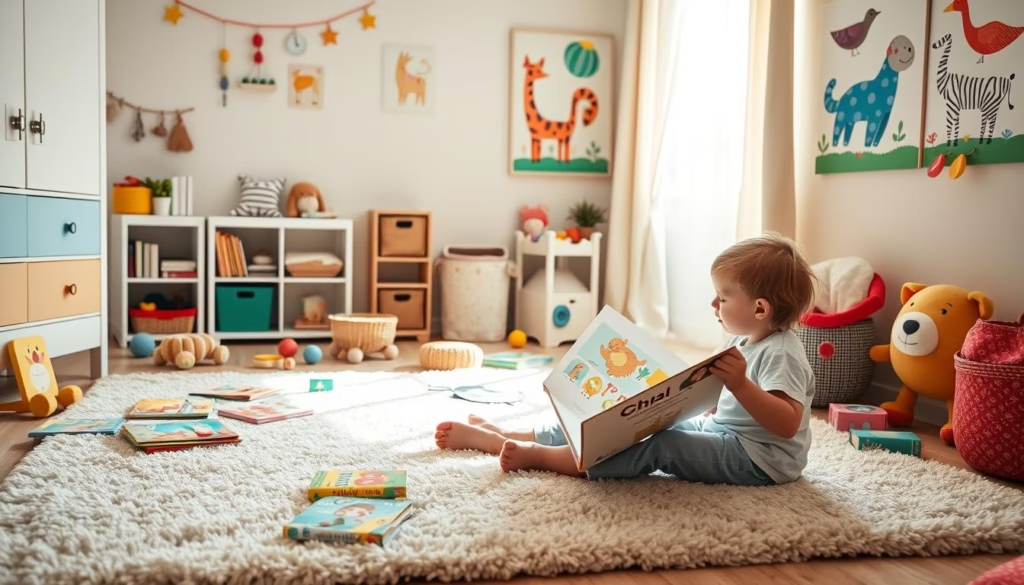
Choosing the Right Toddler Books
It’s important to pick books that match a toddler’s age. For babies up to 6 months, choose books with big, bold pictures. These simple images grab their attention.
As they get older, introduce books with more detailed pictures and simple stories. This helps with language and thinking skills.
Age-Appropriate Selections
- Infants from birth to 6 months: Wordless picture books or books with one word along with a big picture.
- Infants aged 7 to 12 months: Books with medium to large photos and bright illustrations.
- Toddlers from 19 to 30 months: Books with familiar characters and pictures filled with information, action, and detail.
Themes and Topics That Engage
Themes that grab toddlers include familiar objects, animals, and daily activities. These topics help them connect with their world. They also spark a love for children’s literature.
Types of Books: Board Books vs. Picture Books
Board books are great for young toddlers. They are tough and let little hands explore without damage. As they grow, move to picture books with paper pages. These have more detailed pictures and longer stories.
Adding interactive books with textures or flaps makes reading more fun. It also wakes up their senses.
“Early language development in children greatly benefits from reading the right books, as it builds neural pathways for language skills by exposing them to different language patterns.”
Top Toddler Books Recommendations
As your little one grows, books become a magical world to explore. They can enjoy classic tales and modern stories. The right books can spark their imagination, help them learn, and make them love reading.
Classic Toddler Favorites
Some books have been loved for years. “Goodnight Moon” by Margaret Wise Brown is a favorite, priced at $8 on Amazon. “The Very Hungry Caterpillar” by Eric Carle and “Where the Wild Things Are” by Maurice Sendak are also timeless choices.
Must-Have Modern Releases
There are also new books that kids love. “Dragons Love Tacos” by Adam Rubin is a fun story, priced at $6 on Amazon. “Press Here” by Hervé Tullet, also $6, makes reading interactive.
Diverse and Inclusive Choices
It’s key to have books that show diversity and inclusivity. “Our Skin” by Megan Madison and Jessica Ralli celebrates different skin tones. Priced at $12 on Amazon, it helps kids understand and respect each other.
These books offer a mix of classic tales, new stories, and diverse themes. They have engaging stories, beautiful pictures, and important lessons for your child.
| Book Title | Author | Price on Amazon |
|---|---|---|
| Goodnight Moon | Margaret Wise Brown | $8 |
| The Very Hungry Caterpillar | Eric Carle | N/A |
| Where the Wild Things Are | Maurice Sendak | N/A |
| Dragons Love Tacos | Adam Rubin | $6 |
| Press Here | Hervé Tullet | $6 |
| Our Skin | Megan Madison, Jessica Ralli | $12 |
How to Make Reading Fun for Your Toddler
Reading with your toddler can be a fun and rewarding experience. Use interactive books that let your child point, touch, and explore. This makes story time exciting and engaging.
Make stories come alive by using different voices for each character. Add nursery rhymes and songs to help your child with rhythm and memory. Visual aids like flannel boards or puppets can also keep your child’s attention.
- Encourage your toddler to point at images and answer questions about the story, fostering active engagement.
- Use props like stuffed animals or puppets to act out the narrative, bringing characters to life.
- Incorporate movement and dance into the reading experience, allowing your toddler to physically express their enjoyment.
The secret to making reading fun is to make it dynamic and engaging. By using interactive and fun techniques, you can help your child love books and learning for life.
“Reading should not be presented to children as a chore or duty. It should be offered to them as a precious gift.” – Kate DiCamillo
Setting a Reading Routine
Creating a regular reading time is crucial for your toddler to love books. Choose a time each day, like before nap or bedtime, for reading together. Use a calendar to track your reading and keep the routine going.
Establishing a Consistent Schedule
Reading at the same time every night helps your toddler get into the habit. Start with 15 minutes of reading each day. This way, they can finish a long book in about three and a half weeks.
Creating a Cozy Reading Environment
Make a special reading area with soft lights and comfy seats. It makes reading more fun for your toddler. Let them pick their books, as most kids like choosing their own.
Balancing Screen Time with Reading Time
It’s vital to balance screen time with reading in today’s world. Try audiobooks for busy times. Also, have family reading time where everyone reads together. Celebrate when your child finishes a chapter or book to keep them excited about bedtime stories and learning through stories.
Tips for Encouraging a Love of Books
Helping young children love reading is a rewarding journey. It lays the groundwork for a lifetime of learning and growth. As parents, there are many ways to spark a love for books in your kids from the start.
Making Reading a Family Activity
Get everyone in the family involved in reading. Make reading a regular part of your time together. It could be during bedtime, meals, or special family moments. This way, reading becomes a fun, shared experience that creates lasting memories.
Encouraging Toddlers to Choose Their Books
Let your toddler pick their own books. Offer a variety of books and encourage them to try different types. Giving them the freedom to choose can make them more excited and connected to what they read.
Introducing Library Visits and Story Hours
Take your child to the library and story hours often. These trips introduce them to many books and reading experiences. They also help your child meet new people and hear different stories.
By making these activities a part of your family’s life, you can help your child develop a love for early reading and children’s literature. This love will benefit them in school and beyond.
“Reading aloud with children is known to be the single most important activity for building the knowledge and skills they will eventually require for learning to read.”
– U.S. Department of Education
Understanding Your Toddler’s Preferences
Exploring developmental books and toddler books is exciting. It’s key to watch what your toddler likes and how they react. Seeing what they enjoy can help you pick the best books for them.
Observing their Interests and Reactions
Notice which pictures, characters, or stories they like best. Do they always choose books about animals, cars, or daily life? Their smiles, points, or laughs can show you what they like.
Choosing Books Based on Favorites
After finding out what they love, look for books that match. This keeps them excited about reading. Choosing books they love makes reading time more fun and meaningful.
Rotation and Variety in Selections
- Change the books you offer often. This keeps reading interesting and fun.
- Give them different types of books. This includes everything from classic stories to interactive books. It helps them see many ways to tell stories.
- Bring in new books now and then. This lets them discover new things and meet new characters.
Knowing what your toddler likes and mixing up the books you offer makes reading fun. This helps them grow to love books and learn more about the world through stories.
Handling Reading Challenges
As parents, we all want our toddlers to love reading. But early literacy can be tough. Short attention spans and picky book choices can test our patience. Yet, with the right strategies, you can help your child love reading forever.
Dealing with Short Attention Spans
Toddlers have short attention spans, making story time a challenge. Choose shorter books or break reading into small parts. Add movement, gestures, and sounds to keep them interested.
By making reading fun, you can keep their attention. This encourages them to enjoy the story more.
Addressing Reluctance to Read
Some toddlers don’t like reading as much as other activities. Make story time more fun by adding their favorite characters or songs. Let them pick the books to read.
This lets them feel more involved in reading. It helps them enjoy the process more.
Strategies for Finicky Book Choices
Toddlers often stick to the same books. Offer a few choices and let them pick. Gradually introduce new books based on their interests.
Be patient and keep trying. This way, you can help them explore more books and stories.
Every child learns at their own pace. Showing them many learning through stories and interactive books helps them love reading. Adapt your approach and try different strategies to help your child’s reading skills grow.
Resources for Parents
Exploring children’s literature and early reading can be exciting. There are many resources to help you along the way. You can find lists of recommended books, join communities, and participate in local programs.
Recommended Websites for Book Lists
Websites like Goodreads and Common Sense Media have huge lists of books for kids. They include reviews and ratings to help you find the best books for your toddler. This ensures they have a great time reading.
Communities and Support Groups
Being part of parenting communities and book clubs is great. You can meet other parents who love books. These groups share book tips, discuss reading, and offer support.
Local Libraries and Storytime Programs
Your local library is full of great resources for parents. They have storytime, summer reading challenges, and more. Bookstores also host events and give book suggestions for your child.
FAQ
Why are toddler books important for child development?
Toddler books are key for growing minds. They help with learning, speaking, and feeling emotions. Reading boosts memory, focus, and solving problems. It also grows vocabulary and improves talking skills.
Stories teach about feelings and social life. This builds empathy and smart thinking.
How do I choose age-appropriate toddler books?
For babies up to 6 months, pick books with big pictures and simple scenes. As they get older, find books with more pictures and stories. Themes like animals and daily life are great.
Board books are best for little ones. Older toddlers like picture books with paper pages.
What are some classic and modern toddler book recommendations?
Timeless choices include “Goodnight Moon” and “The Very Hungry Caterpillar”. “Where the Wild Things Are” is also a favorite. For new books, try “Dragons Love Tacos” and “Press Here”.
“Our Skin” promotes diversity and inclusion. These books are loved by many.
How can I make reading more interactive and engaging for my toddler?
Ask questions and have your toddler point at pictures. Use different voices for characters. This makes stories come alive.
Songs and rhymes help with rhythm and memory. Use puppets or stuffed animals to act out stories. Flannel boards keep their attention.
How do I establish a consistent reading routine for my toddler?
Read every day, like before naps or bedtime. Create a cozy reading spot. Limit screens for more reading time.
This routine makes books a source of calm and fun. It builds a lifelong love for reading.
How can I encourage a love of reading in my toddler?
Read together as a family. Let toddlers pick their books. This makes them excited to read.
Go to libraries and story hours. Show off books at home. Reading is fun when you see others enjoy it too.
How do I understand my toddler’s book preferences?
Watch how they react to different books. See what catches their eye. Choose books that match their interests.
Change books often to keep things interesting. Offer a variety of books to broaden their reading.
How do I handle reading challenges with my toddler?
Use short books or read in short sessions. Make reading fun with gestures and sounds. Offer a few book choices to avoid resistance.
Be patient and try different ways until you find what works.
Where can I find resources to help me with toddler book selections?
Check out Goodreads or Common Sense Media for book ideas. Join parenting groups and book clubs. Libraries offer great programs and book suggestions.
Bookstores host events and can give expert advice. These resources help find the best books for your toddler.
External Resources for Further Reading
Fun Indoor Activities for Toddlers to Keep Busy
Keeping toddlers busy indoors is key for their growth and fun. Kids love making magic with loose parts more than specific toys. Themed boxes filled with items like hardware and art supplies offer endless play.
Open-ended toys like blocks and art supplies keep toddlers engaged for hours. A toy library system helps keep things fresh and prevents too many choices. This way, kids can explore and learn without feeling overwhelmed.
Key Takeaways
- Themed boxes of loose parts encourage open-ended play
- Open-ended toys like blocks and art supplies engage toddlers for longer
- Rotating toys through a toy library system prevents overwhelming choices
- Minimizing flashy toys can encourage deeper engagement in play
- Indoor activities promote physical, cognitive, and social development
Table of Contents
Importance of Indoor Activities for Toddlers
Indoor activities are key for toddlers’ growth. They help with learning through play and Montessori activities at home. These activities boost a child’s cognitive development and fine motor skills.
Benefits of Indoor Play
Indoor play helps toddlers stay active. It builds their endurance and strengthens muscles and bones. It also helps them sleep well and improves social skills.
Play helps toddlers deal with emotions, builds confidence, and reduces stress. Indoor play is just as good as outdoor play if it meets their needs.
Cognitive Development and Learning
Indoor play boosts cognitive skills and fine motor abilities. Games like color sorting teach toddlers about categorization. They also improve their thinking.
Montessori activities and structured play enhance problem-solving and spatial awareness. They help toddlers understand the world better.
Social Interaction Opportunities
Indoor activities offer chances for toddlers to interact and work together. Sharing toys and taking turns teach them important social skills. They learn to communicate and develop emotional intelligence.
These experiences are crucial for their social growth.
“Indoor play is essential for toddlers’ physical, cognitive, and social growth. It offers a safe and enriching environment for them to explore, learn, and thrive.”
Creative Arts and Crafts Ideas
Let your toddler’s creativity shine with fun arts and crafts projects! You can try simple coloring, nature art, or DIY kits. These activities spark their imagination and improve their fine motor skills.
Simple Coloring Projects
Coloring games are great for toddlers. They help with hand-eye coordination and color recognition. Give your child crayons, markers, and paints to express their art.
Nature-Inspired Art
Try nature-themed art projects to bring the outdoors inside. Sticky Wall Art lets your toddler stick leaves and twigs on the wall. Playdough activities also encourage imagination and sensory play.
DIY Craft Kits for Kids
Craft kits are a fun way for toddlers to be creative. Set up a craft museum at home with paints, crayons, and pipe cleaners. Let your child show off their art at a family show.
Arts and crafts projects are great for toddlers. They boost creativity, fine motor skills, and problem-solving. Enjoy watching your child grow and become more confident through these activities.
Engaging Storytime Activities
Storytime is a special time for toddlers. It’s when they can go on exciting adventures through stories. To make it even better, try interactive reading, puppet shows, and a special story corner.
Interactive Read-Aloud Techniques
Reading aloud is key for toddlers. It helps them learn language and love books. Make it fun by asking questions, predicting what happens next, and acting out the story.
Use movement, sounds, and props to make the story come alive. This will spark their senses and keep them interested.
Puppet Shows with Story Themes
Puppet shows are great for toddlers. They help with creativity and talking skills. You can make puppets from socks, buttons, and fabric.
Let toddlers tell their own stories or act out ones they know. Shadow puppets are also fun. Use a flashlight to create shadows on the wall and tell stories.
Creating a Storytime Corner
Make a cozy spot for storytime. Add pillows, blankets, and books that are right for toddlers. This encourages them to love reading and learning.
These activities make storytime special. They help with learning, talking, and imagination. It’s a great way to support your toddler’s growth.
Nature Exploration Inside
While the outdoors is great for nature discovery, indoor play can also be fun and educational for toddlers. You can bring nature into your home with these activities. They encourage indoor play ideas and sensory activities for toddlers.
Indoor Plant Care Projects
Involve your little ones in caring for indoor plants like bean sprouts, sunflowers, or herbs. They can water the plants and watch them grow. This teaches them about nature and responsibility.
Scavenger Hunts for Natural Items
- Make a nature-themed scavenger hunt. Challenge your toddler to find items like feathers, pinecones, acorns, leaves, and seashells.
- This activity helps them observe, think critically, and appreciate nature. All from home.
Mini Gardens in Containers
Help your toddler grow a mini indoor garden in a small container or pot. Plant seeds, water, and watch the plants grow. This sensory activity for toddlers lets them touch, see, and even taste nature.
| Nature Center | Hours of Operation |
|---|---|
| Crabtree Nature Center | 9:00am – 5:00pm (March – October) 9:00am – 4:00pm (November – February) Closed on Fridays |
| Red Oak Nature Center | 10:00am – 4:00pm (Tuesday – Friday) 10:00am – 2:00pm (Saturday) Closed on Sundays and Mondays |
| Bartlett Nature Center | 9:00am – 4:00pm (Monday – Friday) 9:00am – 1:00pm (Saturday) |
| Peggy Notebaert Nature Museum | 10:00am – 4:00pm (Daily) Closed on May 3, November 28, and December 25, 2024 |
| Lyman Woods Nature Center | 9:00am – 4:00pm (Monday – Saturday) 10:00am – 2:00pm (Sunday) |
These indoor play ideas and sensory activities for toddlers help them love nature. They provide fun learning at home.
Fun Movement Activities
It’s important to keep toddlers active indoors. They need to move to grow healthy and happy. Activities like dance parties and yoga help them stay active and sharp.
Dance Parties for Toddlers
Music and movement are perfect for toddlers. Play some fun songs and watch them dance. Use colorful scarves or tambourines to make it more exciting.
Let your toddler dance like they want. It’s all about having fun and expressing themselves.
Yoga for Little Ones
Yoga is great for toddlers. It helps them relax and feel calm. Try simple poses and animal movements to make it fun.
Yoga helps toddlers with balance and body awareness. It also teaches them to breathe deeply and relax.
Obstacle Courses at Home
Turn your living room into an obstacle course. Use things like tables and chairs for your toddler to crawl and climb over. It’s a fun way to get them moving and thinking.
You can also add games like balloon-batting or “freeze dance” for more fun.
Make indoor activities fun for your toddler. This way, they stay active and learn new things. It’s a great way to help them grow in a safe and fun place.
Educational Games and Puzzles
Helping your toddler grow their mind can be fun. Check out educational games and puzzles that grab their interest and help them learn. These activities turn learning into a fun adventure.
Age-Appropriate Board Games
Start your toddler with board games made for their age. Color sorting games are great for teaching them to sort things. Use colored objects and bins to help them learn.
Build-Your-Own Puzzle Projects
Let your toddler’s creativity shine with build-your-own puzzle projects. Give them simple puzzles or help them make their own. This boosts their problem-solving skills and makes them feel proud.
Memory and Matching Games
Help your toddler get better at noticing things with memory and matching games. Hide toys and challenge them to find them. Games like hide-and-seek with clues are fun and help their brain grow.
Use learning through play with many educational games for toddlers. These games help their mind grow and make them love to explore. Let learning through play help your toddler’s mind grow.
Sensory Play Experiences
Engage your toddler’s sense of touch, sight, and smell with fun sensory play. Fill big containers with rice, beans, sand, or water beads. Add small toys for them to find.
Create indoor “snow” by mixing baking soda and water. This makes a snow-like texture. Your little one can make snowballs or mini snowmen.
Water play indoors is refreshing. Use a big tub filled with water and toys. Kinetic sand is great for molding and shaping, boosting imagination and skills.
Sensory bins and trays let toddlers explore and learn. They engage their senses in a fun way.
Homemade Sensory Bins
Make your own sensory bins at home. Here are some ideas:
- Colored rice or pasta
- Dried beans, lentils, or peas
- Uncooked oats or cereal
- Shredded paper or tissue paper
- Pom-poms or pipe cleaners
- Small toys, figurines, or nature items
Put the materials in a big container or bin. Let your toddler explore the textures and shapes.
Unconventional Sensory Materials
Be creative with sensory play. Use shaving cream, cornstarch and water (oobleck), or cloud dough. Try natural elements like mud, leaves, or snow for a unique experience.
Water Play in a Safe Space
Make a safe area for water play indoors. Use a big tub or sink with water and toys. Make sure it’s safe for your toddler’s age and skill level. It’s great on warm days.
Sensory play is key for toddlers’ growth. It helps them learn through touch, sight, and smell. It supports their brain, body, and emotional development.
Cooking and Baking Together
Cooking and baking are great ways to help toddlers learn and develop their fine motor skills. By making simple recipes, you can spark their interest in food. They’ll get to try new flavors and ingredients.
Simple Recipes for Toddlers
For toddlers, recipes should be easy. Betty Crocker has kits that make baking simple. Meijer is also a good place to find baking activities for toddlers. Choose recipes with just 3-5 steps, as toddlers can focus for about 20 minutes.
Themed Cooking Days
Themed cooking days are fun for exploring different foods. You can make everything from birthday cake cookie cups to peanut butter fudge. Add colors and numbers to make it educational and fun.
Exploring New Ingredients
Baking is a great time to introduce new ingredients to toddlers. Let them mix in a big bowl. This helps them with their fine motor skills. Always watch them when they’re near the oven or handling icing.
Remember, the most important thing is to have fun. Enjoy the mess, celebrate their efforts, and cherish the time you spend together in the kitchen.
“Cooking with toddlers is not just about the final product – it’s about the journey, the laughter, and the memories you create together.”
Tech-Free Indoor Activities
Keeping your toddler entertained without screens can be very rewarding. Simple, tech-free activities can lead to hours of fun and learning. They tap into your child’s natural curiosity and imagination.
Building Forts with Blankets
Turn your living room into a fort-building zone with blankets, pillows, and furniture. This activity boosts creativity and offers a safe space for imaginative play. Add fairy lights or glow sticks for a magical touch. Share stories and snacks inside their cozy hideaway.
Creative Pretend Play Scenarios
Spark your toddler’s imagination with pretend play scenarios. Set up a “restaurant” for them to take orders and serve meals. Or, create a “pet shop” with plush toys and accessories. Let your child lead and explore different roles, improving their social skills and problem-solving.
Indoor Hide and Seek Variations
Indoor hide and seek is a classic game that’s easy to adapt. Hide behind furniture or in closets and have your toddler find you. You can also hide small toys and objects for them to find, improving their observation and tracking skills. For a challenge, add sound cues or clues to make the game more exciting.
FAQ
What are some fun indoor activities for toddlers?
Fun indoor activities for toddlers include making themed boxes and playing with open-ended toys. You can also set up a toy library and do physical activities like dancing. Indoor obstacle courses are great too.
Why are indoor activities important for toddlers?
Indoor activities are key for toddlers’ growth and fun. They help with thinking, fine motor skills, and socializing. They also build endurance, muscles, and bones. Plus, they help with sleep and social skills.
What creative arts and crafts ideas can I try with my toddler?
Toddlers love simple coloring and nature-inspired art like Sticky Wall Art. DIY craft kits are also great for their imagination and fine motor skills.
How can I engage my toddler in storytelling activities?
Storytelling activities for toddlers include puppet shows and shadow puppets. Setting up a cozy storytime corner is also a good idea. It boosts creativity, communication, and imagination.
What indoor nature exploration activities can I do with my toddler?
Indoor nature exploration for toddlers includes indoor gardening and creating a nature box. Indoor scavenger hunts for natural items are also fun.
What fun movement activities can I do with my toddler indoors?
Indoor movement activities for toddlers include dance parties and age-appropriate yoga. Creating obstacle courses with household items is also great. It promotes physical activity and problem-solving.
What educational games and puzzles can I play with my toddler?
Games and puzzles for toddlers include age-appropriate board games and build-your-own puzzles. Memory and matching games are also good. They improve cognitive skills and learning.
What sensory play experiences can I offer my toddler indoors?
Indoor sensory play for toddlers includes homemade sensory bins and kinetic sand. Setting up safe water play areas is also a good idea. It engages their senses and boosts imagination.
How can I involve my toddler in cooking and baking activities?
Cooking and baking activities for toddlers include simple recipes and themed cooking days. They help practice fine motor skills and learn about food.
What tech-free indoor activities can I do with my toddler?
Activities without tech for toddlers include building forts and creative pretend play. Indoor hide-and-seek variations are also great. They encourage imagination and problem-solving.
External Resources for Further Reading
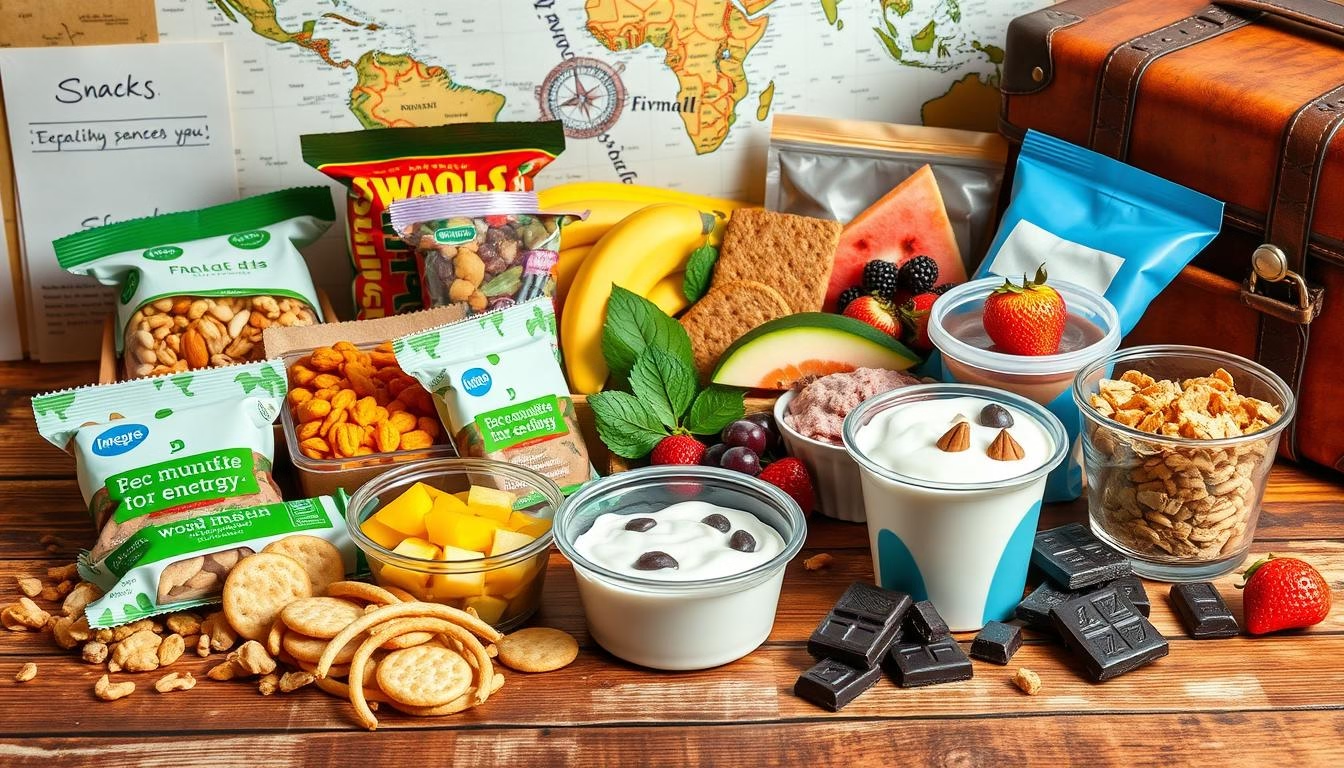
Best Good Snack for Traveling Healthy Options on the Go
Traveling can be thrilling, but it can also be hard to eat healthy. It’s key to have a good snack for traveling when you’re on the move. Whether you’re driving, flying, or exploring, the right snacks keep you energized and happy.
There are many tasty and easy-to-carry snacks out there. We’ll look at the best good snacks for traveling. You’ll find healthy and easy-to-pack options that are better than junk food. Get ready to enjoy delicious and nutritious good snacks for traveling on your trips.
Key Takeaways
- Discover a variety of nutritious and convenient snack options for your travels.
- Learn about low-mess options for car trips and airplane-friendly choices.
- Explore how to pack smart and choose snacks that will keep you energized and satisfied during your journey.
- Understand the importance of selecting snacks with a focus on nutritional value and portion control.
- Find inspiration for creating your own homemade snacks that are perfect for on-the-go adventures.
Table of Contents
Why Snacks Are Essential for Travel
When you start your next adventure, whether it’s a road trip or a flight, having non-perishable snacks and nutritious on-the-go snacks is key. Snacks help keep your energy up and prevent you from eating unhealthy foods at airports or rest stops.
Keeping Your Energy Levels Up
Travel can be tiring and make you hungry. Eating snacks rich in protein and healthy carbs, fats, or fiber keeps you full and energized. Try snacks like jerky, hard-boiled eggs, or nut-based bars for a quick energy boost.
Avoiding Unhealthy Airport Options
Airports and rest stops often have tempting but unhealthy snacks. These can include sugary treats and salty chips. Bringing your own non-perishable snacks helps you avoid these bad choices and saves money and health.
“Homemade snacks offer the benefit of transparency regarding ingredients, typically having lower levels of salt, sugar, and fewer chemicals compared to store-bought options.”
Making your own nutritious on-the-go snacks lets you choose what goes into them. This way, you can stick to healthy foods and feel more at home while traveling.
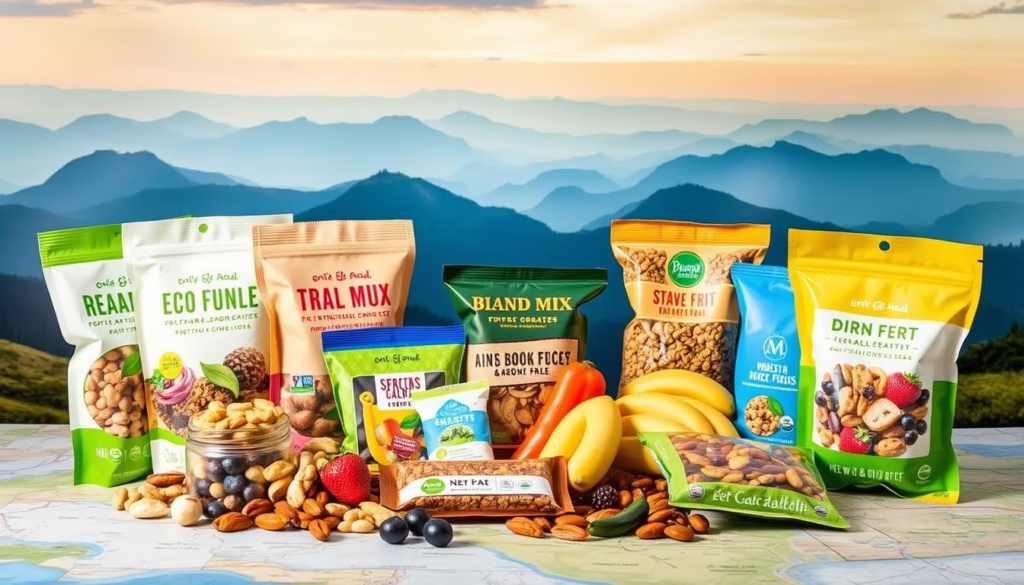
Choosing snacks that are good for you helps keep your energy up. This way, you can enjoy your travels more, whether it’s a long drive or a busy airport day. The right snacks can greatly improve your travel experience.
Tips for Choosing Healthy Travel Snacks
When you’re on the move, picking the right convenient travel munchies and travel-friendly snack options is key. These snacks should fuel your adventures. Here are some tips for choosing healthy snacks for your next trip:
Focus on Nutritional Value
Choose snacks that mix protein, healthy carbs, and fiber. This mix keeps your energy up and prevents big drops in blood sugar. Go for nuts, seeds, nut butters, whole grain crackers, and fresh or dried fruit.
Consider Portion Size
Snacking on the road means watching your portions. Pick pre-portioned snack packs or use small containers. This keeps your diet healthy and calorie intake in check while traveling.
Check for Allergen Information
If you or your travel buddies have food allergies, check snack labels carefully. This avoids any surprises and makes sure everyone can enjoy the convenient travel munchies and travel-friendly snack options you’ve brought.
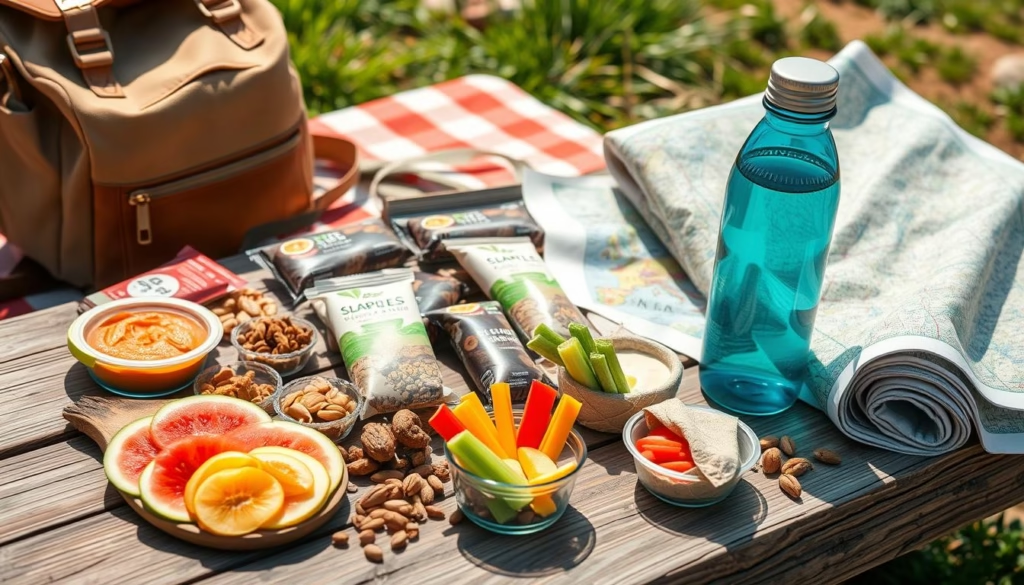
“Fueling your body with the right snacks can make all the difference in how you feel during your travels.”
Best Healthy Snack Categories for Traveling
When you’re about to hit the road or get ready for a flight, having healthy snacks is key. Sorting your snacks into categories helps keep your diet balanced and energy up. Let’s look at some top snack categories for travel.
Protein-Packed Options
Snacks high in protein are great for energy and feeling full. Think about packing hard-boiled eggs, cheese sticks, beef jerky, or trail mix. Jerky, especially mushroom jerky, is a tasty, protein-rich choice. Nuts like peanuts, almonds, and cashews also boost protein.
Fiber-Rich Choices
Snacks with lots of fiber aid digestion and keep you full. Choose fresh fruits like apples, peaches, bananas, grapes, and oranges for natural sweetness and hydration. Whole grain crackers, veggie chips, and snacks like pea chips and veggie straws are also good for fiber.
Hydrating Snacks
It’s important to stay hydrated while traveling. Pack water, fruit-infused water, or unsweetened iced tea. Snacks like applesauce in squeeze tubes, yogurt tubes or pouches, and fresh fruits also help with hydration.
By grouping your snacks into protein, fiber, and hydrating categories, you ensure a balanced snack experience. This keeps you energized and satisfied, whether you’re on a road trip or flying.
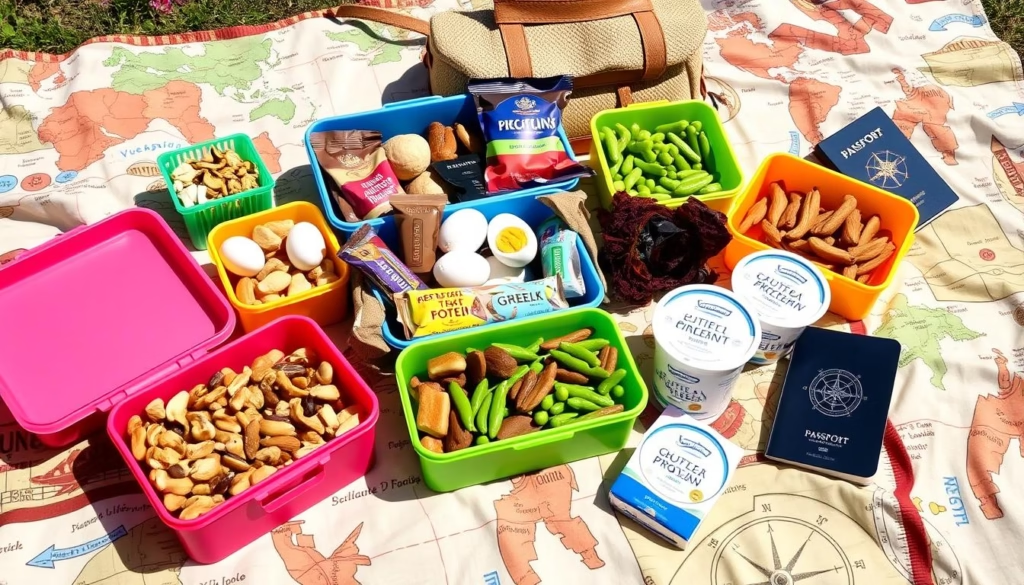
| Protein-Packed Options | Fiber-Rich Choices | Hydrating Snacks |
|---|---|---|
|
|
|
“Protein and granola bars are highlighted as less messy travel snacks that can keep travelers full and satisfied.”
Choosing a variety of snacks is key for a great travel experience. With protein, fiber, and hydrating snacks, you fuel your body and stay energized. Enjoy a healthier journey, whether on the road or in the air.
Top Store-Bought Snacks for Your Journey
Store-bought snacks are a great choice for travel. They should be high in protein, fiber, and healthy fats. This keeps you full and energized. Good options include nuts, seeds, whole grain crackers, and dried fruits.
Nut- and Seed-Based Snacks
Nuts and seeds are excellent travel snacks. They’re full of protein, healthy fats, and nutrients. Try almonds, cashews, pumpkin seeds, and mixed nuts. Brands like KIND, Larabar, and Kashi offer easy-to-carry packs.
Whole Grain Crackers
Whole grain crackers are crunchy and full of complex carbs. Look for ones made with whole wheat, oats, or quinoa. Add nut butter, cheese, or hummus for a more filling snack.
Dried Fruits
Dried fruits are a tasty, portable snack. Choose ones with little added sugar and preservatives. Dried apple, mango, and berries are good choices. They also go well with nuts and seeds for a healthy mix.
When picking snacks for travel, choose ones that are healthy and easy to carry. With some planning, you can have tasty, nutritious snacks for your journey.
Easy Homemade Snack Ideas
Homemade snacks are great for healthy travel. They’re nutritious and you can make them how you like. Here are some easy snack ideas for your next trip.
Energy Bites Recipe
Energy bites are a tasty, easy snack. Mix oats, nut butter, honey, and add-ins like dried fruit or nuts. Roll them into balls for a snack that boosts energy.
Homemade Trail Mix Variations
Trail mix is a favorite travel snack. Making your own lets you pick the ingredients. Start with nuts and seeds, add dried fruit, dark chocolate, and whole grain cereal. You can make many different trail mix flavors.
Granola Bars You Can Make
Homemade granola bars are better than store-bought ones. Use oats, nuts, seeds, and natural sweeteners like honey. Bake them for chewy, healthy bars that fuel your adventures.
Preparing these snacks saves money and ensures you have healthy options on the go. Whether you’re driving or flying, these snacks will keep you energized and happy.
Snacks for Long Flights
When you’re on a long flight, it’s important to bring the right snacks. Choose non-perishable, airplane-friendly snacks that are easy to eat. They should also not smell too strong. This makes your flight more comfortable and enjoyable.
How to Select the Right Snacks
Look for snacks that are:
- Non-perishable and won’t spoil quickly
- Compact and easy to eat on the go
- Mild in flavor to avoid overwhelming senses
- Filling and nutritious to sustain energy levels
Popular In-Flight Options
Some top snack choices for flights include:
- Nuts and seeds, such as almonds, cashews, or pumpkin seeds
- Dried fruits, like apricots, mango, or raisins
- Granola bars or energy bites
- Whole grain crackers
- Fresh fruits like apples, bananas, or clementines
Items to Avoid
It’s best to avoid snacks that:
- Can melt or spoil quickly, like yogurt or fresh produce
- Have strong odors that may bother fellow passengers
- Require utensils or extensive preparation
- Are subject to TSA restrictions, such as liquids or gels
Don’t forget to bring a refillable water bottle. This way, you can stay hydrated during your flight. By choosing the right snacks, you can keep your body fueled and enjoy a better travel experience.
Quick Snacks for Road Trips
When you start your next road trip, it’s key to have good snacks ready. The right snacks can keep you energized and save you time and money. Let’s look at some great options like fruits, protein-rich foods, and veggie snacks to make your trip better.
Portable Fruit Options
Fruits like apples, bananas, and grapes are perfect for road trips. They’re full of vitamins, minerals, and fiber to keep you going. Make sure to wash and prep them before packing in bags or containers. These healthy road trip snack ideas will keep you hydrated and happy on the move.
Jerky and Meat Sticks
Jerky or meat sticks are great convenient travel munchies. They’re full of protein to keep you energized during long drives. Choose ones with good ingredients and few additives. Beef, turkey, or plant-based options are all good choices.
Veggie Chips
Want something crunchy? Veggie chips from sweet potatoes, beets, or kale are a healthy choice. They’re low in calories and high in fiber, perfect for health-focused travelers. Pack them in bags for easy snacking on the road.
Adding a mix of these snacks to your trip will make it more enjoyable and energizing. Don’t forget to drink water, listen to your body, and enjoy the trip!
Healthy Alternatives to Junk Food
Snacking on the go doesn’t have to be unhealthy. Choose snacks that fuel your body and keep you energized. Instead of chips and candy, pick healthier options for your travel snacks.
Why You Should Avoid Processed Snacks
Processed snacks are full of sugar, unhealthy fats, and artificial additives. They can make you feel tired and unsatisfied. These snacks lack the vitamins, minerals, and fiber your body needs.
Choosing Whole Foods
- Go for fresh fruits and veggies like apples, bananas, and carrot sticks. They’re easy to pack and eat on the move.
- Choose nuts and seeds like walnuts and pepitas for a crunchy snack.
- Include protein-rich foods like cottage cheese and jerky to stay full.
Satisfying Sweet Cravings
For a sweet treat, try dried fruit, dark chocolate, or homemade energy balls. They’re sweet without the added sugars and artificial ingredients found in junk food.
| Snack | Calories | Fat | Carbs | Fiber | Protein |
|---|---|---|---|---|---|
| Justin’s Almond Butter (1 pack) | 220 | 19g | 5g | 3g | 6g |
| Beanfield’s Nacho Chips (1 serving) | 140 | 6g | 6g | 6g | 5g |
| Nuts and Seeds Trail Mix (1 serving) | 336 | 25g | 4g | 11g | 11g |
Make smart snack choices with whole, nutrient-rich foods. This way, you fuel your body and satisfy your cravings while traveling. Add a mix of nutritious on-the-go snacks and healthy travel snacks to your travel routine for a better experience.
Snack Packing Tips for Travelers
Having the right travel-friendly snack options is key when you’re on the move. Smartly packed snacks keep your energy up and prevent unhealthy buys at airports or rest stops. Here are some tips to keep your snacks that travel well fresh and in the right amounts.
Containers and Storage Solutions
Get reusable snack bags, small airtight containers, or bento-style lunch boxes for packing snacks. They keep things organized and easy to find. For items that need to stay cool, use a small cooler with ice packs.
Keeping Snacks Fresh
To keep your travel-friendly snack options fresh, freeze items like yogurt tubes or energy balls before you leave. This keeps them cool and prevents spoilage. But, skip packing fresh fruits and veggies unless you have a way to keep them cold.
Portion Control Techniques
Divide your snacks that travel well into individual servings to avoid overeating. Use small containers, sandwich bags, or muffin tins for this. It makes snacking easier and helps you stay mindful of your eating.
By using these tips, your travel-friendly snack options will stay fresh, portioned right, and always ready. A bit of planning lets you enjoy healthy snacks that fuel your adventures and keep you energized on the go.
Mindful Eating While Traveling
Eating healthy while traveling can be tough, but mindful eating helps a lot. Listen to your body, drink plenty of water, and pick snacks that give you energy. This way, you fuel your travels with foods that nourish you.
Listening to Your Body’s Needs
It’s key to listen to your hunger and fullness signals while traveling. Don’t snack out of boredom or because food is easily available. Ask yourself if you’re really hungry before grabbing a good snack for traveling. This mindful eating helps you choose healthy travel snacks that your body needs.
Staying Hydrated
Drinking enough water is vital, especially when you’re not in your usual routine. Carry a refillable water bottle and drink water often. Choose snacks like fruits and veggies to keep you hydrated and energized.
Choosing Snacks Mindfully
When picking healthy travel snacks, think about how they’ll fuel you. Steer clear of snacks with quick sugar spikes that can crash your energy. Go for foods like nuts, seeds, and whole grain crackers that give lasting energy. Be mindful of how much you eat and aim for snacks that are balanced in nutrients.
“Mindful eating is not just about the food; it’s about being present and attentive to the experience of nourishing your body.”
By eating mindfully on your travels, you can pick good snacks for traveling that boost your well-being. Stay in tune with your body, drink water, and choose snacks that give you energy and nutrients.
How Snacks Can Enhance Your Travel Experience
Snacks are more than just a quick fix for hunger while traveling. By picking the right snacks, you can make your trip better in many ways.
Creating Snack Packs for Different Destinations
Choose snacks that match your destination. For a warm place, try dried mango or nuts. In cold weather, go for granola bars or roasted chickpeas. This way, you fuel up right and enjoy the local culture more.
Engaging with Local Flavor
Traveling is about trying new foods. Instead of your usual snacks, look for local treats. Try fresh fruit, local baked goods, or artisanal snacks. It’s a fun way to experience the local tastes.
Sharing Snacks with Fellow Travelers
Snacks can help you meet people. Sharing snacks with others can start conversations and make friends. It’s a great way to share experiences and find new favorites.
Choosing the right snacks can make your trip better. It keeps you healthy, connects you with locals, and helps you meet others. Snacks are powerful for making your travels memorable and enjoyable.
| Snack | Nutritional Benefits |
|---|---|
| Pistachios | 100 calories per 32 nuts, rich in fiber, protein, and healthy fats |
| Greek Yogurt | High in protein and calcium, contains probiotics for gut health |
| Almonds | Rich in fiber, potassium, protein, and vitamins B and E |
| Avocado | Nearly 1,000 mg of potassium per fruit, and packed with various nutrients |
| Sunflower Seeds | Contain tryptophan, promoting serotonin breakdown for mood improvement |
The secret to better travel snacks is to choose ones that are good for you and fit your trip. Being smart about snacks can fuel your adventures, let you taste local flavors, and create lasting memories with others.
Conclusion: Making Smart Snack Choices on the Go
When you travel, picking the right snacks is key. They help keep you energized and feeling great. With 78% of people struggling to eat healthy on the move, the right snacks can be a game-changer.
Recap of Healthy Options
There are many healthy snack choices for travel. Try nuts and seeds for protein, and fruits and veggies for fiber. Greek yogurt, whole-grain crackers, and natural nut butters offer a mix of carbs, proteins, and fats. These snacks help keep your energy up all day.
Encouragement for Future Travels
Be open to trying new snacks on your travels. With 87% of people looking for snacks with natural ingredients and less sugar, there’s a growing market for healthy travel snacks. Discover local flavors and snacks that fit your taste and diet.
Final Tips for Smart Snacking
For your next trip, always carry a water bottle to stay hydrated. Try to eat a balanced mix of nutrients all day. Also, pack extra snacks for any unexpected hunger. Smart snacking makes your travel experience better and keeps you healthy.
FAQ
What are some good snack options for traveling?
Good travel snacks include fresh fruits and veggies, nuts, seeds, and jerky. Whole grain crackers and homemade energy bites or granola bars are also great. They give you energy and keep you full.
Why are snacks essential for travel?
Snacks keep your energy up, stop hunger boredom, and help avoid bad food choices. They’re key to staying happy and energized on your trip.
What should I look for when selecting healthy travel snacks?
Look for snacks that are nutritious, have the right size, and tell you about allergens. Choose ones with protein, healthy carbs, and fiber for the best nutrition.
What are the best categories of snacks for traveling?
The top snack categories for travel are protein-rich (like eggs, cheese, and jerky), fiber-rich (like fruits, veggies, and whole grain crackers), and hydrating (like fresh fruits and water).
What are some top store-bought snack options for travel?
Great store-bought snacks include unsalted nuts, seeds, whole grain crackers, dried fruits, and granola bars from brands like KIND, Larabar, Kashi, or Made Good.
What are some easy homemade snack ideas for travel?
Make your own snacks like energy bites, trail mix, and granola bars. Use oats, nut butter, honey, nuts, and dried fruits for these.
What are the best snack options for long flights?
For long flights, pick snacks that don’t spoil, like nuts, dried fruits, granola bars, and whole grain crackers. Stay away from things that melt or smell bad.
What are some quick snack ideas for road trips?
Good road trip snacks are fruits like apples and bananas, protein like jerky or meat sticks, and veggie chips. Use small containers for kids.
How can I make healthier snack choices instead of junk food?
Choose whole foods like fruits, veggies, nuts, seeds, and homemade energy balls over processed snacks. This gives you lasting energy and better nutrition.
What are some tips for packing and storing snacks while traveling?
Use small containers, reusable bags, or bento boxes for snacks. Keep cool items in a cooler with ice packs. Portion snacks to avoid eating too much.
How can I practice mindful eating while traveling?
Listen to your hunger and fullness signals, stay hydrated, and pick snacks that give lasting energy. Be mindful of how much you eat and keep your diet balanced.
How can snacks enhance the travel experience?
Make snack packs for your destination, try local foods, and share snacks with others. Having extra snacks can also help with unexpected delays or needs.
External Resources for Further Reading