
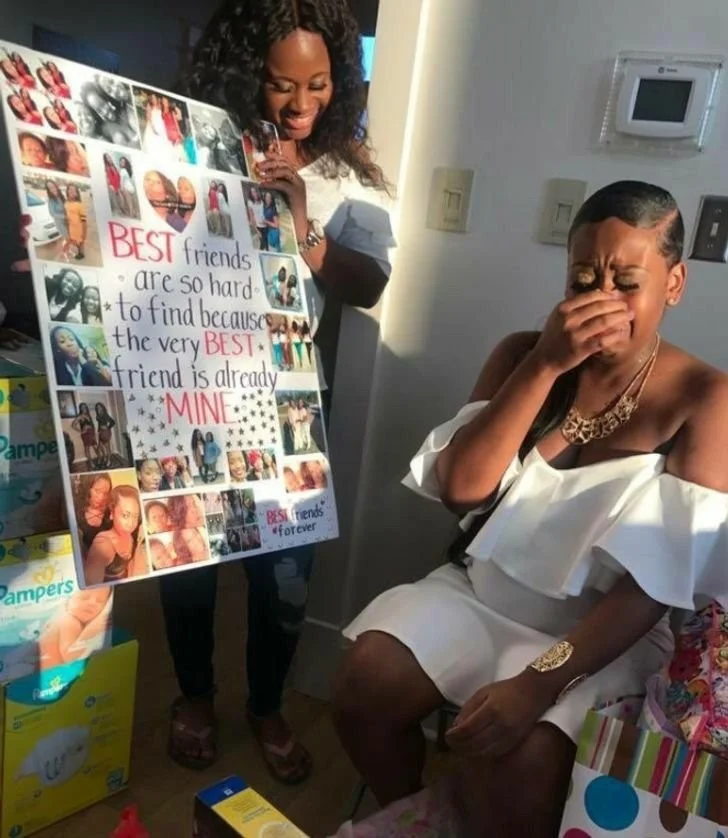
25+ Creative Birthday Gifts For Best Friend
30 Creative Birthday Gifts for Your Best Friend
Finding the perfect birthday gift for your best friend means balancing thoughtfulness, personality, and a little surprise. Whether they love handmade keepsakes, shared experiences, or practical items they’ll actually use, this guide offers 30 creative ideas to inspire you. If your best friend is about to become a mom, you might also want to peek at some helpful baby shower gift ideas to complement her birthday present.
Below are curated gift ideas grouped by theme, with tips to personalize each one so it truly reflects your friendship.
Sentimental & Personalized Gifts
- Custom photo book — compile inside jokes, memorable trips, and candid shots with captions.
- Handwritten letters jar — 12–24 notes for different moods (“Open when…”).
- Engraved jewelry — a bracelet or necklace with coordinates, initials, or a short message.
- Custom star map — the sky on the night you met or a meaningful date.
- Memory scrapbook kit — add tickets, Polaroids, and doodles for a DIY keepsake.
Experience Gifts (Create New Memories)
- Concert or show tickets — pick an artist or comedy act they love.
- A surprise local day trip — plan an itinerary and bring snacks.
- Spa day or massage voucher — a restorative treat.
- Cooking class for two — learn a cuisine you both enjoy.
- Subscription to an experience box — monthly workshops or craft kits.
Practical Yet Stylish
- High-quality travel mug or water bottle — personalized or in their favorite color.
- Cozy throw blanket with monogram — perfect for movie nights.
- Compact tech organizer — keeps chargers and earbuds neat.
- Portable phone charger with design — practical for busy days out.
- Customized planner or bullet journal — tailor it to their goals and hobbies.
For the Homebody
- Scented candle trio with custom labels — pick scents linked to shared memories.
- Board game night kit — new games, snacks, and a scorecard.
- Indoor plant with care guide — low-maintenance varieties like snake or pothos.
- DIY baking kit — pre-measured ingredients and a sweet note.
- Personalized mug set — add nicknames or quirky pet portraits.
Creative & DIY Gifts
- Handmade friendship bracelet set — modernize with charms or beads.
- DIY art print — frame a painting, watercolor, or a stylized quote you both love.
- Customized mixtape (digital playlist) — pair tracks with a note explaining each pick.
- Hand-decorated tote bag — stencil or fabric-paint a design that suits their style.
- Coupon book — vouchers for chores, movie picks, or “one night of your choice” dinners.
Gifts for Adventurers & Foodies
- Picnic kit with a personalized blanket — curated snacks and a playlist included.
- Specialty cooking ingredients — hot sauce set, exotic spices, or a gourmet oil sampler.
- Compact travel hammock or daypack — for spontaneous outdoor escapes.
- National park annual pass — great if you both love hiking.
- Food tour or tasting experience — book a local tasting or create your own at home.
Tips to Make Any Gift Special
- Add a handwritten note explaining why you picked the gift.
- Wrap creatively — reuse maps, sheet music, or fabric for a memorable unwrapping.
- Pair a small physical gift with an experience: for example, give a picnic blanket plus a planned picnic date.
- Personalize with inside jokes, favorite colors, or references to shared memories.
If your friend’s life stage affects your choice—like welcoming a baby soon—consider a gift that supports that chapter; for example, practical nursery items or useful parenting resources such as recommended cribs and sleeping solutions can be thoughtful and timely. For more detailed crib recommendations that new parents appreciate, see the guide to the best cribs for newborns.
How to Choose the Right Gift
- Think about their current needs and hobbies. A thoughtful, useful present often wins over something flashy.
- Consider your shared experiences — gifts tied to memories strengthen the bond.
- Set a budget and be honest; meaningful gifts don’t require overspending.
- If in doubt, opt for an experience you can share — memories last longer than things.
Conclusion
For more inspiration on memorable outings that could pair well with a birthday gift, check this roundup of fun things to do in Portland, Maine to plan a getaway day. If your best friend is a teen or loves decor and travel-friendly items, these curated holiday gifts teen girls will love for home or travel offer many giftable ideas that work for birthdays too.
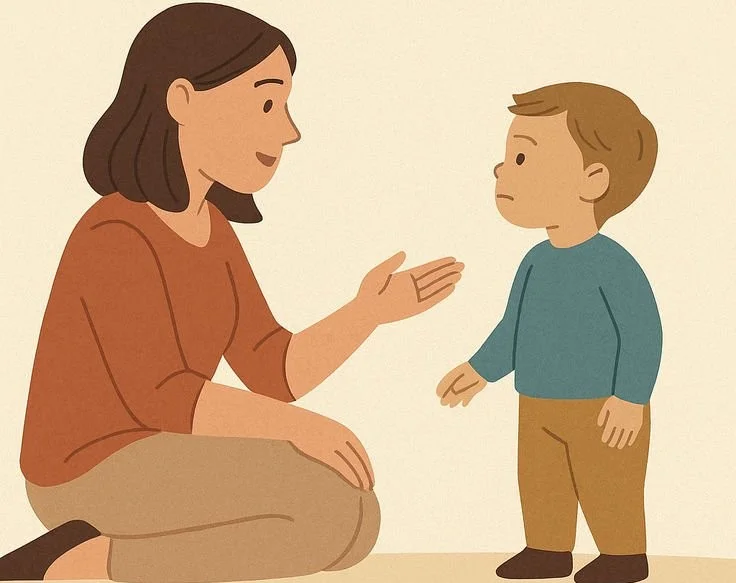
5 Better Phrases Than Use Your Words
We all want toddlers to communicate instead of acting out, and “Use your words” seems like a quick fix. But for many little children this phrase is vague, abstract, or delivered at the wrong time — and it can come off as dismissive. In this article you’ll find five simple, Montessori-aligned alternatives that teach communication, calm big feelings, and invite cooperation. If you’re caring for siblings or balancing infant and toddler needs, resources about the best sleeping position for your baby can help you juggle routines.
Why “Use your words” falls short
- It’s generic: Toddlers often don’t know what words to use or how to label feelings.
- It can sound impatient: Said in frustration, it shuts a child down.
- It removes scaffolding: Montessori teaching favors offering language and structure, not just commands.
Below are five replaceable phrases with brief explanations and examples you can try immediately.
1. “Show me what you want”
Why it works: Toddlers often find it easier to demonstrate than to verbalize. This gives them a concrete option while you model language. How to use it: If a child reaches for a toy another child has, kneel down and say, “Show me what you want.” When they point or hand the toy, narrate: “You want the red truck. You can say, ‘My turn, please.’” This pairs action with words.
2. “Tell me how you feel”
Why it works: Naming emotions builds emotional vocabulary, a key Montessori goal. It validates the child and gives them a target phrase to try. How to use it: If a toddler is slapping a book, gently hold the book and say, “I see you’re upset. Tell me how you feel.” Offer options: “Are you mad? Sad? Frustrated?” Repeat whichever label they choose.
3. “Use a gentle hand / use gentle words”
Why it works: Specific behavioral instructions are clearer than abstract demands to “use your words.” It also models the tone you want. How to use it: In moments of aggression or rough play, calmly say, “Use a gentle hand.” If they look puzzled, model: “Gentle,” while stroking softly a stuffed animal, and invite them to imitate.
4. “Show me with your face / Show me with your voice”
Why it works: Montessori emphasizes expressive development. Direct prompts like these teach children how to modulate tone and facial expression, vital parts of communication. How to use it: If a toddler shouts to get attention, kneel level with them and say, “Show me with your voice — can you say it more softly?” Demonstrate the softer voice and let them try.
5. “Say, ‘Can I have that, please?’”
Why it works: Phrasing exact words gives toddlers a script to copy. Scripts reduce anxiety because the child isn’t inventing language on the spot. How to use it: When two children want the same toy, model the sentence and encourage role-play: “Let’s practice. You say, ‘Can I have that, please?’” Praise attempts: “Nice asking!”
Practical tips for success
- Model, don’t demand: Say phrases yourself and let children imitate.
- Keep it short: One or two words or a short sentence is easier for a toddler to copy.
- Use positive language: Tell them what to do (use gentle hands) instead of what not to do (don’t hit).
- Label feelings often: Frequent naming of emotions in neutral moments prepares toddlers to use words when upset.
- Follow through with help: If they can’t find the words, offer the language and then step away so they can try.
Mealtime and everyday routines Meals and routines are prime times to practice these phrases because expectations are repeated. Offer scripts like “I want more, please” during snacks and encourage polite requests. For meal planning and age-appropriate options, check guidance about foods not suitable to cook for five-year-olds to keep routines calm and predictable.
A Montessori mindset Remember, Montessori parenting prioritizes respectful language, independence, and gentle scaffolding. These alternative phrases give toddlers structure and the language they need to grow emotionally and socially — much more effectively than a single, often-empty command.
Conclusion
For more examples of alternative prompts and a deeper look at Montessori-friendly language, see the practical list at 5 Better Phrases Than Use Your Words for Toddlers. If you want to learn about common phrases that can unintentionally backfire and how to reframe them, this article on 8 parenting phrases you probably say that can totally backfire offers useful insight.
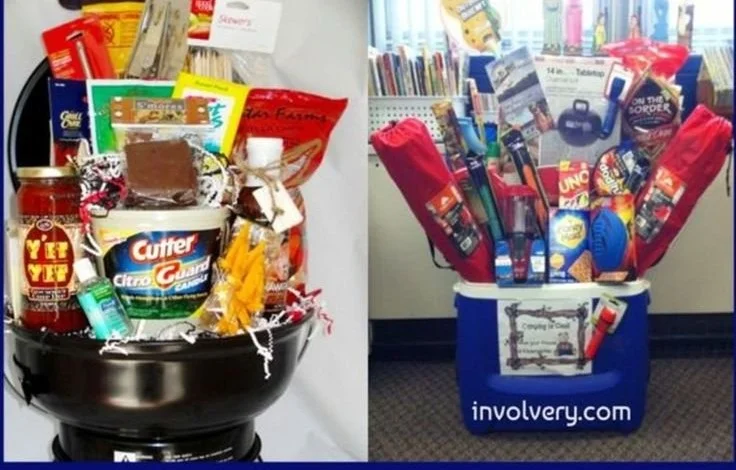
57 Raffle Gift Basket Ideas For Fundraisers and Silent Auctions
57 Creative Raffle Basket Ideas for Fundraisers and Silent Auctions
Finding the right raffle or silent-auction basket can make your fundraiser memorable and boost ticket sales. Whether you want cozy comforts, local experiences, or kid-friendly fun, a well-themed basket tells a story and attracts bidders. For more curated inspiration that complements this list, see these helpful gift basket ideas for raffles to jump-start your planning.
How to use this list
Pick a theme that matches your audience, secure quality items (donated or purchased), arrange them attractively, and write a clear item description with estimated value. Consider creating several tiers of baskets—high-end experiences, mid-range themed collections, and smaller add-on prizes—to appeal to different budgets.
57 Raffle Basket Ideas
- Coffee Lover’s Kit: gourmet beans, flavored syrups, a French press, and a ceramic mug.
- Tea Time Collection: loose-leaf teas, infuser, honey, and shortbread cookies.
- Movie Night Basket: streaming gift card, popcorn, cozy throw, and candy.
- Date Night Package: local restaurant voucher, wine, and a movie rental code.
- Local Restaurant Tour: several small gift certificates to neighborhood eateries.
- Wine & Cheese Pairing: two bottles, artisanal cheeses, and a cheese knife.
- Craft Beer Sampler: regional beers, branded glassware, and snacks.
- Baking Essentials: mixing bowls, spatulas, recipe cards, and gourmet sprinkles.
- BBQ Grill Master: spices, grill tools, apron, and a meat thermometer.
- Breakfast in Bed: pancake mix, maple syrup, jam, and a breakfast tray.
- Plant Parent Starter: potted plants, potting soil, and care guide.
- Herb Garden Kit: seed packets, planters, and markers.
- Gardening Lovers: gloves, hand tools, kneeling pad, and bulbs.
- Spa & Relaxation: bath bombs, candles, face masks, and a plush robe.
- Self-Care Night: essential oils, diffuser, journal, and herbal teas.
- Fitness Starter Pack: yoga mat, resistance bands, and water bottle.
- Runner’s Kit: socks, running belt, energy gels, and a reflective vest.
- Home Workout Bundle: dumbbells, workout app pass, and a sweat towel.
- Pet Pamper Pack: treats, toys, grooming brush, and a bandana.
- Dog Walking Kit: leash, waste bags, portable water bowl, and treats.
- Cat Deluxe Basket: scratching toy, cozy bed, and gourmet cat treats.
- Back-to-School Kit: notebooks, pens, backpack, and study snacks.
- Teacher Appreciation: classroom supplies, gift cards, and thank-you notes.
- Crafting Corner: paint set, brushes, canvases, and inspiration book.
- Knitting/Crochet Set: yarn bundles, needles/hooks, and a pattern book.
- DIY Home Repair: tape measure, screwdriver set, and multipurpose tools.
- Coffee Table Book Bundle: local photography, recipes, and gardening books.
- Date Night In: board game, gourmet popcorn, cocktail mixers, and cozy socks.
- Game Night Pack: popular board games, score pads, and snacks.
- Outdoor Adventure Kit: picnic blanket, portable cooler, and trail snacks.
- Camping Essentials: lantern, compact stove, utensils, and a first-aid kit.
- Beach Day Basket: towel, sunscreen, flip-flops, and a beach game.
- Staycation Package: spa pass, hotel gift certificate, and city attraction tickets.
- Local Experience Voucher: museum membership or theater tickets donated by a partner.
- Tech Accessory Set: portable charger, Bluetooth speaker, and phone stand.
- Photography Enthusiast: tripod, lens cleaning kit, and a photography guide.
- Car Care Bundle: car wash gift card, microfiber towels, and air freshener.
- Home Baking Subscription Box (sample month): themed ingredients and recipes.
- International Snack Box: treats from around the world and a tasting guide.
- Chocolate Lover’s Dream: assorted artisanal chocolates and a tasting journal.
- Cocktail Mixologist Set: bitters, shaker, recipe cards, and glassware.
- Mocktail & Family Drinks: syrups, fun glassware, and mixers for all ages.
- Seasonal Decor Bundle: wreath, ornaments, and table centerpiece.
- Holiday Baking Kit: cookie cutters, icing, and festive sprinkles.
- Memory Keeper: photo album, instant camera film, and scrapbooking supplies.
- New Home Starter: kitchen towels, candle, tool kit, and welcome mat.
- Retirement Relaxation: puzzles, soothing teas, and slippers.
- Corporate Gift Pack: branded items, gourmet snacks, and a desk plant.
- Artisan Food Basket: local jams, honey, olive oil, and crackers.
- Culinary Class Voucher + Ingredients: cooking lesson plus themed ingredients.
- Sports Fan Basket: team merchandise, tickets, and snacks.
- Golf Enthusiast: balls, tees, glove, and a range voucher.
- Music Lover’s Crate: vinyl, headphones, and a record-cleaning brush.
- Teen Tech & Trend: phone accessories, trendy socks, and a gift card.
- Newlywed Basket: cookbook for two, wine glasses, and date-night coupons.
- Sensory Play for Little Ones: safe tactile toys, bubbles, and soft books.
- Kindergarten-Ready Kids’ Pack: storybooks, crayons, educational games, and a small backpack for school excitement — great for family-friendly fundraising events and ideal if you need focused gift ideas for kindergarteners when creating a children’s basket.
Assembly Tips
- Presentation matters: use clear cellophane, ribbon, and an itemized list taped inside.
- Value and donation receipts: estimate retail value and note which items were donated.
- Theme cohesion: stick to one clear theme and avoid mixing unrelated items.
- Promotion: photograph each basket attractively and include those photos on auction websites or social media.
- Add a unique touch: include a handwritten note from the organization or a small “experience” element (e.g., a guided tour, lesson, or VIP seating) to raise interest.
Conclusion
For quick starter inspiration and examples of themed bundles, check out this curated post with practical suggestions and photos of finished baskets: 11 ideas for silent auction baskets.
If you’re organizing a larger fundraising campaign and want ideas beyond baskets—such as events and promotional strategies—this resource on fundraising initiatives outlines creative ways to energize donors: exciting fundraising initiatives take flight.
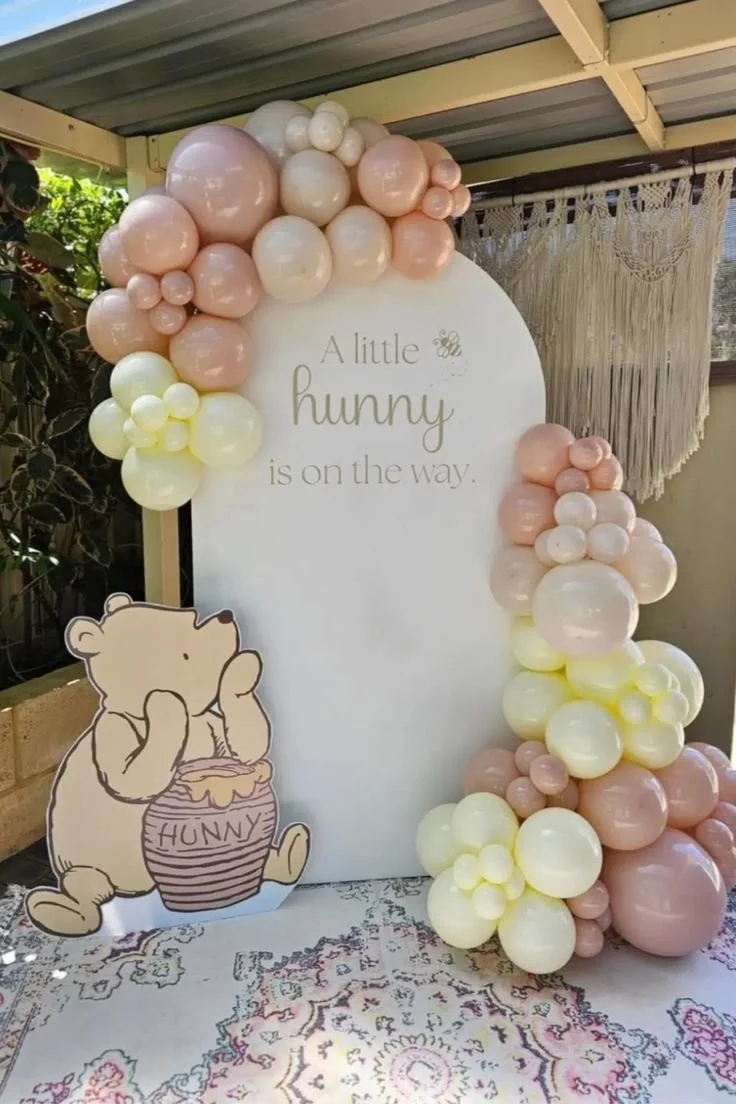
Pooh bear baby shower: ‘A little hunny is on the way’
Pooh Bear Baby Shower: "A Little Hunny Is on the Way"
Planning a Winnie-the-Pooh themed baby shower is a warm, whimsical way to welcome a little one. This gentle, honey-sweet motif works beautifully for decorations, invitations, and keepsakes. If you’re looking for inspiration that extends beyond the party — from room decor to color palettes — take a look at these thoughtful Winnie-the-Pooh nursery ideas to help you carry the theme into the nursery.
Theme and Color Palette
Stick to soft yellows, muted honey tones, gentle greens, and warm browns. Classic Pooh elements — honey pots, bees, balloons, and forest florals — translate well into banners, table runners, and centerpieces. Incorporate plush Pooh bears and storybook-style signage to give the shower a storytime feeling.
Invitations and Styling
Create invitations that look like pages from a beloved picture book: textured paper, watercolor illustrations, and playful fonts. Add a line like "A little hunny is on the way" to set the tone. For styling, use picnic blankets, wooden crates, and mason jars filled with wildflowers to evoke Hundred Acre Wood charm.
Food, Cake, and Baby-Friendly Options
A honey-inspired dessert table is essential: honey cakes, honeycomb candies, and cupcakes topped with edible bee decorations. For guests who are parents-to-be or bringing littles, include simple finger foods and consider a few baby-friendly purées or soft snacks. If you want to make fresh, nutritious options for a baby around six to eight months, these baby food recipes for 6–8 months can guide you in preparing safe, tasty eats that fit the theme by using mild fruit and vegetable purees.
Games and Activities
Keep games gentle and nostalgic: a Pooh-themed trivia quiz, a "guess the baby animal" matching game, or a honey jar guessing game. For keepsakes, set up a station where guests can write wishes on leaves or small scrolls to place in a "Storybook Wishes" box.
Favors and Keepsakes
Favor ideas include small jars of local honey with custom labels, bee-shaped soaps, or mini storybooks. Personalized onesies or bibs with tiny honey pot motifs make memorable gifts for the baby and practical mementos for parents.
Styling Tips for Photography
Natural light and soft backdrops work best for capturing the warmth of a Pooh-themed shower. Use props like a wooden ladder with hanging bunting, a plush Pooh, and scattered faux leaves for layered, storybook visuals. Encourage guests to take polaroids and add them to a scrapbook for the parents.
Conclusion
For a ready-made decorative touch, consider a custom banner that reads “A Little Hunny Is On The Way” available on Etsy via this charming banner listing tailored to Winnie-the-Pooh showers. If you prefer to shop a variety of party supplies and themed sets, browse related options through this curated Amazon search for "A Little Hunny Is On The Way" baby shower items.

10 SUBTLE GASLIGHTING PHRASES PARENTS SAY TO THEIR KIDS
10 Subtle Gaslighting Phrases Parents Say to Their Kids (and What to Say Instead)
Parents often mean well, but some everyday phrases can quietly undermine a child’s experience and trust. Gaslighting isn’t always dramatic manipulation — it can be subtle, habitual language that tells a child their feelings, memories, or reality are wrong. Below are 10 common phrases parents use, why they can be harmful, how a child might feel, and healthier alternatives that validate and strengthen connection.
Introduction
Children develop emotional intelligence through how adults respond to them. Small dismissals can add up into confusion, self-doubt, and difficulty trusting their own feelings. For ideas that help reduce mealtime stress and nurture a calm household, consider this resource on gluten-free kids’ potato ideas which can make shared family moments gentler and more predictable.
"You’re too sensitive."
Why it hurts: This dismisses the child’s emotional experience and implies there’s something wrong with them for feeling what they feel.
What a child hears: "Your feelings are wrong or exaggerated."
Better: "I hear that upset you. Tell me what happened so I can understand.""I was only joking."
Why it hurts: When a child is hurt by a comment, calling it a joke minimizes their pain and teaches them their reactions aren’t valid.
What a child hears: "Your reaction is not legitimate."
Better: "I didn’t realize that would hurt you. I’m sorry — that wasn’t my intention.""You’re remembering it wrong."
Why it hurts: Challenging a child’s memory can make them doubt their own perceptions and reality.
What a child hears: "Trust your memory less than what I say."
Better: "I remember it differently. Let’s talk about both versions and figure out what really happened.""Calm down."
Why it hurts: Telling someone to calm down while they’re upset usually escalates distress and signals their emotions are inappropriate.
What a child hears: "Your feelings are a problem for me."
Better: "You’re really upset. I’m here — take a breath and tell me what’s going on when you’re ready.""I never said that."
Why it hurts: Flat denials erase the child’s experience and can contribute to long-term distrust.
What a child hears: "You can’t rely on your memories — I’m right and you’re wrong."
Better: "If I said that, I’m sorry. Let’s sort out what was said and how we can fix this.""You’re making that up."
Why it hurts: This accuses the child of lying and invalidates true disclosures, which is especially damaging if the child is reporting harm.
What a child hears: "You shouldn’t tell the truth because no one will believe you."
Better: "Tell me more. I want to understand what happened so I can help.""Stop being dramatic."
Why it hurts: Labels like "dramatic" shame a child and discourage emotional expression.
What a child hears: "Your emotions are a performance, not legitimate."
Better: "I can see this matters to you. Let’s talk about why it feels so big.""It was for your own good."
Why it hurts: Framing hurtful actions as benevolent justification can prevent accountability and make the child feel manipulated.
What a child hears: "You must accept hurt because I know better."
Better: "I thought this was best. I can see it upset you — let’s discuss how to handle it differently next time.""No one else will love you if you act like that."
Why it hurts: Threatening a child’s relationships with shame or fear is emotional manipulation and harms self-worth.
What a child hears: "You are only lovable under conditions."
Better: "Behavior has consequences, but you are loved. Let’s talk about better choices and how I can support you.""You’re just like [negative comparison]."
Why it hurts: Comparing a child to someone negatively reduces them to that trait and can create shame and identity confusion.
What a child hears: "You are defined by this flaw."
Better: "I don’t like that behavior. I know you’re better than that — how can I help you do differently?"
Practical tips for parents trying to stop gaslighting patterns
- Pause before responding: Take a breath so you don’t reflexively dismiss or negate a child’s feelings.
- Reflect their emotion: Use phrases like "You seem…" to name feelings without judgment.
- Ask open questions: "What happened?" or "How did that make you feel?" invites detail and respect.
- Own mistakes: If you dismissed them, apologize and correct course.
- Model vulnerability: Sharing your emotions and admitting uncertainty teaches healthy emotional processing.
If you’re rethinking discipline methods that rely on shaming or threats, exploring alternatives can help build cooperation without eroding trust; for more on options that don’t center on punishment, see this guide to non-punitive discipline alternatives.
Conclusion
If you want a deeper list of common gaslighting phrases and short explanations, this Good Housekeeping article on common gaslighting phrases is a useful reference. For practical strategies on how to stop gaslighting and genuinely hear a child’s pain, this Motherly guide about listening to your child’s pain offers compassionate, actionable advice.
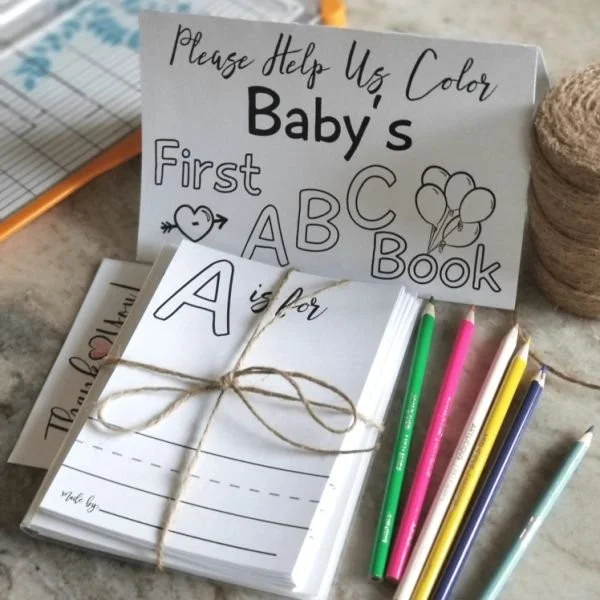
ABC Book Template PDF or Printed
ABC Book Template: PDF or Printed — Which Works Best?
An ABC book is a simple, engaging way for young children to learn letters, vocabulary, and early storytelling. Whether you choose a downloadable PDF template that you can customize at home or a professionally printed version, the right format depends on your goals, time, and audience. If you want ideas for age-appropriate reading progression beyond alphabet books, check out suggestions for chapter books for first graders to see how alphabet familiarity leads into longer reads.
PDF Templates: Fast, Flexible, and Affordable
PDF ABC templates are ideal when you need speed and personalization.
- Instant access: Download and print immediately, which is perfect for classroom crafts, last-minute baby shower activities, or at-home learning.
- Easy to customize: Add photos, family names, or themed clip art on each letter page before printing.
- Economical: Reuse the template many times for different children or events without additional cost.
- Portability: Email or share digital copies with caregivers and teachers.
Tips for using PDFs: choose high-resolution images for print, set page scaling to “actual size” in your printer settings, and consider heavier paper (80–100 lb) for sturdiness.
Printed Books: Polished, Durable, and Gift-Ready
Printing through a professional service produces a keepsake-quality book.
- Professional finish: Durable binding, glossy or matte covers, and consistent color make the book feel special.
- Time-saving: No cutting, gluing, or manual binding required — the supplier handles production.
- Perfect for gifts: Printed books are great for baby showers, graduations to kindergarten, or classroom libraries.
Consider ordering a single proof copy first to check colors, text legibility, and the feel of the binding before placing a larger order.
Customization Ideas and Classroom Activities
Custom features make ABC books more meaningful and engaging.
- Themed alphabets: Create books around animals, foods, family members, or seasonal topics.
- Photo-based pages: Use a child’s photos for “A is for Avery” to help with name recognition and personal connection.
- Interactive elements: Add flaps, textures, or simple questions on each page to prompt conversation.
- Collaborative projects: Have children contribute one page each, compile them into a single class book, and display the finished product.
For creative inspiration, try combining alphabet illustrations with hands-on activities such as simple recipes or name-based crafts, similar to ideas from the cooking name for preschoolers book.
Production and Presentation Checklist
Before printing or handing out your ABC books, run through this quick checklist:
- Proofread every page for spelling and letter order.
- Use CMYK color profiles if sending to a commercial printer for best color fidelity.
- Choose the proper trim size and ensure margins and bleeds meet printer specifications.
- Consider adding a title page with the author’s name, date, and a short dedication to personalize keepsakes.
Conclusion
If you want a quick, zero-cost start for an event or activity, download this free printable ABC book template for baby shower activities to customize and print at home. If you prefer a polished, ready-to-gift option with professional binding and finish, explore these printed guest books and baby shower keepsakes to order copies that will last for years.

How To Raise A Strong Willed Child Into A Thriving Adult
How to Raise a Strong-Willed Child into a Thriving Adult
Strong-willed children can be a joy and a challenge. Their determination, curiosity, and refusal to accept an easy “no” often signal future leadership qualities, but without thoughtful guidance those traits can lead to persistent power struggles. This article offers practical strategies to channel a strong will into resilience, responsibility, and emotional intelligence. For immediate techniques to soothe intense emotions, many parents find resources on calming an angry child helpful as a starting point.
Understand the temperament
A strong-willed child typically has a temperament marked by high intensity, persistence, and low adaptability. Recognize that these are stable traits—not deliberate misbehavior. When you frame the behavior as temperament rather than defiance, it becomes easier to respond with patience and strategy instead of shame or punishment.
Practical steps:
- Observe triggers and patterns: notice times of day, environments, or requests that prompt resistance.
- Validate feelings first: “I see you’re upset because…” helps defuse intensity and opens the door to cooperation.
- Name strengths: point out their bravery, curiosity, and determination so they see themselves positively.
Build connection first
Trust and connection reduce the need for power fights. A child who feels seen is more likely to accept limits from a caregiver they believe has their best interests at heart.
How to connect:
- Give focused attention daily—5–10 minutes of undivided play or conversation.
- Use “choice moments” to give autonomy in safe ways (e.g., “Do you want apples or bananas?”).
- Mirror emotions to validate and teach emotional vocabulary.
Set clear, consistent boundaries
Strong-willed children often test limits to understand them. Clarity and consistency are your allies.
Guidelines for boundaries:
- Keep rules simple and consistent—fewer rules done well beat many rules enforced inconsistently.
- Explain the why: kids are more cooperative when they understand the reason behind a limit.
- Follow through calmly and predictably when limits are crossed; avoid escalating into shouting matches.
Offer choices and involvement
Giving options reduces resistance because the child feels in control. Offer limited, meaningful choices and involve them in problem-solving.
Examples:
- Instead of “Put your shoes on,” try “Would you like your red shoes or blue shoes?”
- When a routine causes friction, involve your child in creating the routine so they feel ownership.
Understanding why children sometimes rush to grow up can also illuminate their need for control; exploring why young children want to be adults helps you respond to their bids for autonomy constructively.
Teach problem-solving and emotional regulation
Strong-willed children benefit from explicit coaching in how to handle frustration and disappointment.
Coaching steps:
- Label emotions and model calm coping strategies (deep breaths, counting, taking a break).
- Role-play alternative responses to common conflicts.
- Praise effort and strategies: “I noticed you took three deep breaths before asking. That helped.”
Encourage responsibility and leadership
Channel that will into responsibilities that foster competence and pride. Assign age-appropriate chores, let them lead small projects, and give them natural consequences when safe and appropriate.
- Use strengths-based praise: focus on effort, planning, and follow-through.
- Offer leadership opportunities like organizing a family game night or helping plan a grocery list.
Avoid power struggles; use strategic consequences
When a standoff begins, be the adult in tone and strategy. Lower your stakes and offer choices that preserve dignity for both of you.
Techniques:
- Use time-limited choices: “You can put that down now, or I will put it away in 10 minutes.”
- Implement natural consequences rather than punitive ones when safe (e.g., if they refuse to wear a coat, accept a short outdoor stay and then return inside when they’re cold).
- Keep consequences closely tied to the behavior and delivered without anger.
Foster long-term resilience
Raising a thriving adult takes time. Strong-willed children need opportunities to fail safely and to experience recovery.
Ways to build resilience:
- Encourage reflection: after a conflict, ask what worked and what didn’t.
- Celebrate problem-solving and recovered mistakes equally to successes.
- Maintain predictable routines that support sleep, nutrition, and emotional regulation.
When to ask for help
If tantrums or resistance consistently disrupt family life or school functioning, seek guidance from pediatricians, counselors, or parenting specialists. Early support can prevent patterns that become harder to change in adolescence.
Conclusion
Raising a strong-willed child into a thriving adult means balancing empathy with limits, offering choices while holding consistent boundaries, and teaching skills rather than demanding obedience. For practical, step-by-step approaches on listening and cooperation, consider resources that offer specific strategies like practical strategies for getting a strong-willed child to listen. If you’re looking ahead to the teen years and want guidance on preserving connection during increased independence, this resource offers helpful advice on helping a strong-willed teen thrive.
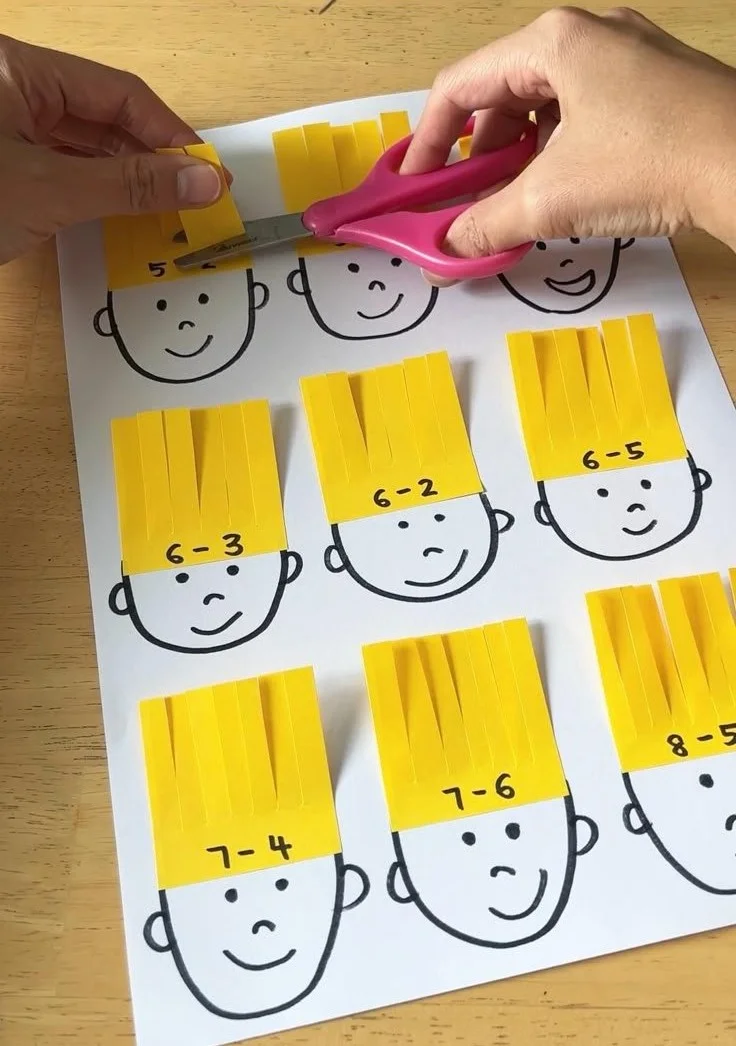
Subtraction Haircut using Sticky Notes
Subtraction Haircut Using Sticky Notes
Turn an ordinary sheet of sticky notes into a lively subtraction activity that feels more like play than work. "Subtraction Haircut" is an interactive, hands-on game that helps young learners internalize subtraction facts, practice one-step word problems, and build fine motor skills — all while giving paper "haircuts" to cute classroom characters.
Learning Objectives
- Practice subtraction facts within 10 (or within 20, adjusted by level)
- Strengthen one-to-one correspondence and counting-back strategies
- Improve fine motor control through tearing or peeling sticky notes
- Foster engagement and cooperative learning
Materials
- A pad of sticky notes (any color)
- Marker or pen
- Chart paper or construction paper cut into character heads (circles or simple faces)
- Scissors (optional)
- Small counters (buttons, beads, or erasers) — optional
Preparation
- Create 6–12 character heads on chart paper, or use individual sticky notes to make faces on a whiteboard or students’ desks.
- Place a stack of sticky notes arranged vertically above (or around) each head to represent hair. Alternatively, stick a column of sticky notes directly on each head so each note represents one "hair."
- On the board or on task cards, write subtraction problems appropriate for your learners (for example, 7 − 3 or 10 − 4).
How to Play: Basic Subtraction Haircut
- Present a subtraction problem to the students (e.g., 8 − 2).
- Tell them that each sticky note is one strand of hair. Start with a full column of sticky notes representing the minuend (the first number).
- The students remove (cut/peel off) the number of sticky notes equal to the subtrahend (the second number) to give the character a "haircut."
- Count the remaining sticky notes together to find the difference (the answer).
- Repeat with new problems, encouraging students to say the subtraction sentence aloud: “Eight minus two equals six.”
Variations
- Partner Play: One student reads the problem and the partner performs the haircut and explains their thinking.
- Timed Challenge: How many correct haircuts can the student do in 5 minutes?
- Story Problems: Embed subtraction into short narratives, e.g., “Sam had 9 hairs; the barber cut 3. How many left?”
- Reverse Operation: Show the result (the remaining sticky notes) and ask students to figure out which subtraction sentence matches.
- Larger Numbers: Stack more sticky notes or use sticky note strips to represent numbers up to 20.
Differentiation
- For beginners: Use smaller minuends (≤10) and allow counters beside the sticky notes for tactile support.
- For advanced learners: Use two-step problems or ask students to record the subtraction sentences and explain strategies (counting back, making ten).
- Visual supports: Label each sticky note with numerals or dots to scaffold counting.
Assessment Ideas
- Observe students as they explain each step to assess conceptual understanding.
- Have students record a few subtraction problems with drawings of the sticky-note haircuts and the corresponding equations.
- Use quick exit tickets: give a pictured haircut (sticky note column with some removed) and ask students to write the subtraction sentence.
Classroom Management Tips
- Prepare multiple sets of heads and sticky notes so small groups can work simultaneously.
- Keep an example model visible so students can quickly refer back to the routine.
- If using real scissors, supervise carefully or pre-cut the sticky note strips for safety.
- Rotate roles within groups (problem reader, haircutter, recorder) to keep engagement high.
Benefits Beyond Numbers
This activity builds language skills (students verbalize subtraction sentences), social skills (partners negotiate roles), and creativity (students decorate characters). It’s flexible, low-prep, and can be adapted for whole-group instruction, centers, or take-home practice.
Conclusion
Subtraction Haircut is a playful, low-cost strategy that helps children visualize subtraction and practice computation with tactile, memorable actions. For more activity ideas using sticky notes and simple manipulatives, check out easy sticky notes ice cream math activities for kids, which offers creative sticky-note extensions. If you want standards-aligned guidance for subtraction within early elementary, review the related curriculum resource First Grade – Add and Subtract within 10 for helpful benchmarks and skill progressions.
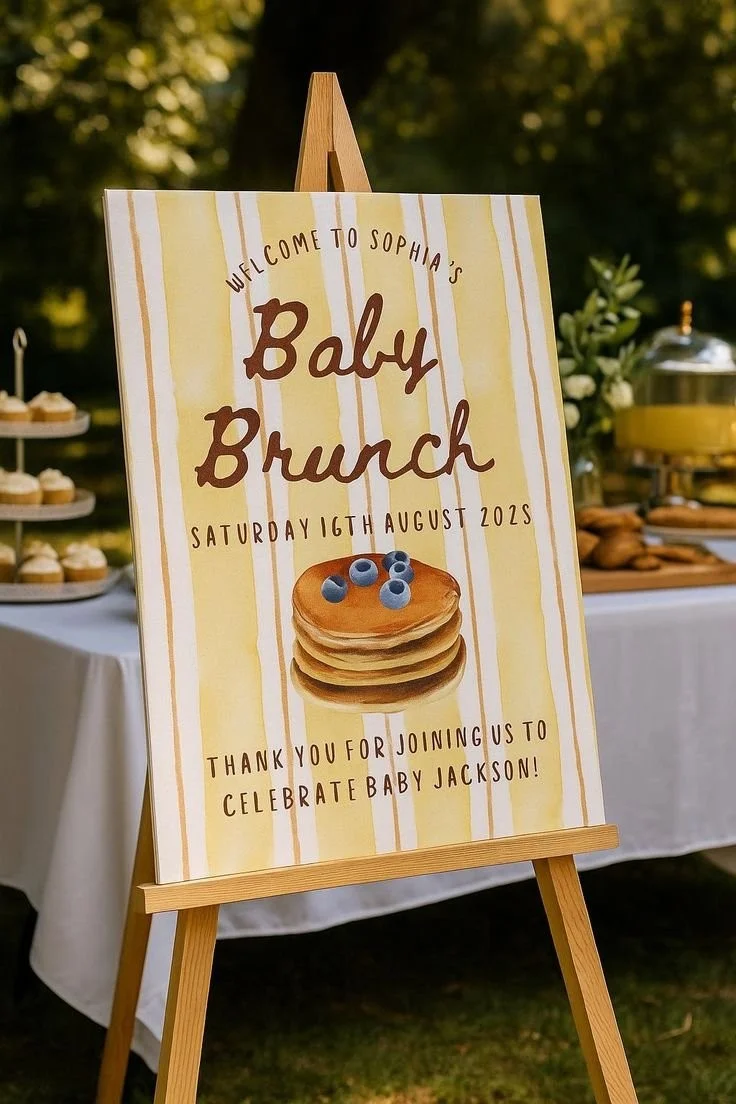
Baby Brunch Baby Shower Welcome Sign
Baby Brunch Baby Shower Welcome Sign: Editable, Printable, and Perfect for Any Sprinkle
Planning a baby brunch? A charming welcome sign sets the tone the moment guests arrive. Whether you’re celebrating a boy, girl, or keeping things neutral, an editable printable welcome sign gives you fast, beautiful decor without the wait. If you’re also putting together the menu, check these helpful baby shower food ideas for a girl to pair your signage with tasty, themed bites.
Why choose an editable printable welcome sign?
Editable templates let you:
- Personalize wording (baby’s name, date, host names).
- Match fonts and colors to your theme.
- Instantly download and print from home or a print shop for a last-minute event. These signs are ideal for a baby brunch because they can be adapted to a casual pancake-and-mimosas vibe or an elegant mid-morning celebration.
Design tips for a baby brunch welcome sign
- Keep the message short and friendly: “Welcome to [Name]’s Baby Brunch” or “Brunch & Baby Love.”
- Select readable fonts for a welcome sign that will be photographed and read from a short distance.
- Use seasonal or theme-based accents (florals, tiny pancakes, bows, or neutral greenery) depending on whether the shower is a boy, girl, or gender-neutral sprinkle.
- If your shower is outdoors, choose a slightly larger size and heavier cardstock so the sign stays upright and visible.
If your party is being planned in the open air, you might also consider these outside baby shower ideas for girls to keep guests comfortable and the decorations protected.
How to customize and print
- Open the editable template in a program that supports the file format (often PDF or a template editor).
- Replace placeholder text with your event details, adjusting font sizes so the main message stands out.
- Keep contrast high (dark text on light background or vice versa) for easy readability.
- For printing:
- Home printer: Use heavyweight matte or satin cardstock for a polished look.
- Professional print shop: Ask for foam board mounting for sturdier display options.
- If you want an economical option, print a smaller version and place it in a stylish frame or on an easel.
Display ideas
- Frame the printed sign in a wooden or gold frame and place it on an easel at the entrance.
- Hang the sign from a decorative ladder or a garlanded arch for a photogenic entryway.
- Pair the welcome sign with a small table offering guestbook cards, mimosas, or favors to create a cohesive welcome station.
Final checklist before your brunch
- Confirm wording and spelling on the editable file.
- Choose appropriate paper weight for the setting.
- Decide on placement and how the sign will be supported or hung.
- Print a test copy to check colors and readability in the venue lighting.
Conclusion
For a stylish and stress-free baby brunch, editable printable welcome signs are a fast way to personalize your decor; a charming example to inspire your design is the Pancake Pink Bow Baby Shower Welcome Sign on Etsy, which suits a soft, brunch-themed sprinkle. If you’re also preparing invitations to match your sign’s look, explore the selection of coordinated options at Tiny Prints baby shower invitations to create a cohesive celebration from invite to welcome.
Raising Emotionally Unstoppable Kids Who Aren’t Afraid of a Little Failure
Raising Emotionally Unstoppable Kids Who Aren’t Afraid of a Little Failure
Introduction
Raising a child who meets setbacks with curiosity instead of fear is one of the most valuable gifts a parent can give. Emotional resilience doesn’t appear out of thin air; it grows from everyday experiences, modeled behavior, and small, consistent practices. Just as nutrition and routines shape physical development, simple habits can shape emotional strength—consider how the benefits of apples for toddlers illustrate the outsized effect of tiny choices on long-term well-being. In this article I’ll outline practical strategies you can apply today to help your child become emotionally unstoppable and unafraid of failure.
Why embracing failure matters
Failure is an information-rich event. When kids see mistakes as feedback rather than identity-defining verdicts, they learn to iterate, try different approaches, and grow. Children who fear failure often avoid challenges, which limits learning and erodes confidence. Conversely, children who experience manageable setbacks learn problem-solving, persistence, and adaptability—traits that carry into adulthood.
Core parenting principles to foster resilience
- Normalize struggle: Talk about how everyone—parents included—faces setbacks. Use age-appropriate examples of when you tried, failed, and tried again.
- Focus on effort and strategies: Praise the process (“You worked hard on that puzzle”) rather than innate traits (“You’re so smart”). This reinforces a growth mindset.
- Teach emotional literacy: Give words to feelings. When a child is upset, say, “You look disappointed—do you want to tell me what happened?” Naming emotions reduces overwhelm and opens space for problem-solving.
- Model calm recovery: Children learn regulation by watching caregivers. When you respond to your own setbacks with composure and curiosity, you teach them to do the same.
Practical strategies and activities
Turn setbacks into science experiments
Frame “failures” as experiments with hypotheses and results. After a scraped paint project or a solvable mistake, ask: “What did we expect? What happened instead? What would we try differently next time?” This de-personalizes the outcome and focuses on learning.Build a “not-yet” vocabulary
Replace “I can’t” with “I can’t yet.” This small linguistic shift signals that abilities are developable. Celebrate incremental progress—completing a task with help, increasing practice time, or trying a second strategy.Offer calibrated challenges
Give children tasks that are slightly beyond their current skills but still achievable with effort. These “stretch” tasks produce productive struggle and teach that effort is a path to improvement.Create a safe failure zone at home
Designate times and spaces where experimentation is expected—whether that’s a messy art table, a weekend coding session, or trying a new recipe. Emphasize curiosity and exploration over perfect results.Teach repair and restitution skills
When mistakes hurt others, guide children to make amends. Learning to take responsibility and repair relationships strengthens social-emotional competence and reduces shame associated with failure.Use stories and role models
Share stories of well-known figures who failed before succeeding. Personalize it with family stories: grandparents who changed careers, parents who learned new skills later in life. These narratives normalize perseverance.
Sibling dynamics and community learning
Siblings and peers are powerful teachers. Observing an older sibling try, fail, and try again teaches younger children that effort matters. Family structure can influence how kids learn resilience; factors like age spacing affect how responsibilities and modeling naturally occur. For example, considering the best age gap between kids can help parents plan environments where siblings can teach and challenge one another constructively.
Emotional coaching scripts you can use
- When a child misses a goal: “That was tough. What do you think went wrong, and what’s one thing we could try next time?”
- After a meltdown: “Take three deep breaths. When you’re ready, tell me what you felt and what you want to try next.”
- When a child gives up: “I notice you stopped. Do you want help breaking this into smaller steps so it feels more doable?”
Avoiding common pitfalls
- Don’t rescue too quickly. Constantly solving problems for children denies them practice in persistence.
- Don’t overpraise outcomes. Overemphasizing results makes children dependent on external validation.
- Avoid labeling. “You’re so talented” can fossilize identity; instead praise strategies, effort, and improvement.
Measuring progress without pressure
Keep track of small wins: the number of times a child attempts a hard task independently, willingness to ask for feedback, or reduced anxiety when facing new challenges. Celebrate these shifts quietly and regularly—progress in resilience is often gradual.
Conclusion
If you want a structured primer on building grit in children, this piece on raising resilient kids with grit offers practical perspectives that complement the strategies above. For deeper insight into overcoming self-doubt—an obstacle that often masks itself as perfectionism—consider the thoughtful techniques described in Overcome Crippling Self-Doubt The Einstein Way.