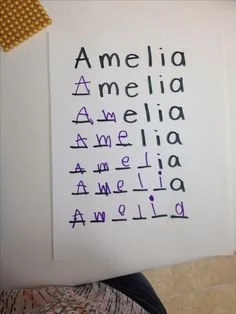
Three engaging activities to help a child learn to write their own name
Helping a young child learn to write their own name is an important milestone. These activities are playful, multisensory, and adaptable for children aged about 3–6 years. They focus on letter recognition, fine motor control, and the connection between the spoken name and its written form. For family-oriented inspiration beyond writing activities, you might also enjoy these maternity photoshoot ideas to capture special moments as your child grows.
How to approach teaching a name
- Start with the child’s spoken name: sing it, spell it aloud, and use their name frequently in conversation.
- Use consistent letter forms (e.g., capital first letter, lowercase for the rest) so the child learns a stable visual model.
- Keep practice short and fun — multiple short sessions work better than long drills.
Activity 1 — Sensory name tray (salt, sand, or shaving cream)
Materials: shallow tray, salt/sand/shaving cream, a printed name card.
Steps:
- Place a name card in large, clear letters where the child can see.
- Fill the tray with a thin layer of salt, sand, or shaving cream.
- Ask the child to write each letter of their name in the sensory medium using their finger.
- Encourage them to say each letter aloud as they write it.
Why it works:
- The sensory feedback reinforces muscle memory.
- Mistakes are easy to erase and try again, lowering frustration.
Variations:
- Use a paintbrush or a cotton swab for a different motor challenge.
- For older children, write words that start with the same letter as their name.
Activity 2 — Name puzzle cards
Materials: cardstock, marker, scissors, optional laminate.
Steps:
- Write the child’s name on a strip of cardstock in bold letters, each letter spaced evenly.
- Cut vertically between letters to make a simple puzzle (one piece per letter).
- Mix the pieces and have the child reassemble the name in order.
- Once assembled, ask them to trace the name with a finger or pencil.
Why it works:
- Breaking the name into pieces builds letter-by-letter recognition and sequencing.
- Reassembling the puzzle increases visual discrimination and problem-solving.
Variations:
- Make multiple copies and create timed challenges for older children.
- Use pictures that begin with each letter to add phonics practice.
Activity 3 — Rainbow writing with markers or playdough letters
Materials: sheet with name printed lightly, several colored markers or playdough.
Steps (rainbow writing):
- Print the child’s name faintly on paper as a guide.
- Have the child trace the name multiple times, using a different color each pass to make a “rainbow” effect.
Steps (playdough letters): - Have the child form each letter from playdough and place the letters in order.
- Ask them to say each letter as they form it and then copy the formed letters onto paper.
Why it works:
- Repeated tracing builds visual-motor integration.
- Colors and tactile play increase interest and attention.
Variations:
- Use stickers, stamps, or highlighters for additional sensory input.
- Challenge the child to form letters in increasingly smaller sizes to refine fine motor skills.
Tips for progression and assessment
- Move from large, whole-arm movements (air writing) to small, wrist-based movements on paper.
- Celebrate attempts and progress rather than perfection.
- Keep informal records: note which letters are consistently correct and which need more work.
- Observe whether the child recognizes letters out of sequence — this can indicate whether they know individual letters or only the whole word pattern.
- For broader guidance on observing developmental progress, consult resources focused on early-childhood assessment.
In the body of activities and tips you can also explore broader wellbeing ideas; for example, these child wellness resources offer related approaches to support learning readiness and fine motor development.
Conclusion
If you want ready-made activity ideas in Spanish with step-by-step instructions, see this article on Actividades para que aprenda a escribir su nombre – Mamá y maestra. For professionals and parents who need guidance on observing and assessing young children’s progress, consult the observation and assessment guide for early childhood. To explore more play-based stimulation ideas in Spanish, review the Estimulación temprana archive on Mamá y maestra.

Click to get the full bundle — instant download