
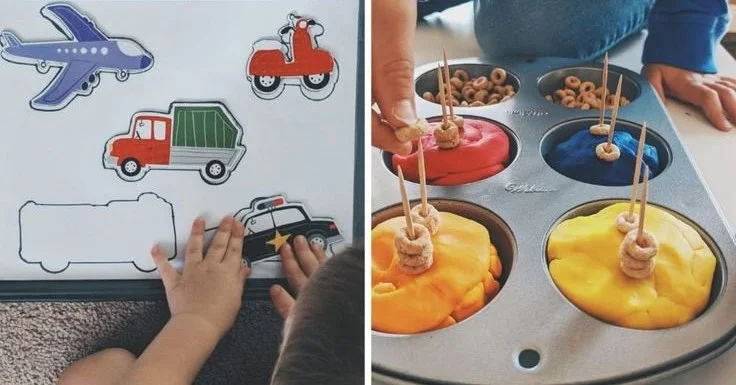
Imagine it’s a rainy Monday morning. You’re staring blankly at the walls, wondering how on earth you’re going to keep your energetic little one entertained for hours on end. Sound familiar? We’ve all been there! But here’s the thing: with just a little creativity and a sprinkle of preparation, you can transform your home into a vibrant learning environment filled with fun hands-on activities. If you’re looking for some easy-to-set-up activities for your 2-3 year old, you’re in the right place. Let’s dive into over 30 engaging learning opportunities that will not only keep your toddler entertained but also provide essential skill building.
Crafting Shapes with Everyday Items
Why not start with one of the most fundamental building blocks of early learning—shapes? You can literally use anything around the house for this.
Shape Sorting: Grab some colored paper and cut out different shapes. Use containers to sort them by color or shape. You can even make it a game, racing to see who can sort the fastest.
Outdoor Shape Hunt: Head outside and see if you can find shapes around the yard or park. Is that a round stone? What about the square windows on the house? This makes learning shapes super interactive.
Counting Made Fun
Counting doesn’t have to be boring, and it can be integrated into almost everything you do.
Counting Snacks: While you prepare a snack, let your child help count out pieces. Whether it’s apple slices, crackers, or grapes, this makes counting practical and delightful.
Nature Number Line: Create a number line with sticks, leaves, or stones collected on nature walks, and enjoy counting them together.
Animal Sounds Count: Pretend to be different animals while you count them. One quack, two quacks, three quacks! (I know this may seem silly, but toddlers love it!)
Letter Exploration
Moving onto letters, you don’t need fancy equipment to make letter learning fun.
Letter Scavenger Hunt: Write down letters on a piece of paper and encourage your little one to find items in your house that start with those letters.
Sticks and Leaves Letters: While out on a walk, collect sticks and leaves to create letters on the ground. It’s a fun way to get some fresh air while learning!
Fine Motor Skills Activities
Developing fine motor skills now helps prepare your toddler for writing down the line. Here are some handy activities that require minimal setup:
Button Art: Gather a bowl of buttons and a piece of cardboard or construction paper. Let your child create different patterns or even pictures using the buttons. This can keep them engaged for quite some time!
Playdough Play: You can never go wrong with playdough. Encourage them to roll, squish, and mold. You might even create shapes or letters while playing.
Sponge Transfer: Use a pair of tongs or even fingers to transfer small sponges from one bowl to another. This develops those little hand muscles that will be so helpful when writing.
Gross Motor Skills Games
It’s important for toddlers to move their bodies. Here are two activities that involve big movements:
Obstacle Course: Set up simple obstacles with pillows, hula hoops, or chairs, and let them climb over, crawl under, or jump around. It’s a great way to get their energy out!
Animal Walks: Encourage them to walk like different animals! Whether it’s a bear crawl or hopping like a frog, it’s an entertaining way to get the wiggles out.
Pre-Writing Skills Focus
Before they put pen to paper, reinforce pre-writing skills in fun ways.
Rainbow Writing: Use crayons or colored chalk and let them practice writing their names or letters in the air or on a large piece of paper. Make a game out of it by asking them to trace over letters with different rainbow colors.
Sand Letters: Fill a shallow dish with sand and encourage your toddler to use their finger to trace letters you call out. It’s a tactile way to engage with learning.
Problem Solving and Critical Thinking
Engaging your toddler’s problem-solving skills is essential for their development. Here’s how you can cultivate that:
Puzzle Play: Choose simple puzzles that encourage them to think critically. You don’t need an expensive puzzle; anything with large pieces will work and keep them engaged.
Mystery Box: Fill a box with various household items and let your toddler explore. Ask questions like, “What do you think this does?” or “Can you find something that is soft?”
Name Practice
Learning to recognize their own name has so many benefits for toddlers.
Name Collage: Write their name on a piece of paper and provide magazine cutouts or stickers that they can use to decorate it. Not only is this a great way to learn letters, but it also fosters creativity.
Name Songs: Sing a song that incorporates their name. Rhymes can be catchy, and this helps them remember their name.
Bonus Ideas
If you’re itching for even more ideas, here are a few that are both fun and educational:
Color Mixing: Pour a little water and add food coloring to different cups. Let them mix colors in clear jars and watch the magic happen.
Cooking Together: Involve your toddler in meal prep. Simple tasks like stirring or adding ingredients are a perfect way to integrate math (measuring) and science (how ingredients change).
Storytime Participation: When reading a story, ask them to point out letters or shapes they see in the illustrations. Make it a game of recognition!
Quick Tips for Low Prep Activities
- Keep a bag of craft supplies ready for impromptu activities.
- Embrace mess! Learning often gets a little messy, and that’s perfectly okay.
- Rotate activities to prevent boredom. Just because your child loves one activity today doesn’t mean they will tomorrow!
Mistakes to Avoid
It’s perfectly normal to feel overwhelmed, but here are a few things to keep in mind:
- Don’t feel pressured to create elaborate activities. Simple is often best!
- Avoid multitasking while engaging in activities, as this can take your attention away from your child.
- Remember that every child is different. What works for one may not work for another; follow their lead.
If you approach these activities with a sense of wonder and excitement, you’ll both benefit immensely. Through this shared play, you’re not just filling their day with fun but also fostering critical skills they’ll need as they grow.
Conclusion
Incorporating hands-on activities into your toddler’s daily routine can be both effortless and incredibly rewarding. By engaging with your little one through simple and playful methods, you foster not only their cognitive development but also your bond with them. If you’re looking for even more ideas, check out Quick Easy Activities for Toddlers, Activities for 1-2 Year Old Toddlers, and Best Preschool Activities for Hands-on Learning. Embrace the mess, relish the giggles, and enjoy this beautiful journey of learning together!