Pre-K at Home: A Daily Schedule That Works
Creating a predictable, flexible daily rhythm for pre-Kers makes learning, play, and family life flow more smoothly. Routines help children feel secure, build independence, and provide natural opportunities for language, motor skills, and social-emotional growth. If you’re juggling naps and bedtime while establishing your pre-K routine, this guide to a 14-month-old sleep schedule offers helpful sleep-structure tips you can adapt as your child grows.
This article lays out a sample day, activity ideas, transition tips, and ways to customize the schedule to fit your family.

Why a Routine Matters
Young children thrive on predictability. A consistent daily flow reduces meltdowns because kids know what comes next. Routines also let you intentionally build learning moments into ordinary tasks — like counting snacks, naming colors during dressing time, or practicing fine motor skills at snack setup. Keep the framework steady, but allow flexibility for sick days, travel, and natural variation in your child’s energy.
Sample At-Home Pre-K Daily Schedule
Below is a flexible, balanced example you can shift earlier or later based on your family’s rhythm.
- 7:00–8:00 — Wake, morning hygiene, breakfast, and a short free-play warm-up
- 8:00–9:00 — Circle time: calendar, weather, a letter/sound or number focus, and a short story
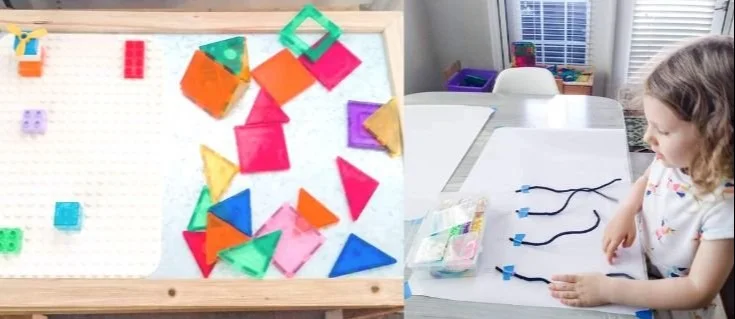
- 9:00–9:30 — Hands-on learning activity: sensory bin, counting games, or a simple science exploration
- 9:30–10:00 — Outdoor play: gross-motor time at a park, backyard, or walk
- 10:00–10:30 — Snack and independent play with puzzles or books
- 10:30–11:00 — Art and creativity: process art, playdough, or cutting practice
- 11:00–11:30 — Music and movement: songs, rhythm instruments, and dance
- 11:30–12:30 — Lunch and wind-down (quiet books, cuddles)
- 12:30–2:30 — Nap/rest time (adjust length by child)
- 2:30–3:00 — Calm wake-up routine and snack
- 3:00–4:00 — Small-group learning: letters, counting games, or simple worksheets adapted to play
- 4:00–5:00 — Free choice play and family time; involve children in simple chores for practical life skills
- 5:00–6:00 — Dinner, evening routine, and a bedtime story by 7:00
This schedule blends structured learning segments with ample free play and outdoor time — both crucial for pre-K development.
Activity Ideas by Domain
- Language & Literacy: Shared book reading with follow-up questions, story retelling with puppets, and rhyming games.
- Math Readiness: Sorting objects by size/color, counting daily items during snack, building towers to explore patterns.
- Fine Motor: Bead stringing, sticker activities, cutting with child-safe scissors, and simple lacing cards.
- Science & Sensory: Nature scavenger hunts, water play, magnet exploration, and sink/float experiments.
- Social-Emotional: Role-play with dolls or puppets, turn-taking board games, and feeling charades using picture cards.
- Gross Motor: Obstacle courses, jump-and-count games, and ball skills.
Switch activities every 15–30 minutes depending on interest and attention span; longer for child-led play sessions.
Transitions and Time Management
Transitions can be the hardest part of a home schedule. Use short songs, timers, or a visual schedule with pictures to cue what’s next. Offer two-minute warnings and involve children in the process (e.g., “Pick up two toys, then it’s time to wash hands”). Keep expectations simple and consistent — move from a high-energy activity to a quieter one gradually.
Week-to-Week Variety
Rotate themes across the week (letters, numbers, animals, community helpers) so children revisit concepts without boredom. Reserve one day for field trips or neighborhood exploration and another for creative arts so every week feels fresh.
Tips for Success
- Plan ahead: Prepare materials the night before to reduce morning scramble.
- Follow the child’s lead: If a child is deeply engaged, extend play; if they’re restless, switch to movement.
- Involve siblings: Design parallel activities so older and younger children can participate together.
- Limit screen time: Use short, educational videos sparingly and pair them with hands-on follow-ups.
- Celebrate small wins: Praise effort and curiosity, not just correct answers.
To celebrate milestones and capture your child’s growth through pre-K, check creative maternity photoshoot ideas that inspire at-home photo sessions and memory-making.
Conclusion
For more examples of a homeschool preschool daily rhythm that you can adapt to your family, see this practical outline from Treehouse Schoolhouse’s homeschool preschool daily rhythm.
If you’d like another perspective on structuring a consistent preschool day at home, this helpful sample from Confessions of a Homeschooler offers concrete time blocks and activity suggestions in their Daily Homeschool Schedule: Preschool.

Click to get the full bundle — instant download