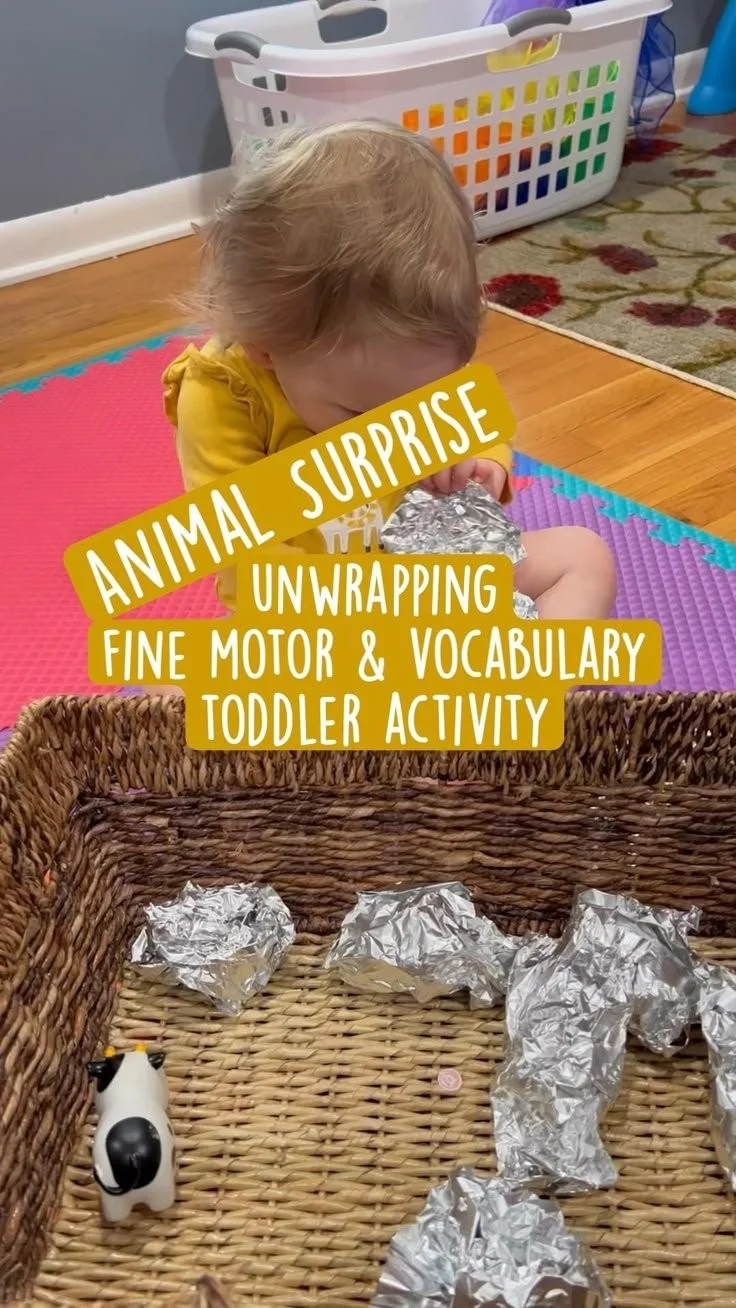
Learn Animals Unwrapping: A Montessori-Inspired Fine-Motor, Sensory, and Vocabulary Activity for Toddlers
This playful unwrapping activity invites toddlers to discover toy animals by peeling back layers, combining fine-motor practice, sensory exploration, and rich language exposure. It’s easy to set up with household materials and fits well within a Montessori approach that encourages independence, repetition, and hands-on learning. If you’re gathering calm, child-sized materials for a morning of exploration, consider pairing this activity with mindful snack times like the Montessori snack ideas for 3-year-olds to create a predictable, nurturing routine.
Why this works for toddlers

- Fine-motor development: peeling, pulling, and manipulating wrappers strengthen pincer grasp and bilateral coordination, essential for later skills such as writing and dressing.
- Sensory input: different textures (paper, cloth, foam) and mild resistances when unwrapping provide proprioceptive and tactile feedback.
- Vocabulary expansion: naming animals, describing textures, and using verbs (unwrap, peek, reveal) grow receptive and expressive language.
- Executive function & concentration: sequencing and staying focused while revealing an object support attention span and working memory.
- Montessori alignment: self-directed discovery, simple purposeful materials, and repetition let the child lead their learning.
Materials (simple and adaptable)
- Small toy animals or animal figurines (one per hide)
- Wrapping materials in varied textures: tissue paper, felt scraps, crinkled paper, soft fabric, small envelopes, and paper towel rolls
- A low tray or basket for presenting the wrapped animals
- Safety scissors for adult prep (never leave with toddlers)
- Optional: a blindfold (for older toddlers under supervision) or container with a hole to reach in and feel
Preparation (adult steps)
- Select several small animal toys — aim for 6–10 to match toddlers’ attention spans.
- Wrap each animal in a different material or combination (e.g., tissue + ribbon, felt + sticker tab) to create varied unwrapping experiences.
- Place the wrapped items neatly on a small tray at child height. Include a demonstration sample for the first use.
- Keep the environment calm and free of distractions so the child can focus on the task.
How to introduce the activity
- Sit nearby and invite the child: “Would you like to open an animal?”
- Model one reveal slowly: use words to describe each step (“I pull the paper,” “I see a tail!”), emphasizing verbs and animal names.
- Offer choices: “Which one would you like to open first?” This encourages decision-making and language.
Step-by-step activity flow
- Child chooses a wrapped item from the tray.
- Child uses fingers to peel, slide, or tear away the wrapping to reveal the animal.
- Adult labels the animal and comments on features: “It’s a giraffe — long neck! Tall giraffes eat leaves.”
- Encourage imitation sounds or actions: “Can you stomp like an elephant?”
- Replace the animal in its wrapping for repeated practice, or invite the child to rewrap for fine-motor strengthening and sequencing practice.
Differentiations and progressions
- Simplify: use loosely wrapped tissue paper or envelopes for beginners.
- Challenge: add taped seams to require more sustained effort or include multiple nested layers to increase steps.
- Sensory focus: include scented papers (mild, child-safe scents) or textured fabrics to emphasize descriptive vocabulary.
- Language focus: create a two-part game where the child matches animal pictures to the unwrapped toy to build vocabulary and memory.
Integrating other routines and learning moments
- Storytime tie-ins: after unwrapping, read a short animal book to connect the toy to narrative language.
- Sorting & counting: after several reveals, sort animals by habitat or count how many were unwrapped.
- Self-care practice: invite the child to put toys back in the tray independently to build responsibility.
Safety and supervision
- Always supervise toddlers during the activity to prevent ingestion of small parts or choking hazards.
- Avoid sharp or tightly sealed wrappings that could frustrate or injure little hands.
- Ensure toys are age-appropriate and follow safety guidelines.
Assessment and observation tips
- Watch hand movements: are fingers isolating (pincer) or using the whole hand? Adjust challenge accordingly.
- Note attention span: increasing time spent engaged suggests growing focus.
- Listen for language growth: does the child name animals, use verbs, or combine words into short phrases?
- Track progress by increasing difficulty gradually and seeing finer motor improvements over weeks.
Cleanup and maintenance
- Make rewrapping a part of the activity: show the child how to fold paper or tuck fabric back around the toy.
- Store wrapped sets in a labeled box for future rotations; rotating materials keeps novelty high.
Extension activities and ideas
- Sensory boxes: place wrapped animals inside a shallow bin of rice or dried pasta for combined tactile search and unwrapping.
- Mystery sound game: record animal sounds and have the child guess which wrapped animal makes each sound before unwrapping.
- Art connection: after revealing, the child draws the animal or stamps its footprint with washable ink.
Recommended age and duration
- Best for toddlers roughly 18–36 months, but easily adaptable for slightly younger or older children.
- Keep sessions short and child-led: 10–20 minutes typically matches toddler attention spans.
Body paragraph with the second internal link
For a calm transition from play to snack or quiet table work, you might serve a simple, protein-rich bite that supports focus; a baby-friendly avocado egg salad recipe is an easy option to prep ahead and bring continuity between activity and nourishment.
Conclusion
This unwrapping animals activity is a low-prep, high-impact way to combine Montessori principles with sensory play, fine-motor practice, and vocabulary building for toddlers. For a deeper theoretical look at related developmental patterns, see the article on the enveloping schema for ideas on how children explore by surrounding and enclosing objects. If you want more ready-to-use daily activities tailored to very young children, review the curated list of development-promoting activities for one-year-olds to find simple extensions and rhythm ideas for your routine.
enveloping schema
development-promoting activities for one-year-olds

Click to get the full bundle — instant download