First Grade Back-to-School Activities and Ideas for the First Week of School
The first week of first grade sets the tone for the entire year: routines are introduced, community is built, and curiosity is awakened. Begin with warm, simple activities that balance structure and fun. For instance, consider tying a short snack-time discussion to an apple-themed lesson and the benefits of apples for young children as a way to model healthy habits and connect classroom learning to everyday life.
This guide offers ready-to-use activities, quick lesson starters, and classroom management tips to make those first five days smooth, memorable, and academically purposeful.
Day-by-day activity plan (first week)
Day 1 — Welcome and routines
- Morning meeting with a name game: students share their name and one favorite thing (color, animal, or food).
- Tour the classroom and practice key routines: lining up, bathroom procedures, and turning in work.
- Read a short picture book about school to prompt conversation and ease nerves.
Day 2 — Community-building and expectations
- Create a class "We Are" poster: each student draws a self-portrait and writes one strength with teacher assistance.
- Establish classroom rules together; turn them into positive statements (e.g., “We listen when others speak”).
- Play a movement-based icebreaker to burn energy and get acquainted.
Day 3 — Literacy launch
- Quick phonics stations (15–20 minutes each): letter recognition, sound sorting, and a blending game.
- Shared writing: compose a class sentence about the morning and practice finger spacing and capitalization.
- Independent read-to-self time with partner reading for confidence-building.
Day 4 — Number sense and hands-on math
- Counting walks: students collect small classroom items (e.g., erasers) and count them into groups.
- Introduce math centers with concrete materials (counters, ten-frames, number cards).
- Short assessment games to gauge students’ number recognition and one-to-one correspondence.
Day 5 — Centers and choices
- Rotate through literacy, math, art, and maker-space centers to observe stamina and interests.
- Reflective circle: students share one thing they learned and one goal for next week.
- Send a positive note home or an invitation to a parent-teacher check-in.
Icebreakers that actually work
- "Find Someone Who…" bingo: give simple prompts (find someone who has a pet, someone who likes soccer) and let kids mingle. It’s an energetic way to practice speaking and listening.
- Partner interviews: students ask two simple questions and then introduce their partner to the class. This models respectful listening and public speaking in a low-stakes way.
- “All About Me” foldable books: students write or draw their favorites and what they hope to learn this year. These become classroom displays and conversation starters.
Quick academic starters that teach routines
- Morning message routine: leave a short, teacher-written note with a predictable format (greeting, two sentences, a question). Students circle letters they know or answer the question to practice comprehension.
- Ten-minute mini-lessons: keep whole-group instruction short and clear, followed by immediate practice at centers.
- Exit tickets: one quick prompt (draw a number bond, write one sight word) to informally assess understanding and shape the next day’s lesson.
Classroom centers and schedules
Design centers that are simple to run and repeatable so routines solidify quickly:
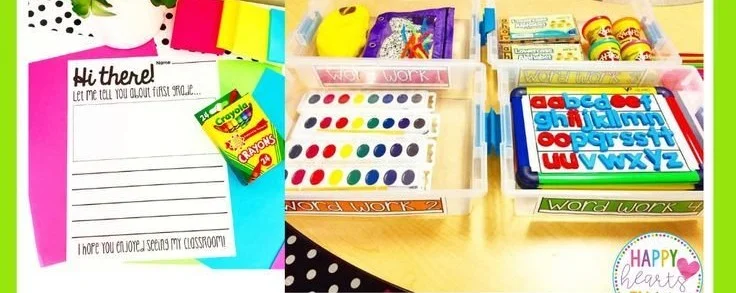
- Literacy center: word building with magnetic letters.
- Math center: number matching and manipulatives.
- Listening center: short audio stories with follow-up coloring or sequencing.
- Maker-space: open-ended materials for fine-motor development and creativity.
Clearly posted visuals and a consistent rotation chart help students transition independently. Use picture cues for first graders who are still mastering reading.
Behavior expectations and positive reinforcement
- Teach and model 3–5 essential expectations (e.g., be safe, be respectful, be responsible).
- Use specific praise (“I like how Maya lined up quickly and quietly”) and tangible class rewards like a sticker chart or a class material choice day.
- Practice calm-down strategies: deep breaths, a quiet corner with sensory tools, or a short mindfulness moment before transitions.
Family communication and at-home connections
Start the year with a welcome letter that outlines routines, supplies, and the best way to contact you. Invite families to share short bios about their child and to contribute one photograph for a classroom family board. Simple, consistent home routines (reading 10 minutes, practicing sight words) strengthen school-home partnerships.
Incorporate activities families can do at home by sharing a rapid “home activity” list that includes reading aloud, counting objects, and a short science observation. If you need examples of creative indoor activities that adapt well for small spaces, check the indoor activity ideas that translate well to early elementary classrooms.
Materials checklist for the first week
- Name tags and a name-tracing activity
- A few reliable read-aloud books and big-picture texts
- Manipulatives: counters, ten-frames, magnetic letters
- Visual routine charts and a class calendar
- Simple sensory materials for a calming corner
Tips for a calm teacher start
- Prep as much as possible the day before: stations ready, welcome materials organized.
- Keep lessons short and student-centered. First graders need frequent movement and concrete experiences.
- Observe more than you correct at first — note who struggles with transitions, who needs language support, and who needs extra challenge.
Conclusion
For more ready-made activities tailored to first graders, take a look at this collection of favorite first grade back-to-school activities that includes printable templates and simple routines. If you want extra inspiration for making the first day feel magical and stress-free, these 16 simple ideas for the best first day of school offer practical, fun touches that build community from day one.

Click to get the full bundle — instant download