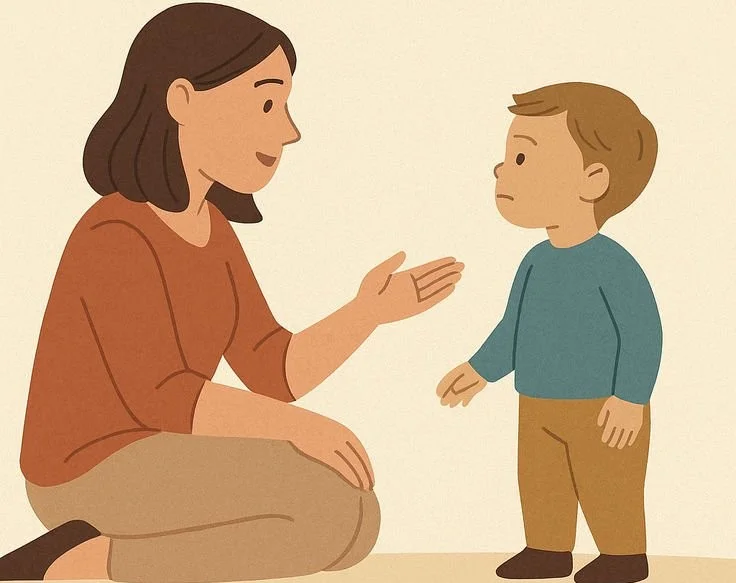
We all want toddlers to communicate instead of acting out, and “Use your words” seems like a quick fix. But for many little children this phrase is vague, abstract, or delivered at the wrong time — and it can come off as dismissive. In this article you’ll find five simple, Montessori-aligned alternatives that teach communication, calm big feelings, and invite cooperation. If you’re caring for siblings or balancing infant and toddler needs, resources about the best sleeping position for your baby can help you juggle routines.
Why “Use your words” falls short

- It’s generic: Toddlers often don’t know what words to use or how to label feelings.
- It can sound impatient: Said in frustration, it shuts a child down.
- It removes scaffolding: Montessori teaching favors offering language and structure, not just commands.
Below are five replaceable phrases with brief explanations and examples you can try immediately.
1. “Show me what you want”
Why it works: Toddlers often find it easier to demonstrate than to verbalize. This gives them a concrete option while you model language. How to use it: If a child reaches for a toy another child has, kneel down and say, “Show me what you want.” When they point or hand the toy, narrate: “You want the red truck. You can say, ‘My turn, please.’” This pairs action with words.
2. “Tell me how you feel”
Why it works: Naming emotions builds emotional vocabulary, a key Montessori goal. It validates the child and gives them a target phrase to try. How to use it: If a toddler is slapping a book, gently hold the book and say, “I see you’re upset. Tell me how you feel.” Offer options: “Are you mad? Sad? Frustrated?” Repeat whichever label they choose.
3. “Use a gentle hand / use gentle words”
Why it works: Specific behavioral instructions are clearer than abstract demands to “use your words.” It also models the tone you want. How to use it: In moments of aggression or rough play, calmly say, “Use a gentle hand.” If they look puzzled, model: “Gentle,” while stroking softly a stuffed animal, and invite them to imitate.
4. “Show me with your face / Show me with your voice”
Why it works: Montessori emphasizes expressive development. Direct prompts like these teach children how to modulate tone and facial expression, vital parts of communication. How to use it: If a toddler shouts to get attention, kneel level with them and say, “Show me with your voice — can you say it more softly?” Demonstrate the softer voice and let them try.
5. “Say, ‘Can I have that, please?’”
Why it works: Phrasing exact words gives toddlers a script to copy. Scripts reduce anxiety because the child isn’t inventing language on the spot. How to use it: When two children want the same toy, model the sentence and encourage role-play: “Let’s practice. You say, ‘Can I have that, please?’” Praise attempts: “Nice asking!”
Practical tips for success
- Model, don’t demand: Say phrases yourself and let children imitate.
- Keep it short: One or two words or a short sentence is easier for a toddler to copy.
- Use positive language: Tell them what to do (use gentle hands) instead of what not to do (don’t hit).
- Label feelings often: Frequent naming of emotions in neutral moments prepares toddlers to use words when upset.
- Follow through with help: If they can’t find the words, offer the language and then step away so they can try.
Mealtime and everyday routines Meals and routines are prime times to practice these phrases because expectations are repeated. Offer scripts like “I want more, please” during snacks and encourage polite requests. For meal planning and age-appropriate options, check guidance about foods not suitable to cook for five-year-olds to keep routines calm and predictable.
A Montessori mindset Remember, Montessori parenting prioritizes respectful language, independence, and gentle scaffolding. These alternative phrases give toddlers structure and the language they need to grow emotionally and socially — much more effectively than a single, often-empty command.
Conclusion
For more examples of alternative prompts and a deeper look at Montessori-friendly language, see the practical list at 5 Better Phrases Than Use Your Words for Toddlers. If you want to learn about common phrases that can unintentionally backfire and how to reframe them, this article on 8 parenting phrases you probably say that can totally backfire offers useful insight.

Click to get the full bundle — instant download